
Challenges
Cleared for Takeoff: Charting a Course Through New Data
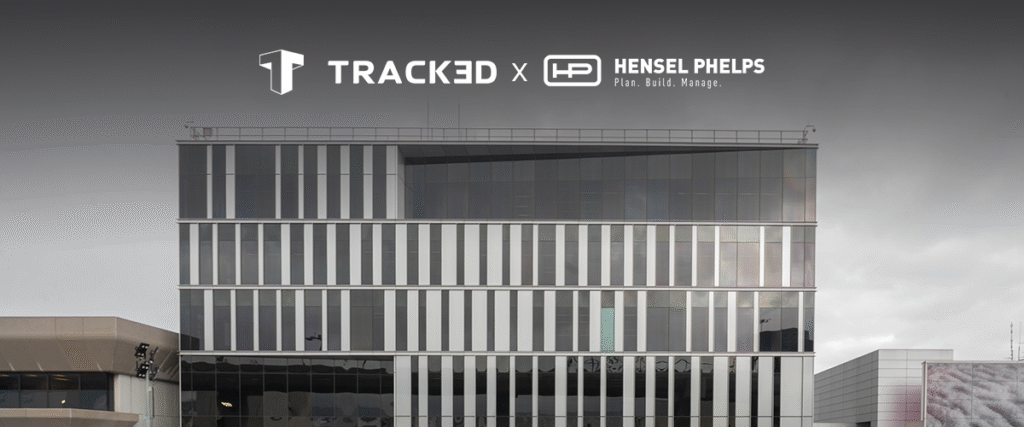
At San Francisco International Airport, Hensel Phelps took on a massive challenge: delivering a six-story complex office and operations center between two active terminals with zero margin for error. Logistically, it was complex, but the real challenge lay in how the team tracked progress.
Like many top ENR400 contractors, Hensel Phelps had state-of-the-art tools for capturing and gathering site data. However, as Superintendent Garin Anderson explained, the challenge wasn’t collecting information, it was making sense of it.
Progress tracking was labor-intensive.
Trade handoffs were clunky.
Pay app reviews were slow and manual.
- And as design changes poured in mid-construction, the team had no quick way to verify if field conditions matched expectations.
Despite their best efforts, efficiency was missing and so was trust in the information at hand.
“We were doing what every GC does — walking the floors, taking photos, marking up drawings. We had no shortage of data, but the challenge was turning it into something useful in the moment. Without that, it just sat there.”
Garin Anderson, Area Superintendent @Hensel Phelps
Solution
Turning Site Captures into Jobsite Intelligence
When the team deployed Track3D during the project’s second phase, everything changed.
Track3D didn’t ask the team to overhaul their workflows. Field engineers continued their routine 360° site walks, but before Track3D, those captures were used only for recordkeeping.
To make use of it, someone had to hunt through images, stitch together updates manually, cross-check them against printed plans, and then sync up with trade foremen to confirm what was actually done. It was a slow, repetitive cycle that relied heavily on memory, judgment, and physical presence.
Progress tracking meant walking each floor separately with every trade. A mechanical scope walk might take 30 to 60 minutes, and that process was repeated for framing, electrical, finishes, and so on.
With Track3D, that manual stitching process disappeared. Now, the same 360° walks fed into an AI-powered engine that segmented every captured frame, identified installed components, and mapped progress directly against the scope of work. Within hours, Garin and his team had a live, visual breakdown of progress by trade, floor, and zone.
"We used to spend 20 hours a week just trying to verify progress. Now it’s an hour. We’re not chasing trades anymore, we’re making decisions."
The impact was immediate. Trade progress became both visual and measurable. Missed installations were flagged before they turned into costly rework.
“This was the first time I could sit at my desk, open my laptop, and know exactly what had been done. Before walking the job or calling anyone, I could track progress with data, it was all there.”
Midway through the build, the project team encountered a challenge — they needed to start tracking lighting installations, a scope that hadn’t initially been part of the setup in Track3D. Once the team had identified the lighting tracking gap, they were able to quickly configure Track3D’s Progress Track to capture and measure this new element with ease.
The platform’s flexible tracking capabilities meant that as long as an object was visually distinguishable, it could be incorporated into the workflow. Within days, lighting proress was being monitored alongside other trades, giving the team clear, measurable insights into install rates and potential delays.
Track3D became the team’s shared single source of truth.
- Project managers used it to validate percent complete during pay app reviews.
- Field engineers pulled up time-stamped images to coordinate across overlapping trades.
- The QC team relied on photo history to verify in-wall work without reopening walls.
- Even the schedulers referenced it to understand field bottlenecks when updating timelines
The Outcomes
2,964
Total Hours
Saved
$342k
Labor cost
savings
50%+
Reduction in
documentation time
3
Major reworks
avoided
20+
Job walks
consolidated
26
Sub trades
coordinated
impact
Smarter Decisions, Fewer Mistakes, Faster Delivery
Track3D didn’t just improve documentation; it transformed how the Hensel Phelps team operated.
Over 2,900 hours of coordination time were saved. 20+ monthly job walks were consolidated into one. Field engineers spent less time collecting data and more time resolving issues. In Garin’s words, “It gave us the freedom to stop documenting everything manually and actually focus on the work.”
But more than saving time or money, Track3D gave the team greater confidence in their progress data, because every insight was backed by verified, measurable results. Each capture was transformed into accurate progress metrics that showed exactly what had been completed, broken down by trade and by zone.
Following the success at SFO, Hensel Phelps began expanding Track3D across other complex builds, where visibility, change, and coordination challenges can make or break delivery.

