


Platform
Company
Resources
Blog
Harnessing the Power of 360-Degree Cameras to Enhance Productivity for Construction Teams

Construction crews encounter a problem that recurs quite often. People frequently interpret differently what is present at the construction site.
A site manager may inspect a floor in the morning, and a contractor may do it in the afternoon. Both of them may have different views about the areas that have been completed and the ones that still need to be worked on.
This small difference in the perception of the site may sound insignificant. But anyone who has ever been part of a busy construction project knows that such differences can quickly turn into bigger problems such as-
delays,
rework,
extra costs.
This is why many teams are now turning to 360-degree cameras for construction. It has become an absolute necessity for construction teams.
With these cameras, a panoramic all-around view is provided, and a single shot captures every corner and angle.
Moreover, as projects become more intricate, that certain level of visibility is not only a help. Rather, it becomes a requirement for timely completion and project control.
To learn more, read on!
360-Degree Cameras in Construction:
What Exactly Is It?
Unlike a conventional camera, a 360-degree camera not only takes a picture of one scene but also the whole surroundings. It covers front, back, sides, above, and below at once.
Generally, there are two main types:
➼ Multi-lens 360 Cameras
These consist of a number of lenses (most often fisheye or wide-angle). They’re placed in a circular arrangement. Every lens takes an image of a part of the scene.
All these are merged into a full spherical panorama.
➼ Single-Lens 360 Cameras
This type of camera uses a single wide-angle lens. The captured image will then undergo the process of image unwrapping.Then a complete panorama is created.
The camera has less complicated hardware. But the powerful software processing gives the same all-around view.
Choosing either type will yield a similar worthy result. A visual record that encompasses all the areas around the camera. And not just what is in the frame.
How It Works
The 360-degree camera is a simple device for field teams. It goes along with the pace of a regular walkthrough. The operator starts recording, then walks along the drawn plan. And the camera records the surroundings completely.
After the video is uploaded, the software processes it. Video clips are stitched together to form a single panoramic video.
Here are the benefits for staff:
The reason behind the increasing popularity of these cameras is their ability to provide solutions to various common problems:
✔ Full site visibility
See the site as it really is. Not through imagination, not through talk and not through photos taken a long time ago, but through a complete 360-degree guided tour.
✔ Easy progress documentation
A casual stroll with the device captures everything. This literally means less argument later on, especially during the insurance claims process or defect disputes.
✔ Strong visual storytelling
No extra personnel are required when the teams make clear visual logs, training videos, and marketing content.
To sum up, it encourages teams to work smarter. And also eliminates minor inefficiencies that have been accumulating over time.
How 360-Degree Cameras Improve Productivity in Construction
Time Saving and Cost Reduction
Traditional photo documentation requires time. Why? There’s a need to capture photos from different angles, catalog them and label them. In contrast, a 360-degree camera can do this simultaneously as a single walk through records everything.
Why is it important?
→ One image captures what would otherwise take dozens of single shots
→ No chance of overlooking any angles or having incomplete documentation
→ All visual materials are preserved with their respective dates and places
→ Less time is spent by the teams in discussing the problems
Key productivity benefits-
- Faster documentation
• Lower travel expenses
• Less rework from miscommunication
• More predictable timelines
Using platforms such as Track3D makes the whole process even simpler. How? It automatically organizes the captures and shows progress clearly.
Faster Decision Making
A single flat photo very often is not enough and thus misses context. However, a 360-degree image allows the viewers to look around the entire space. This helps the teams to realize what is really happening without needing a site visit.
This results in:
→ Immediate resolution of disputes
→ Clear understanding of the field conditions
→ Less clarification calls
→ More confident decisions
Teams utilize 360-degree views to:
- Discuss problems from a distance
• Detect installation mistakes in time
• Minimize delays due to uncertainty in information
When everyone has the same view, the decision-making process is quicker.
Improved Coordination Among Trades
Construction relies on the operations sequence. A trade cannot move on until another is completed. In the absence of visibility, teams are left to wait and guess. At worst, they learn about the issue too late.
The 360-degree camera facilitates general alignment.
The following are the coordination improvements:
→ Displays accurately what is finished and what is still pending
→ Assists teams in organizing their daily tasks
→ Minimizes conflicts among different trades
→ Provides a clear weekly comparison for the supervisors
Useful for:
• Coordination between the Mechanical and electrical trades
• Checking of Drywall and finishing
• Inspection of the site and preparation
• Daily standups and planning meetings
BIM Integration
There are some software applications that allow the user to superimpose BIM with real 360-degree images. Track3D takes it a step further by linking the BIM parts to the construction timetable.
The teams can thus:
→ Contrast the actual with the projected work
→ Detect the delays at an early stage
→ Inspect the installations according to the design
The advantages are:
• Elimination of errors resulting from design discrepancies
• More reliable reporting
• Easier cost management
• Greater transparency for the stakeholders
Way 360-Degree Cameras Add Value
Improved Training for New Staff
New employees and subcontractors usually require some time to get to know the site’s layout. Instead of the long way, a team can just simply show one capture of the 360-degree image.
This aids in:
• Accelerating onboarding
• Less misunderstanding
• Increased safety awareness
• Better knowledge of present situations
Increased collaboration amonth teams in different locations
It may happen that the architects, engineers, and clients are not able to be present at the same time on the site. A 360-degree image will let them participate without the need to travel.
This brings about:
• Quicker reviews
• Less time taken for feedback
• More fruitful coordination meetings
Better communication with clients
Transparency is one of the key factors that clients want. And 360-degree images give it.
Clients receive:
• An actual view of the progress
• An easy way to follow the updates
• More confidence in the team
• Less demand for extra reports
Future Outlook
Construction companies have always used tools that help them work faster and safer. 360-degree cameras are part of this shift.
Besides documentation, they also cut down on misunderstandings and allow all the members of a team to see the same way site looks.
With the increasing acceptance, these cameras will be more intertwined with-
AI,
scheduling software,
quality management systems.
This will facilitate teams even more in catching the issues early, managing the costs, and preventing delays.
By using platforms like Track3D, contractors are able to take the basic visuals and convert them into useful insights. This could then support smarter decisions and stronger control over the entire project lifecycle.
Final Thoughts
Construction teams are now using 360-degree cameras to upgrade the way they document and manage progress.
The cameras
take a complete site picture just in one walk,
give clear records for planning,
facilitate faster collaboration.
These cameras, along with the technology, will be more involved in monitoring and coordinating projects in the future.
Want to know how Track3D is utilizing 360-degree camera data for the automation and simplification of progress tracking? Let our team give you a quick product walkthrough.
subscribe to our blog
- Blogs to read
May you also like
Blog This release focuses on giving enterprise teams the centralized
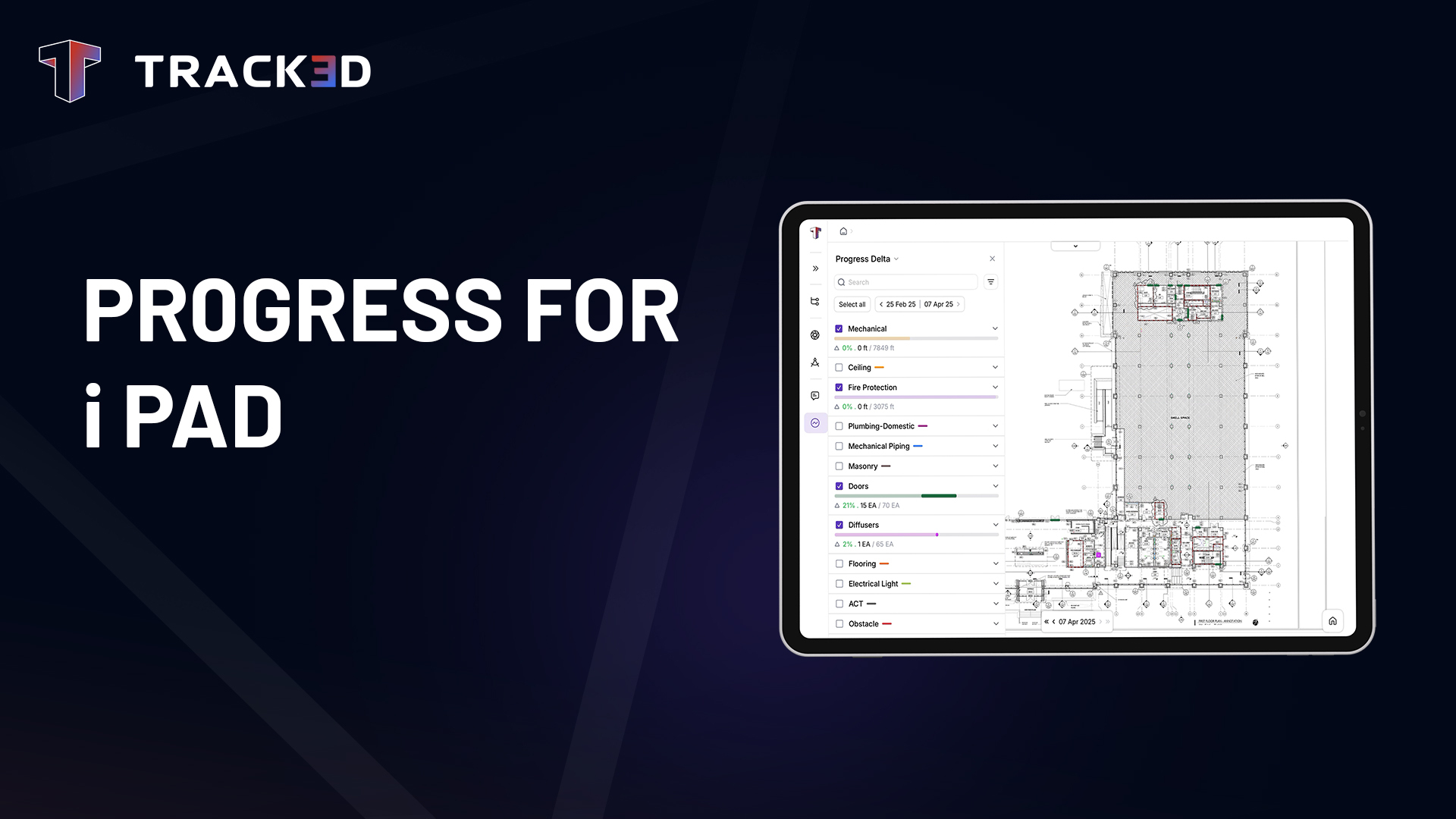
Blog If you’ve ever watched a superintendent frantically scribble notes
Blog Construction teams rely on multiple systems to manage designs,