Construction projects only really take off when the work being done each and every day is up to par.
To run a successful jobsite is not just how many hours you are putting in. But how much actual work is actually getting done? That’s where construction productivity tracking comes into play. You want to know how efficiently your construction team is turning all that labour, materials and time into actual, verified work that’s getting finished.
When teams can see productivity for what it is, clear and plain, they can pick up on any issues like delays, cost blowouts, and disputes before they take over and wreck the whole project. Sadly, the construction industry still struggles with how to boost productivity.
According to studies, the productivity increase rate in the construction industry has always been much lower compared to other industries. In particular, between 2000 and 2022, productivity growth reached approx 10%, while the overall productivity increased approximately five times. What’s more? US construction productivity fell within the last half-century. And now it’s much lower compared to many other economic areas.
If you want to deliver projects on time and on budget in 2026, then tracking productivity is something you can’t take lightly. Want to know more about this? Read on!
Key Takeaways
- Construction productivity tracking measures verified output, not just hours logged or tasks marked complete.
- Production rates are the most useful productivity metric on a live construction project.
- A 10% productivity shortfall caught in week two is recoverable. The same shortfall caught in week ten is a schedule crisis.
- Tracking at project level hides weak areas. Productivity must be tracked by work package and by location.
- Spatial productivity tracking, knowing exactly where performance is falling, is the next step beyond traditional tracking.
What Is Construction Productivity Tracking?
A lot of teams confuse productivity tracking with labor tracking. They are not the same thing. Labor tracking tells you what was spent. It will give you the number of hours worked by the crew, the number of personnel employed, and the amount of labor expense incurred. Such data are important, but it will not tell whether the progress made on the project is proceeding according to plan.
On the other hand, productivity measurement gives you the amount produced. It will inform you about what has been accomplished. Put in another way, although a crew may have worked for ten hours, this does not necessarily mean that they finished the installation of either 100 or even 20 feet of pipe.
Productivity tracking fills that gap. The simplest way to measure productivity is output per unit of time or labor. That means tracking things like:
- meters of structural steel erected per shift
- square meters of cladding installed per week
- number of glazing units installed per day
When you compare actual output against a planned baseline, you get an early warning sign. If a crew is producing 70% of the planned rate, you know there is a problem. You can investigate before the delay spreads into other trades.
As per McKinsey Global Institute, construction productivity has declined over the decades, while productivity in other industries has improved. This is the reason why productivity tracking is now a priority in 2026. Sometimes, it’s difficult to manage productivity naturally. That’s when it needs to be managed.
Why Construction Productivity Tracking Matters
Poor productivity tracking does not just create reporting issues. It creates schedule issues and cost issues.When productivity drops and nobody catches it early, the impact compounds. Small shortfalls turn into big ones. A crew that is slightly behind this week can become a major bottleneck next month.
One of the biggest risks is that production rate drops often go unnoticed until the monthly cost report. At that point, weeks have passed. Recovery becomes harder. It is also more expensive.
Another major issue is labor cost overruns. If productivity is low, crews may still be burning the same hours. The difference is they are producing less output. That gap becomes lost money, and it often shows up too late.
Rework also plays a big role. If quality issues are not monitored closely, crews spend time fixing mistakes instead of building new work. Those wasted hours rarely show up clearly in a dashboard unless rework is tracked properly.
Then there is billing. Payment disputes often happen when progress claims are based on unverified numbers. Owners want proof that work is truly complete. If productivity tracking is weak, payment applications become negotiations instead of straightforward approvals.
The biggest takeaway is this. A 10% productivity shortfall in week two is usually recoverable. You can adjust sequencing, add manpower, or remove obstacles. But the same shortfall in week ten is often a crisis. By then, the float is gone, and critical path activities are affected.
The numbers show just how costly this gets. Of the nearly $900 billion in construction put in place by labor-intensive contractors in the US in 2022, and contractors lost approximately $30 – $40 billion due to labor inefficiencies.
And the trend is moving in the wrong direction. In 2012, 57% of contractors surveyed said productivity had improved. By 2023, that figure had dropped to just 23%, while those reporting productivity decline rose from 25% to 45% over the same period.
The compounding effect is the real danger here.
Key Productivity Tracking metrics
Collecting accurate productivity data is only possible if one knows which metrics to collect first. Here are the key construction productivity measures that need to be tracked on any project:
Production Rates
These indicators measure production quantities during certain periods of time. For instance, the amount of erected structural steel meters daily or exterior cladding per week in square meters. By monitoring these figures, teams can determine whether there is an achievement gap when comparing them against plans.
Schedule Performance Index (SPI)
It reflects the proportion between the completed and planned value at the current moment of time. Thus, an SPI index less than 1.0 demonstrates that the project has produced fewer results for the time spent than was expected. The connection between productivity metrics and earned value management is beneficial for project teams.
Labor Productivity
It’s a measure of output per labor hour. And this one is useful because it shows you whether your workforce is operating efficiently at the trade level. For example, if you’ve got two crews for a ceiling grid and one is producing twice as much per hour as the other, well, that tells you something. Maybe one crew has better access, maybe the other crew is stuck waiting for materials all the time, maybe the work area is just too crowded. Labor productivity helps teams understand if all those labor hours are actually translating into real progress on the project.
Rework Rate
Rework rate calculates the percentage of the total work that needs reworking. Rework is one of the major causes of inefficiencies because it uses up working hours without any progress in the project. Rework rate indicates major underlying issues, such as a lack of synchronization and poor installation guidelines. Recording the rework rate helps determine where efficiency losses may be arising from.
How to Track Construction Productivity: Step by Step
Tracking productivity does not need to be complicated. But it does need to be consistent. Here is a practical way to do it.
1. Define production rate baselines before work starts
Every major work package should have a planned output target. This should be set during planning, using subcontractor input and realistic jobsite conditions. If you skip this step, you will have no benchmark later. You will only know that progress feels slow.
2. Break scope into trackable work packages
Tracking productivity only works when the scope is measurable. Instead of tracking “interior work,” break it into clear packages like:
- framing Level 2
- drywall hang and tape Level 3
- rough-in plumbing zone A
- ceiling grid installation Level 5
Work packages should have clear start and finish criteria. Otherwise, teams argue about what counts as complete.
3. Assign tracking responsibility
If nobody owns tracking, it does not happen. Each work package should have one named person responsible for capturing output. It does not have to be the superintendent. It can be a foreman or project engineer. But someone needs to own it.
4. Capture output data in the field
This is the key step. Output data must be verified. Not estimated. For example, instead of “drywall is 70% done,” the team should log: 4,500 square feet installed, 300 sheets hung and 8 rooms completed.
The more measurable the output is, the easier it is to track and defend.
5. Compare actual vs planned production rates
At each reporting interval, compare actual output to the baseline. A strong approach is to flag anything running below 85% of planned output. That does not mean the crew is failing. It means something needs attention.
6. Investigate deviations
A productivity drop is not the conclusion. It is a warning signal. The job is to find out why it is happening. Common causes include:
- materials not arriving on time
- poor sequencing between trades
- access restrictions
- rework
- unclear drawings or RFIs
- too much crew congestion
7. Update the schedule using productivity data
If productivity changes, the schedule needs to reflect it. A schedule that is not updated based on real production rates is not a forecast. It is just wishful thinking. The best teams feed productivity data into schedule updates weekly, sometimes even daily on critical path scopes.
Spatial Productivity Tracking: Knowing Where, Not Just How Much
Traditional productivity tracking gives you a number. Spatial productivity tracking gives you a location. That difference matters because productivity problems are rarely spread evenly across a project. One zone may be moving smoothly while another zone is stuck. For example, knowing roofing productivity is at 78% of target is useful. But knowing that the north elevation is at 55% while the south elevation is at 95% is far more actionable.
Now you know exactly where the issue is. You can focus on your next site walk there. You can ask why access is restricted. You can check if deliveries are blocked. You can investigate if another trade is interfering.
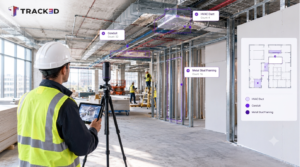
Spatial productivity tracking works by tagging verified output quantities to their precise location in the project model. Production rates can then be calculated by zone, floor, trade, and element, rather than just by activity name. This helps teams see deviations visually. Instead of scanning a spreadsheet, they can see performance gaps directly on the model.
Digital platforms that connect progress monitoring with spatial data capture are helping teams move beyond input tracking. They provide productivity intelligence that is grounded in what is actually happening on site.
Tools and Technologies for Construction Productivity Tracking
Productivity tracking has undergone many changes because of the improvements in the technology used. More contractors are moving away from spreadsheets and toward systems that capture real-time field data.
Production tracking software: It’s one of the most common tools used today. These platforms allow site teams to log verified output quantities, hours, and observations directly from mobile devices. This feeds dashboards without manual data entry.
BIM and 3D project models: These are also becoming a major part of productivity tracking. When production targets are tied to specific zones and elements in the model, teams can compare planned vs actual output by location.
EVM and project controls platforms: These are used on larger projects where schedule performance needs to be tied to earned value. SPI and CPI calculations become more meaningful when they are connected to real output.
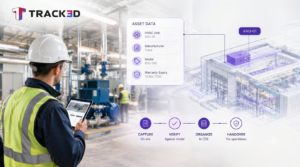
Reality capture and progress monitoring tools: These are another major category. These platforms capture physical site conditions continuously and compare what has been built against what was planned. This helps calculate output quantities without relying only on self-reported data.
Key considerations when choosing productivity tracking software
- Construction teams should look for features that support output-based tracking.
- It should measure verified quantities, not just hours.
- It should allow location tagging so data can be tied to zones and elements.
- It should be mobile-friendly and require minimal manual entry.
- Automated deviation alerts are also important, as well as integration with the schedule.
What Good Productivity Tracking Looks Like in the Real World
A lot of teams think productivity tracking has to be complicated. It does not. A good productivity system should feel like a simple weekly routine.
For example, imagine you are tracking drywall installation on Level 4. The baseline is 10 rooms per week. Every Friday, the foreman logs the number of rooms completed and notes any delays. That data is tagged to the floor plan. If output drops to six rooms, the team investigates immediately.
This is the difference between controlled projects and reactive projects. Controlled projects catch issues while they are still small. Good productivity tracking also creates better conversations. Instead of arguing about whether a trade is slow, teams can look at the numbers. If productivity is low, the next discussion becomes about the root cause. That is where real improvement happens.
The Link Between Productivity and Cash Flow
One area many teams overlook is how productivity impacts cash flow.
If productivity drops, progress billing slows. That means cash coming into the project slows too. Meanwhile, labor costs continue. Subcontractors still need to be paid. Suppliers still send invoices. This is why productivity tracking is not just about schedule. It is also about protecting cash flow. The faster teams can spot productivity loss, the faster they can correct it and keep billing on track.
When progress claims are backed by verified output quantities, payment applications become stronger. Owners have fewer reasons to delay approval. That helps keep the project financially healthy.
Pros and Cons of Construction Productivity Tracking
Productivity tracking offers major benefits, but it also comes with challenges.
Pros:
Early warning: Production rate deviations can be identified weeks before they become schedule delays.
- Smarter resource allocation: Instead of relying on gut feel, teams can deploy labor based on evidence.
- Objective performance measurement: Verified output replaces subjective estimates.
- Supports payment applications: Confirmed output quantities strengthen SOV claims and reduce billing disputes.
- Early warning: Production rate deviations can be identified weeks before they become schedule delays.
Cons:
- Implementation takes effort. Baselines must be established, responsibilities assigned, and field habits built.
- Data quality is also critical. Productivity tracking is only as good as the data feeding it.
- There can also be resistance from site teams, especially if tracking feels like extra reporting.
- Complexity increases at scale. Tracking dozens of work packages requires structured systems, not spreadsheets.
When Construction Productivity Tracking May Not Be Suitable
Productivity tracking works best when scope is measurable and the project is long enough for trends to develop. It becomes harder in situations like:
- very short-duration projects
- highly bespoke scopes with no historical benchmarks
- extremely fluid scope where baselines change daily
- teams that lack consistent field reporting habits
In those cases, tracking still helps, but the approach may need to be simplified.
Common Construction Productivity Tracking Mistakes
1: Tracking inputs instead of outputs
Logging hours without measuring verified quantities gives the illusion of control. But you still do not know what was actually built.
Solution: Set measurable output amounts for all work packages being tracked prior to beginning work.
2: Tracking at only the project level
A project may seem to be performing well on the whole, yet some of its trades or zones may be lagging.
Solution: Track productivity by work package, trade, and location.
3: No corrective action process
Some teams track productivity but do nothing with the results. That turns tracking into paperwork instead of a management tool.
Solution: Set clear thresholds. If a work package falls below 85% of planned production for two consecutive periods, trigger a formal investigation.
Final Thoughts
Construction productivity tracking is one of the most direct levers a project team has over schedule performance and labor cost control. But only when it measures the right thing. Verified output is what matters. Not hours logged. The teams that consistently deliver on program are not always the ones working harder. They are the ones tracking smarter.
They measure what’s actually been built, where it was put up, and how that compares against what was originally laid out. When you’ve got productivity data that’s firmly rooted in a specific location, updating in almost real time, and tied to the overall project plan, issues start to surface right when they can still be sorted out. This is where problems are actually still fixable.
Want to see how this all works out in the real world? Explore how Track3D brings spatial productivity tracking to construction projects, so you always know where performance is falling, not just that it is.
Construction Productivity Tracking Software Compared
Different tools capture productivity in different ways. The table below compares the main categories so you can match a tool to how your team actually works.
| Tool Type | Best For | How It Tracks Productivity |
|---|---|---|
| Production tracking software | Day-to-day labor and task tracking | Logs quantities installed vs. hours worked |
| BIM & 3D models | Design-heavy, coordinated projects | Ties installed work back to the model |
| EVM & project controls | Large, complex programs | Measures earned value vs. planned |
| Reality capture & progress monitoring | Objective, remote verification | Compares site reality against the plan automatically |
Worked Example: Calculating a Productivity Rate
Productivity is usually expressed as output per labor hour. Say a crew installs 480 square feet of drywall in a shift and logs 40 total labor hours (5 workers × 8 hours). The productivity rate is 480 ÷ 40 = 12 sq ft per labor hour. If your estimate assumed 15 sq ft per labor hour, the crew is running about 20% behind — a gap you can catch on day one rather than at month-end.
Because labor is the biggest swing factor on most jobs, tracking these rates closely also protects your budget. See how these numbers connect to labor costs in construction for the full cost picture.
How to Improve Construction Productivity
Tracking is only half the job — the goal is to actually raise labor productivity on site. A few proven levers:
- Reduce idle and travel time by staging materials closer to the work face.
- Plan the day before it starts so crews never wait on information, materials, or preceding trades.
- Standardize field reporting — a consistent construction daily log makes it easy to spot which activities are dragging labor productivity down.
- Act on deviations early using objective progress data instead of waiting for end-of-month reports.
- Invest in the right crew mix and training so skilled hours go to skilled work.
FAQs
Q1. What is construction productivity tracking?
Ans. Productivity monitoring in construction is the practice of estimating the efficiency in the transformation of labor and time into the production of work. This monitoring involves a comparison between actual production and planned production levels.
Q2. How do you measure productivity on a construction site?
Ans. Productivity can be calculated by analyzing the output compared to the input. For instance, compare quantities installed with the production baseline set by the project manager. Labor productivity measures labor output per hour of labor expended.
Q3. What is the production rate for construction?
Ans. A production rate is the quantity of completed work delivered per unit of time. For example, the square meters of cladding installed per day. Production rates are set during planning and tracked throughout the project.
Q4. What is the best construction productivity tracking software?
Ans. The best software depends on your workflow. Look for tools that track verified output, support location tagging, allow easy mobile field capture, and integrate with BIM and schedule management.
Q5. How does poor productivity tracking affect a construction project?
Ans. Poor productivity monitoring leads to poor production, which delays and increases costs. Bad productivity monitoring also compromises claim procedures, increases disputes, and makes recovery more difficult.
How do you measure labor productivity in construction?
Labor productivity is measured as the quantity of work completed per labor hour — for example, square feet of drywall hung or cubic yards of concrete placed per hour worked. Compare the actual rate against your estimated (budgeted) rate to see whether a crew is ahead of or behind plan, then investigate the gap.