Introduction
You understand the importance of accurate finances in construction projects, but are they truly reflecting what’s going on the jobsite? If not, you might want to consider establishing CIP accounting. It provides a structured way to track, organize, and report project costs while keeping financial statements aligned with the ongoing work at the physical jobsite. In fact, when done well, CIP accounting can bring clarity to complex projects and support better financial decision-making.
In this guide, we explore the fundamentals of CIP accounting and the supporting tools and technologies. Continue reading to find out more!
Key Takeaways
- CIP accounting tracks all construction-related costs as a non-current asset until the project is ready for use.
- Only directly attributable costs qualify for capitalization. No indirect or post-completion costs should be expensed under this.
- CIP comes under PP&E costs without depreciation and is transferred to fixed assets at substantial completion.
- CIP balances can be accurate only when they are aligned with verified on-site progress. CIP accounting needs reliable and verified data instead of self-reported percentages.
- Delayed transfers and incorrect cost capitalization are the most common and high-risk errors.
- Since verified progress data plays a critical role in maintaining accurate and reliable CIP reporting, teams can use various tools and tech to enable that.
What is Construction-in-Progress Accounting?
Construction in progress accounting is the process of accumulating and tracking all costs associated with constructing a long-lived project and recording them on the balance sheet as a non-depreciable asset until the project is substantially complete and ready for use. Also called CIP accounting, it captures virtually every asset before it is placed in service. For example, materials, labor, site preparation, permits, engineering fees, and interest on borrowed funds. They flow into the CIP account first, instead of being expensed immediately.
On the balance sheet, CIP comes within the Property, Plant, and Equipment (PP&E) section as a non-current asset with no accumulated depreciation. As soon as the asset (service or product) is substantially complete and ready for its intended use, the accumulated CIP balance transfers to the appropriate fixed asset account, and depreciation begins.
To explore the concept of CIP accounting better, we need to understand some key terms about the different accounts used by finance teams. In the following table, we look at the difference between CIP, WIP, and Fixed Assets.
| Account | What it represents | Balance Sheet | Depreciated? |
| CIP | Long-lived asset under construction | Non-current PP&E | No |
| WIP | Partially completed inventory | Current inventory | No |
| Fixed Asset | Completed asset in service | Non-current PP&E | Yes |
These work in correlation with each other:
- Under US GAAP (ASC 360), CIP transfers to fixed assets when the asset is substantially complete and ready for its intended use.
- Under IFRS (IAS 16), the trigger is when the asset is available for use.
This information is highly relevant from a budget perspective because delayed reclassification is potentially the single-most common CIP audit finding, which understates depreciation and overstates net income. We explore this in detail in later sections.
What Costs Are Included in CIP?
To understand how CIP accounting works, we must learn what it covers. The following lists contain the costs that qualify under CIP accounting and those that don’t (but are commonly mistaken for qualifying).
Costs That Qualify Under CIP Accounting
- Direct materials like structural steel, roofing systems, external cladding, and glazing.
- Direct labor includes employees and contractors who are directly involved in the construction project.
- Site preparation, such as demolition, excavation, grading, and environmental remediation.
- Permits, approvals, and regulatory fees.
- Architectural and engineering fees directly related to the construction project.
- Testing and commissioning costs, which are employed in verifying whether the asset functions as intended.
- Capitalized interest on borrowed funds (ASC 835-20 under GAAP; IAS 23 under IFRS).
Costs That Do Not Qualify Under CIP Accounting
- General and administrative overhead that’s not directly tied to the project.
- Abnormal waste, avoidable rework, or material spoilage that goes beyond normal expectations for any construction project.
- Strong construction quality control processes can help reduce rework, improve execution accuracy, and minimize unnecessary project costs.
- Training costs for staff who will operate the completed asset.
- Any costs incurred after the asset is ready for its intended use.
Why Does Construction-in-Progress Accounting Matter?
According to the American Institute of CPAs, construction-related assets consistently rank among the highest-risk areas in financial statement audits. This is because of the complexity of cost capitalization judgments and long project timelines. And when it comes to CIP accounting, it goes well beyond bookkeeping. In fact, even minor inaccuracies in the balance create major consequences for the business. For example:
- Reported earnings: If the capitalized cost in the balance sheet differs from the expensed amount, it directly affects the income statement. Additionally, premature capitalization overstates profit, making the figure of reported earnings even more skewed.
- Tax obligations: The basis of the asset’s cost determines depreciation deductions. If the CIP transfer is inaccurate, it affects the tax position and produces an incorrect figure.
- Loan covenant compliance: The CIP balances on the sheet contribute to the total asset calculations used in debt covenant tasks. So any errors in the CIP balance will ultimately affect these subsequent tasks too.
- Audit outcomes: CIP accounting is scrutinized on a high level in both external and internal audits, which further heightens the risk for material misstatement.
A Guide to CIP Accounting: All Relevant Steps
CIP accounting follows a clear lifecycle from the beginning of the project to asset transfer. It is crucial to know this process to avoid mishaps.
- Open a dedicated CIP account: Begin by opening a dedicated CIP account. Create a sub-account or a project code for each construction project you undertake to keep track of all the incurred costs. This will also keep it organized.
- Accumulate qualifying costs: Record all directly attributable costs to the CIP account accurately, as soon as they are incurred.
- Review for non-qualifying costs: You must periodically assess the costs charged to the CIP account against the capitalization policy. If you find any costs that do not meet the directly attributable test, expense them!
- Account for scope changes: Consistently review previously capitalized costs as the scope of different projects changes. Write off any amounts that pertain to abandoned or substantially altered work.
- Monitor progress against the balance: Theory often doesn’t match the practical. Thus, reconcile the CIP balance against the verified site progress at each stage and period of reporting. Ultimately, the balance sheet should reflect the physical reality of the construction site.
- Initiate the transfer at substantial completion: When the asset is ready for its intended use, transfer the full accumulated CIP balance to the appropriate fixed asset amount. Do not keep it hanging; do not keep the amount in limbo!
- Begin depreciation: Start depreciation in the period when the asset becomes available for use, depending on the assigned useful life and depreciation method.
CIP vs. WIP vs. Fixed Assets
In addition to the relevant steps, there’s also a list of common errors that you could make while practicing construction-in-progress accounting. Here’s a detailed overview of the list and how to fix them.
Mistake #1: Delayed transfer from CIP to fixed assets.
Description: Not transferring assets from CIP to fixed is especially problematic because completed assets that are remaining in CIP understate depreciation and overstate net income, thereby hampering the net balance sheet.
How to fix: Establish a monthly CIP review that requires the project managers to submit written completion certificates at substantial completion.
Mistake #2: Capitalizing non-qualifying costs.
Description: Adding non-qualifying costs to CIP, like general overhead or post-completion costs, will inflate the asset’s carrying value and attract audit findings.
How to fix: Develop a written capitalization policy that lists all eligible cost categories. Establish and enforce mandatory approval workflows for all CIP charges so no non-qualifying costs slip through.
Mistake #3: Self-reported progress without independent verification.
Description: The numbers that are input into the balance sheet must be verified against the physical progress. Unverified, self-reported percentages generate CIP balances that don’t reflect the physical site reality and create misstatement risks that can compound over long project timelines and ruin your balance sheets.
How to fix: Implement verified progress reporting that connects the physical site conditions to capitalization decisions. You mustn’t rely only on estimated figures.
Key CIP Journal Entries
In the following table, we explore some of the most significant CIP journal entries, so you can use them as a reference while building and maintaining your balance sheets.
| Recording construction costs: | |
| Debit: Construction-in-Progress | $500,000 |
| Credit: Accounts Payable | $500,000 |
| Writing off abandoned scope: | |
| Debit: Expense Abandoned Costs | $75,000 |
| Credit: Construction-in-Progress | $75,000 |
| Transferring CIP to fixed assets at completion | |
| Debit: Buildings | $2,500,000 |
| Credit: Construction-in-Progress | $2,500,000 |
Pros & Cons of Construction-in-Progress Accounting
Now that we’ve explored the basics of construction-in-progress accounting, let’s look at some of its pros and cons:
Advantages of CIP Accounting:
- Accurately matches costs to the periods in which the asset generates economic benefit.
- Prevents large one-time expense distortions on the income statement throughout the construction year.
- Provides a structured framework for tracking capital expenditure across complex multi-project portfolios.
- Supports audit readiness with a clear, documented, cost-accumulation trail.
Challenges of CIP Accounting:
- Demands significant cross-departmental coordination among finance teams, procurement crews, and project managers.
- Long project timelines increase the risk of errors. For instance, delayed transfers that compound over time, unrecorded scope changes, and capitalized non-qualifying costs.
- If CIP balances are based on self-reported progress figures, they have the risk of misstatement.
- Impairment assessment adds further complexity. Hence, CIP must be evaluated for impairment whenever indicators suggest the asset’s recoverable value may be below its carrying amount.
When Is CIP Accounting Not Straightforward?
After discussing the challenges of CIP accounting, it is evident that there are instances when construction in progress accounting is not the smoothest path. It works best on projects with a well-defined scope, clear completion of milestones, and strong communication between all relevant departments. It becomes more complex and high-risk when:
- Projects have frequent scope changes: Every single change requires a review of previously capitalized costs and potential write-offs that are easy to miss without a well-established formal process.
- Projects have a long duration: The longer a project runs, the greater is the risk of delayed transfers, accumulated errors, and audit findings from CIP balances that do not accurately reflect the reality of the physical jobsite.
- Projects have multiple sites or multiple phases: Combining costs across different phases or locations in a single CIP account makes individual asset tracking and transfer virtually impossible.
- Projects have weak progress reporting: When figures are self-reported without any independent verification against the construction site, every single capitalization decision you make will rest on unreliable data.
Tools & Technologies That Support CIP Accounting
To help with the challenges of CIP accounting, you can use the following tools and tech. Not only do they simplify the whole process, but they also actively address the issues of CIP accounting.
- ERP systems: SAP, Oracle, and Microsoft Dynamics include capital project modules. These modules accumulate costs by project and automate CIP to fixed asset transfer workflows.
- Fixed asset management software: This software manages the full CIP lifecycle with audit trail functionality, depreciation scheduling, and impairment tracking.
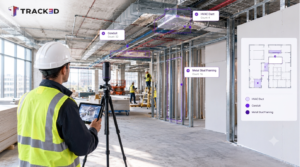
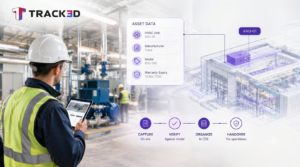
- BIM platforms: They assist in connecting design intent to construction milestones. This enables the finance teams to cross-reference physical progress against CIP balance accumulation.
Modern spatial AI in construction solutions help connect BIM data, site visibility, and project intelligence for better construction monitoring. - Construction progress monitoring platforms: These digital platforms provide automated spatially verified completion figures, so the finance team doesn’t have to depend on self-reported estimates for capitalization decisions.
- Cloud document management: All invoices, change orders, and completion certificates must be documented in a centralized storage system so both finance and project teams can access the same information in real time.
Proper construction project documentation improves financial transparency by centralizing invoices, approvals, site records, and compliance-related documents.
Final Thoughts
Construction-in-progress accounting is a disciplined means of keeping financial reporting aligned with on-site reality. It requires costs to be capitalized accurately, progress to be verified with the physical reality, and transfers to be made at the right time. This way, your balance sheet and finances will always reflect the true reality of the construction jobsite.
Teams need to treat CIP accounting as a continuous, controlled process to get the best out of it. Ultimately, financial data, project execution, and verified site progress must work in unison to ensure long-term visibility and transparency in company finances.
Accurate construction progress tracking helps teams validate project completion percentages and maintain reliable CIP accounting records throughout the project lifecycle.
Want to see it in action? Explore how Track3d connects verified site progress data to your construction in progress accounting workflow, so your CIP balance always reflects what is actually being built.
FAQs
Q1. What is construction-in-progress in accounting?
Ans: Construction-in-progress accounting is a non-current asset account within PP&E costs. It accumulates all costs associated with a long-lived asset before it is placed into service.
Q2. How does CIP appear on the balance sheet?
Ans: CIP appears as a separate line item within PP&E at gross cost with no accumulated depreciation. It stays on the balance sheet until the asset is reclassified and transferred to a fixed asset category, at the point of substantial completion.
Q3. What is the difference between CIP and WIP in construction?
Ans: CIP relates to a long-lived asset under construction. It is a non-current asset within PP&E costs that becomes a depreciable fixed asset only at substantial completion. On the other hand, WIP represents partially completed inventory. It is a current asset that flows to the cost of goods sold when the finished product is sold.
Q4. What happens to CIP when a construction project is abandoned?
Ans: When a construction project is abandoned, the accumulated CIP balance must be written off as an impairment loss. Previously capitalized costs need to be removed from CIP and recognized as an expense in the period when the abandonment decision is made.
Q5. How does accounting for construction in progress connect to site progress reporting?
Ans: If the self-reported completion figures overstate physical progress, they can lead to premature capitalization and misstatement on the balance sheet. Thus, teams need verified progress data that is grounded in actual site conditions for accurate CIP accounting.