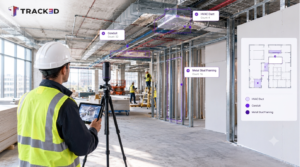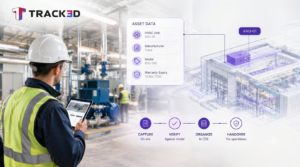
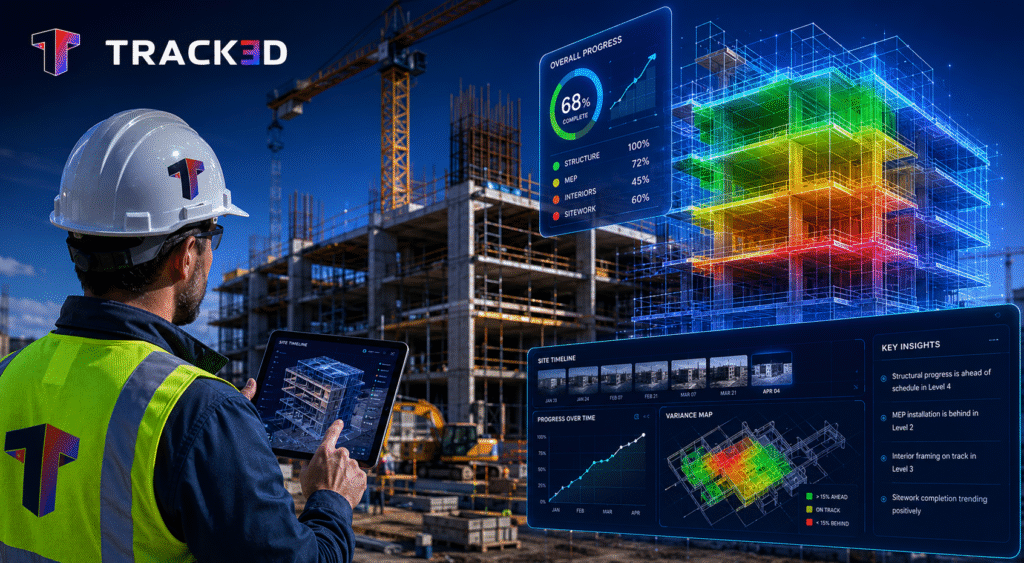
Whether it’s project management from the office or making rounds on the site, progress monitoring on construction is always an intricate process. There needs to be a precarious balance between on-field work, documentation, reporting, and review to extract a comprehensive picture of progress. However, more often than not, it’s hard to achieve. Teams often fail to draw up an accurate representation of progress because of discrepancies, delayed back-and-forth, and processing time. Also, conventional methods and techniques of progress monitoring tend to be slow and unreliable. The best solution to this is progress monitoring with Reality Intelligence.
In this blog, we cover what is lacking in traditional progress monitoring, the benefits of Reality Intelligence in progress monitoring, and its best practices. Continue reading to find out more!
Why Do Traditional Methods of Progress Monitoring Fail?
A colossal part of traditional progress monitoring relies on manual data collection. Whether it’s handwritten notes made during field visits, hundreds of images taken to track the growth, or reports and reviews drawn up to present the details, everything is done by hand. Because of this, the biggest challenge becomes time management. Moreover, superintendents or project managers need to organize notes, manage photos, collect updates, and keep everyone on the same page – all of which, again, takes a lot of time.
Another hurdle is the constant discrepancies. First, the field team gives updates that are compiled with visual data by the superintendents. These are put together in progress reports along with other updates. And by the time they reach all the key stakeholders, the onsite project has already moved on. This lag, owing to the endless manual documentation and processing, can severely impact the visibility and collaboration of contractors and owners.
Along with these, there are several other limitations of traditional progress monitoring that might not seem like a huge obstacle but can impact your construction project in hefty ways. For instance, poor time management and lagged updates, coupled with factors like inconsistent data processing and rigid update templates, can lead to delayed decision-making, challenges in maintaining transparent communication, poor accountability, and random task delegation. The solution? Scale up. Move to advanced tools. Opt for digitalization. And your best bet is Reality Intelligence. It can completely change the game and transform the way you track progress.
How Does Progress Monitoring Work With Reality Intelligence?
Reality Intelligence is a compilation of reality capture, artificial intelligence analysis, and actionable insights. Once you’ve adapted to tools like drones and 360° cameras, your next step is to utilize the data they collect. This is where Reality Intelligence comes into the picture. It auto-analyzes all information constantly, recognizes regular changes, flags deviations from the original project plan, and provides trend and pattern analysis. This equips you with the tools to keep progress monitoring a transparent, efficient, quick, and insightful process.
Benefits of Advanced Progress Tracking with Reality Intelligence
Progress tracking with Reality Intelligence is designed to be a convenient and efficient experience that gives you time to focus on other aspects of construction. Contractors, superintendents, and project managers experience up to a 50% travel reduction because of remote access and 95% faster documentation. Additionally, there are several benefits of integrating Reality Intelligence, some of which are listed here:
- Reality Intelligence provides three times more coverage compared to other reality solutions across the construction project lifecycle.
- Automated reports and flawless production analysis help save over 15% of the total time previously spent on reporting and analysis.
- Teams observe around 12% improvement in adhering to the schedule and keeping the project on track.
- Reality Intelligence helps reduce hefty rework costs by predicting potential risks and flagging any deviations.
- The deviation detection feature helps to minimize project delays and overall time wastage, which would have been required otherwise to fix mistakes.
- When you deliver projects on time and according to plan, customer satisfaction and trust will automatically increase.
Best Practices for Progress Monitoring with Reality Intelligence
Only integrating Reality Intelligence might not bear the best fruits. You must also know how to make the best use of it. Here are a few best practices that you can implement to ensure that you’re using Reality Intelligence to the optimum.
#1 Set Clear Objectives
Reality Intelligence can help you automate your workflow completely, but only if you know what you want from it. It’s crucial to define clear objectives and outcomes for the system before you integrate it into your workflow. For construction management and progress tracking, it’s best to start by exploring how Reality Intelligence can track the progress of every zone and task, compile information, and derive insights for you.
#2 Define Clear Tracking Categories
Construction is a many-faceted job that requires coordination between multiple stakeholders, subcontractors, field workers, and more. Even small projects that seem simple will demand that you look at multiple aspects of trades, tasks, and locations. Thus, it’s prudent to define these categories upfront and track them accordingly. For example, trades can be divided into framing, drywall, electrical tasks, plumbing, etc., and locations into floors, zones, and specific work areas. This will not only give structure to the review system but also ease reporting.
#3 Use The Right Capture Tools
As mentioned above, a major part of Reality Intelligence is reality capture. The former cannot work without the latter. As with any other smart system, there needs to be a comprehensive database for it to work with, which comes with reality capture. Employ advanced tools to constantly survey the jobsite. Here are a few:
- Drones: With the help of drones, orthomosaic maps, and detailed point clouds, you can capture site-wide visualizations, like exterior sequencing, façade work, site logistics, and underground utilities.
- 360° cameras: 360 images and videos provide detailed interior documentation during active installation stages. You can experience a comprehensive virtual presence on-site from any location in the world.
- Laser Scanner: You can verify as-built conditions against original models with ease to ensure optimal accuracy.
- Measure on Image: Measure on captured images directly to further reduce the need for physical site visits while elevating precise monitoring.
#4 Practice Real-Time Data Integration
The largest disaccord in data capture and reporting arises because the captured information is old and no longer true. However, with Reality Intelligence, you can tackle this easily. With reality capture, images and videos of the site can be captured in real time. And with Reality Intelligence, they’re analyzed and reported almost instantly as well! No gap in capturing and reporting.
#5 Standardize Capture Frequency
Consistency in capturing visuals from the site also implies standardized capture frequency. If you’re capturing data twice in one week and then once in two weeks, the system will not be able to employ its tools properly and give you adequate results. Moreover, the trend and pattern analysis feature can only work if there’s a set routine in capturing the visuals. Thus, there must be a consistent capture cadence that aligns with the pace of the on-site work.
Most teams observe weekly meetings for core updates across the team. But it’s often wise to integrate more frequent captures for fast-moving projects and when approaching important milestones.
#6 Integrate the Schedule
Visual progress is helpful, but it’s directionless if you can’t compare it against the original plans or schedule. Integrate the schedule, drawings, sketches, and all original construction plans so Reality Intelligence can constantly compare and give you updates. It will further give you deeper insights into the pace of the project, timelines, deadlines, and overall consistency. This way, you get a system that actually supports planning and gives teams a reality-based understanding of the project.
#7 Use Defined Takeoff Quantities
Takeoff quantity refers to the estimates of contract quantities derived from drawings, models, and plans. Based on this, construction costs, material quantities, and labor requirements can be estimated. If well-defined takeoff quantities are implemented, progress tracking becomes more granular and structured. Installation rates can be tracked with precision; progress validations can be aligned with payment accuracy; and production pacing can be routinely observed.
#8 Break It Into Zones
Construction projects are a heavy job that often requires balancing multiple trades, sections, and stakeholders. A prudent approach to managing these projects is to divide them into different zones. It enables Reality Intelligence to give you deeper insights and more actionable updates. At the same time, delegation of work and active accountability increase to a large extent.
All zones need to be defined only once on the project map, and all captures automatically link to the correct areas. The system will continue to review progress based on individual zones, selected areas, and the complete project without discrepancies.
With defined zone tracking, teams can:
- Identify bottlenecks or individual delays in zones before they spread out and impact the project.
- Securely delegate respective zones to individual stakeholders for more uniform adjusting and planning.
- Keep trade crews and project planning aligned so tasks stay in motion.
#9 Integrate Project Insights With Routine Project Reviews
The greatest advantage of employing Reality Intelligence is that it can provide actionable insights by analyzing data. It can also analyze trends and patterns to predict risks and find out manageable issues in the project. However, it’s essential to also integrate this output naturally into the team. Regular communication and fluent coordination can help take the discussion to what’s been done, what needs more attention, and which areas are approaching key sequencing or inspection points. All of this can help expedite alignment and make it smoother. Moreover, it also helps avoid risks, discrepancies, and issues that can potentially escalate into blunders.
Final Thoughts: Elevate Progress Monitoring with Reality Intelligence
Progress monitoring and tracking can be a tough job, but it doesn’t have to be. Reality Intelligence has the potential to give teams structure, direction, and clear objectives. As the superintendent or contractor, you can automate virtually every aspect of manual documentation in construction project management with Reality Intelligence. It can transform the virtual database documented by reality capture into a powerful tool that provides actionable insights. Consistent review and reporting will help you identify trends, patterns, potential risks, bottlenecks, and more. It is a streamlined approach to digitalizing construction progress monitoring.
Moreover, the best practices of progress monitoring in construction ensure that clarity, accurate interpretation, and meaningful application are implemented. Data must not be just storage; it needs to be an important guide that helps teams decide what happens next and gives them a stronger sense of control.