Construction robots handle heavy, repetitive, or precise tasks on a job site. They lift steel beams. They place bricks along a marked line. They tie rebar joints on a schedule a manual crew cannot match.
A good construction robot takes on the physical strain. That frees crews to focus on judgment calls machines still cannot make. Not every robot sold for construction meets that bar. Knowing the difference matters before you buy.
Key Takeaways
- Construction robots fall into five practical categories: lifting and transport, layout and marking, bricklaying, demolition, and rebar tying.
- Autonomous construction robots plan their own path using cameras or lidar, so no one needs to steer them.
- Robotics in construction can cut two costly problems: rework and repetitive strain injuries.
- Construction site automation pays off fastest on repetitive, well-mapped tasks, not on sites where the layout changes daily.
- Reality Intelligence tools help teams confirm a robot delivered real value, not just activity.
What Are Construction Robots?
A construction robot performs physical site work with some independence from human control. Examples include a robotic arm that lays brick, a rebar-tying unit, and a mobile platform that carries material across a floor.
A robot only adds value when you match it to the right task. Assign it to the wrong job, and it becomes an expensive, underused asset, no matter how advanced its sensors are.
Robotics in construction covers a wide range of machines. Small robotic arms bolt onto a scaffold. Wheeled units roam an open floor plate. Larger tracked machines handle demolition.
Each one shares the same goal. Take on one narrow, well-defined task. Free people to focus on planning and quality checks instead of repetitive labor.
Most contractors combine a few robot types depending on the build phase. Early foundation work might use almost none. A mid-rise structure with a fixed floor plate is a much better fit.
The common mistake is not buying the wrong robot outright. It is deploying a robot built for a structured task onto a site that is still too irregular to support it.
Why Robotics In Construction Matters
Construction has one of the highest rates of physical strain injuries of any industry. Manual lifting causes many of them.
A robot can carry a 40-kilogram load across uneven ground all day. It does not get tired. It does not need a break. It does not risk a back injury. That single fact drives most of the category’s growth.
Teams often buy a robot before they define how they will measure success. In most cases, no one agreed in advance on what “working” would look like.
Teams need to confirm the robot actually closed the gap it was bought to close. That step is separate, and many skip it entirely.
How Are Construction Robots Built?
Constructing A Robot For A Single Task. Most builds start with three core systems. A mobility base, such as wheels or tracks. A task-specific end effector, like a gripper or lifting fork. And a control system that links sensors to motors.
Learning how to construct a robot for one job, like lifting a pallet, is far simpler than building a general-purpose machine. The range of motion needed stays narrow. That is also the answer to how to construct robot hardware that holds up on a job site: keep the design narrow and task-specific.
Constructing A Robotic Arm. For teams asking how to construct a robotic arm, the arm itself is usually the hardest part to build. It needs enough joints to reach and orient a load without hitting nearby structure.
An arm that only places a brick along a line needs far fewer joints than one that works at multiple angles. Fewer joints usually mean fewer failure points too.
Building Simple Versus General-Purpose. Learning how to construct a simple robot starts with picking one narrow task. A simple robot built for one narrow task tends to be more reliable and easier to maintain. Fewer parts mean fewer things that can fail.
Teams asking how to construct a robot from scratch usually start with a proven mobility base. They save their engineering time for the end effector and control logic instead.
Autonomous Construction Robots For Mobile Lifting
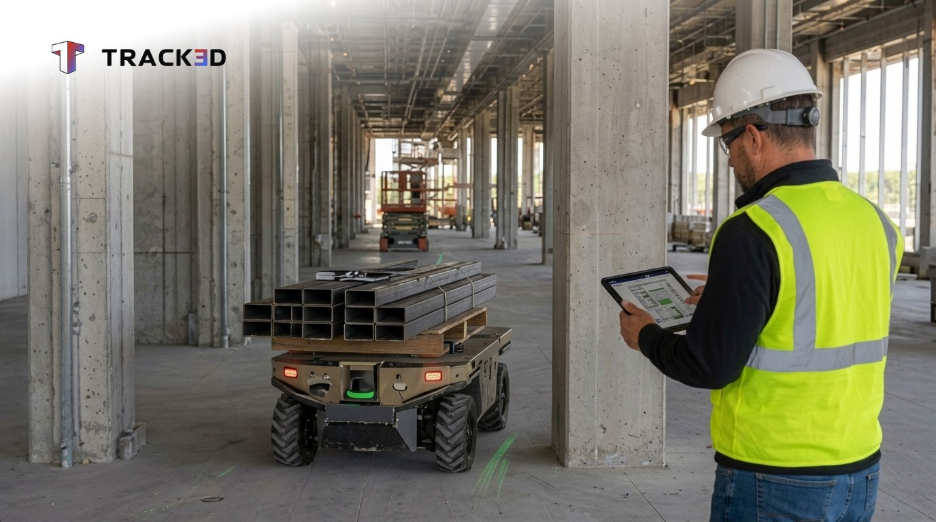
Autonomous construction robots remove the need for a human to steer the unit. A supervisor sets a destination. The robot plans its own path using cameras, lidar, or both.
This matters most on large or congested sites. A load might travel a few hundred meters past scaffolding and moving crews. An autonomous unit can pause or reroute the moment it detects an obstacle.
The tradeoff is setup time. These systems need an accurate site map before daily use. Sites that change layout weekly, such as early foundation work, see less benefit from full autonomy. Sites with a fixed floor plate benefit more.
Autonomous robots change construction through consistency more than raw speed. They repeat the same route at the same pace every time. That makes planning far easier for site supervisors.
How Construction Robots Are Used On Site
- Lifting and transport robots move materials like blocks, panels, or tools between staging areas and work zones. They often run the same route dozens of times a shift.
- Layout and marking robots use pre-loaded digital plans to mark exact points on a slab. This cuts layout errors that would otherwise surface much later in the build.
- Bricklaying and finishing robots handle repetitive placement tasks at a steady pace. Output does not slow down as a shift wears on.
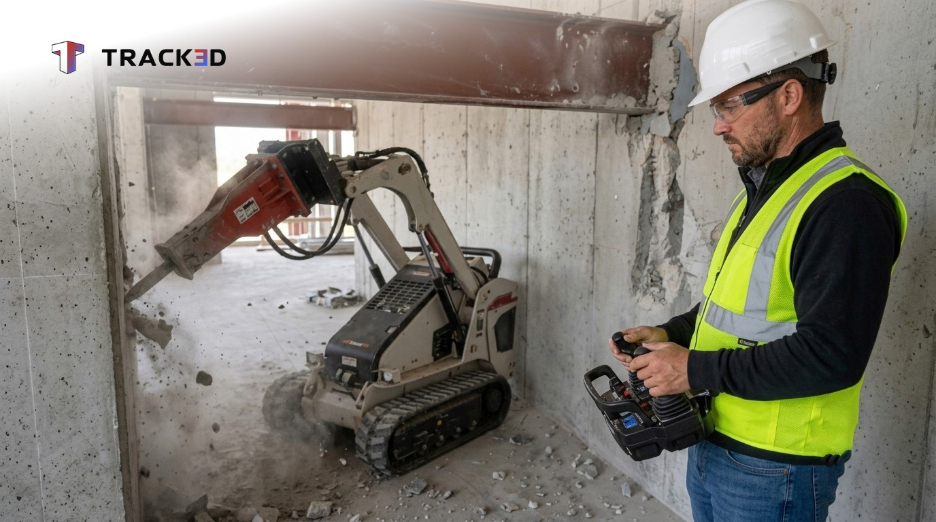
- Demolition robots operate in tight or unstable spaces where sending a person in would be risky. Yes, they are already in active use for selective demolition in structurally uncertain buildings. Some models can remove concrete in tight spots that would otherwise need manual jackhammering.
- Rebar tying robots move along a grid. They tie joints faster and more consistently than a manual crew working the same span.
Most crews start small. They assign one robot to one repetitive task, like moving pallets from a laydown yard to a floor. The rest of the site runs as usual.
That narrow start makes it easy to measure whether the robot actually saves time. Then the team can expand its role to a second or third task.
Construction Site Automation: Benefits And Tradeoffs
Construction site automation tends to deliver value in a few consistent ways. Fewer manual lifting injuries show up in reduced lost-time claims. Task timing gets more predictable, since a robot’s output stays steady from the first hour of a shift to the last.
How much money robots save construction companies varies widely by task and region. Treat any published figure as an estimate, not a guarantee.
The tradeoffs are real too. Robots are a capital cost. They need a structured site to navigate well. That can be harder on early-stage sites, where layouts change daily.
A robot moving material only helps if that material ends up in the right place at the right stage of the build. That is why teams need to check the lifting side of automation against what is actually happening on the ground.
Choosing Between Construction Robot Types
A few practical distinctions matter when choosing a robot type.
- Fixed-path robots cost less. They need the route redrawn whenever the layout shifts. Fully autonomous units cost more upfront, but they adapt to a changing site on their own.
- A single-task robot tends to be more reliable at its one job. A general-purpose unit covering several tasks at once is less consistent.
- Leasing suits a shorter project or a first trial run. Ownership makes more sense once a task has been proven across multiple sites.
- Sensors that work well on a flat interior slab do not always hold up in mud, rain, or uneven outdoor grading.
How Teams Actually Verify Whether Robots Are Working
Most of the case for robotics on a site still rests on assumption. The robot looks busy, so it must be helping.
Confirming that requires knowing what the robot actually installed, moved, or placed. Teams compare that against what the schedule called for. That data has historically come from manual site walks, reconciled days later.
Reality Intelligence platforms like Track3D close that gap. Track3D’s Progress Track shows teams whether a robot’s output matches the plan. No one needs to wait on a manual walk-through. That turns a lifting robot from a standalone gadget into a verified part of the build process.
Common Mistakes Teams Make With Construction Robots
A few mistakes show up often.
- Buying for the wrong site condition, such as a fixed-path robot on a site where the layout changes weekly.
- Skipping a way to verify the investment. That turns the equipment into an unverified line item rather than a measurable improvement.
- Automating too broad a task too soon, instead of proving value on one narrow job first.
- Ignoring the sensor environment. Dust or poor lighting can quietly degrade navigation accuracy. Teams often do not notice until the robot is already deployed.
Want To See What Your Site Is Actually Building?
Robots move materials fast. Whether that speed turns into real progress is a separate question. Reality Intelligence is built to answer it.
Talk to the Track3D team about how Progress Track fits alongside your automation investment.
Frequently Asked Questions
Will construction workers be replaced by robots?
Not in the near term. Construction robots take on specific, physically demanding tasks like lifting and placement. Supervision, problem solving, and coordination on site still need experienced people.
Will robots replace construction workers eventually?
Most estimates point to robots handling more narrow, repetitive tasks over time. Full job replacement is unlikely, since construction sites are too variable for full automation today.
How are robots used in construction?
Common uses include material lifting and transport, layout marking, bricklaying, rebar tying, and demolition in unstable spaces.
How do you use construction robots effectively?
If you are wondering how to use construction robots, start with a well-mapped, structured area of the site. Define a narrow task for the robot. Track the output against the plan so you can measure the investment.
Are demolition robots being used in construction yet?
Yes. They are an established category of construction robotics. Teams typically use them for selective demolition in tight or structurally uncertain spaces where sending in a person would be risky.
How much money do robots save construction companies?
Savings vary by task and site. Treat any published figures as estimates. The most consistent gains tend to come from fewer lifting injuries and less time spent on repetitive material handling.