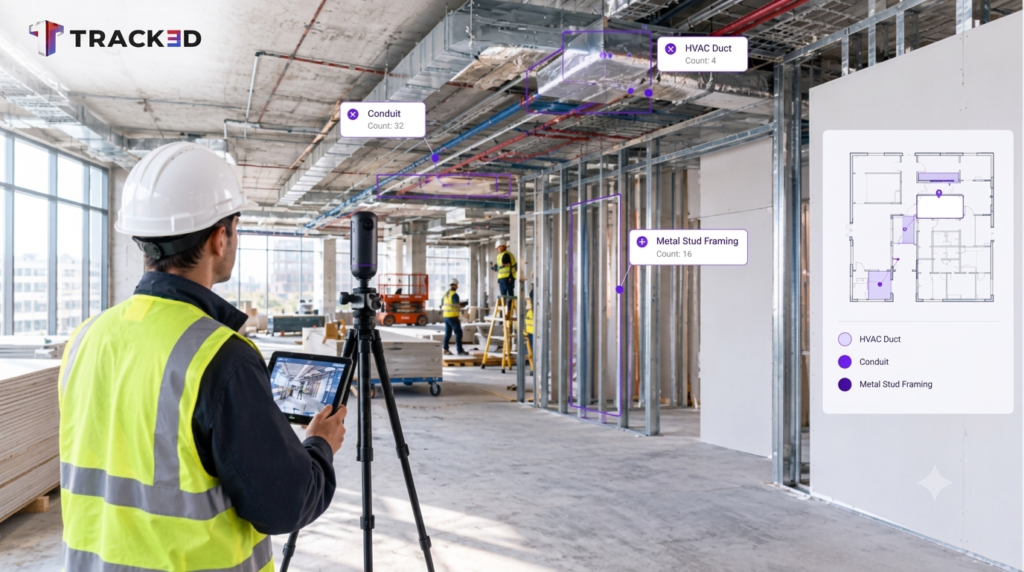
On Thursday afternoon, a PM needs a progress number for the owner meeting the next morning. The latest report is five days old. Three trades have worked since then. No one can say how much they installed.
AI construction progress tracking closes that gap. It reads site capture and measures installed work against the plan. It then shows project progress, including what crews have completed, what remains, and where work is slipping.
AI is changing how construction sites track progress. Construction Progress Tracking shows what AI saves your team, who it benefits and how it works on a real project.
How Is AI Changing Construction Progress Tracking?
For years, tracking progress meant walking the site. Field engineers photographed each floor and wrote up notes. They sent those notes to the PM. The PM merged them into a weekly report. By the time the report landed, the site had already changed.
This approach worked on small job sites. On a mid-rise with twenty trades across ten floors, it broke down. Twenty areas needed checking, and one person could cover only a few. Reports arrived late. Meetings then turned into debates over whose numbers were right.
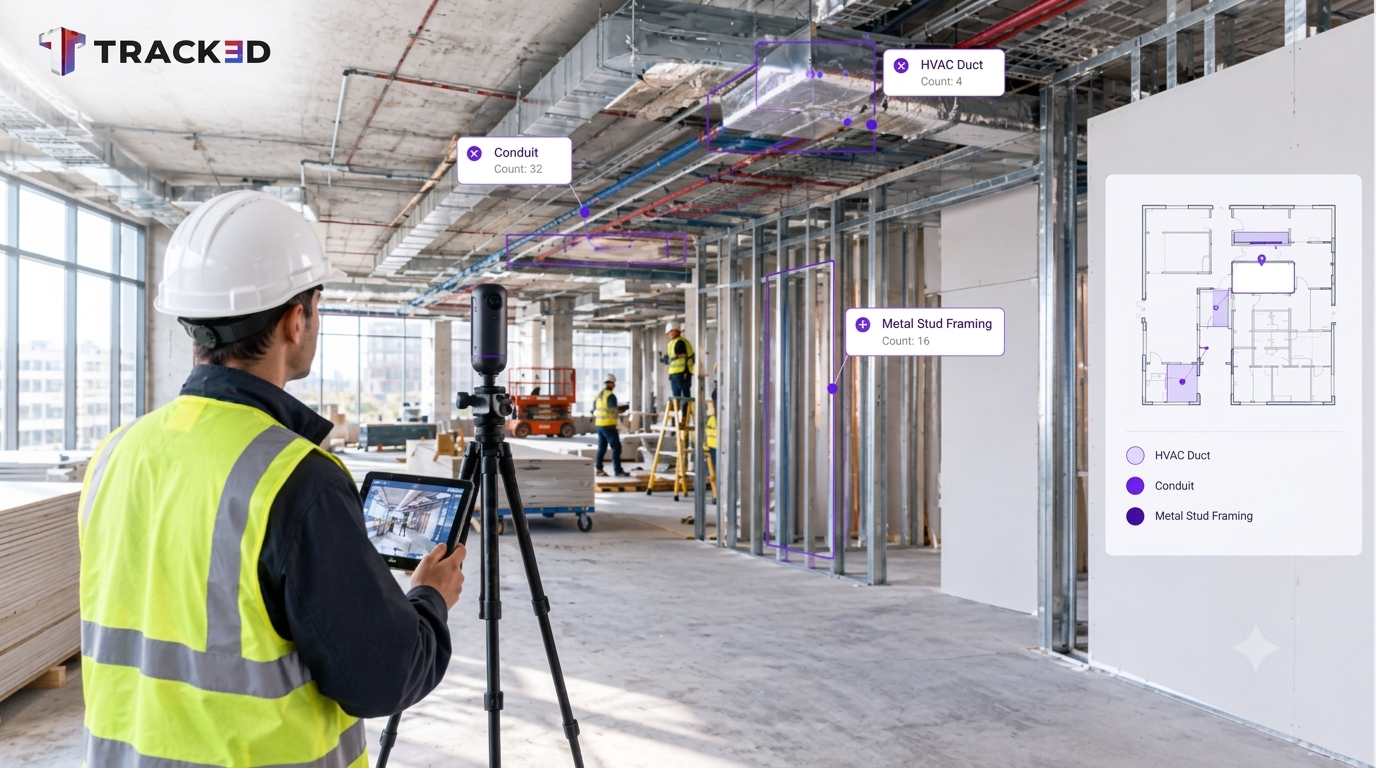
Several changes have reshaped this routine. A 360-degree camera, a drone, or a LiDAR phone now records a floor in one pass. Data collection happens during the walk teams already do.
Computer vision then identifies installed elements in the footage and counts them. The platform checks each count against the plan. Team members get current numbers within hours instead of days.
Construction progress tracking software has existed for years. Most of it still depends on a person entering a percentage by hand.
Why Does AI Matter for Construction Costs?
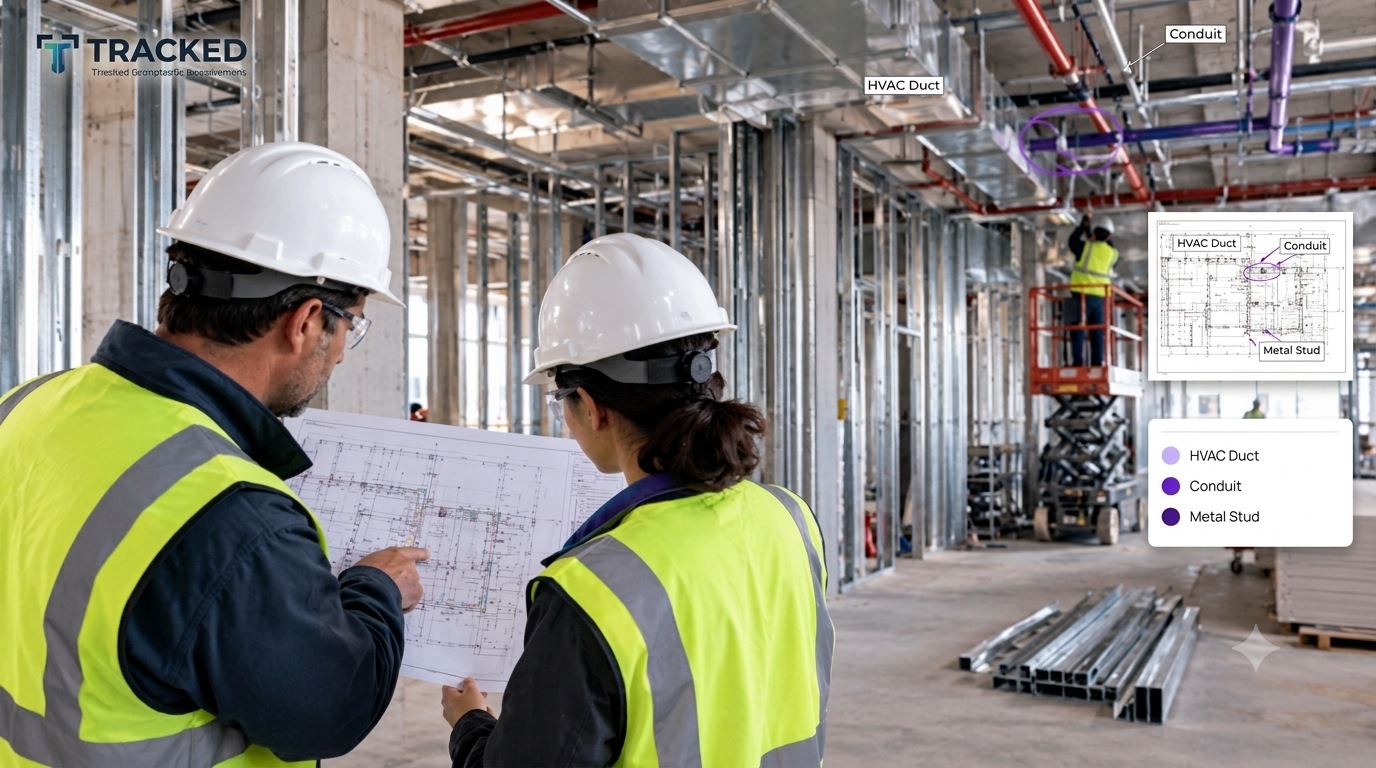
Margins in construction are thin. The industry’s net margin sits near 6.3%, among the lowest of any major U.S. sector. Studies summarized in PlanRadar’s rework review put average rework near 5% of project cost. The Construction Industry Institute reports a range of 2% to 20%. PlanRadar notes that even the low end can erase most of a contractor’s margin on a typical job.
What causes that rework? Frequently, information arrives late or not at all. A PlanGrid and FMI study put the 2018 cost at more than $177 billion. That figure covers rework, miscommunication, and poor data in U.S. construction. PlanRadar’s review traces 26% of rework to miscommunication and 22% to bad data.
Rework that nobody measures also gets absorbed into the budget. PlanRadar cites a 2026 study in the ASCE Journal of Construction Engineering and Management. It found that contractors under-reported field rework costs by around 300%.
AI addresses this gap by measuring the facts that project teams need every week:
- Percent complete by trade, level, and zone, which supports the schedule of values on a pay app
- Quantities installed against the plan, such as square feet of drywall hung or linear feet of conduit run
- Installation rates over time, which show whether a crew can still finish by its planned date
- Variance from the schedule, activity by activity
- Status of each trade handoff, zone by zone
Each measure answers a cost question. The team learns whether a trade is ahead of schedule and whether the next crew can start. Correcting a misaligned wall before crews hang drywall takes a few hours. Correcting it after crews install finishes requires a teardown. This habit also supports quality control, because the platform checks each captured element against the plan.
How Does AI Help Each Person on the Project?
AI construction progress tracking helps each role on construction teams in a different way.
Field teams feel the change first. Field engineers keep the same walkthrough. They stop writing reports by hand. Capturing three floors before lunch leaves the afternoon free for other work. Supers also get a clear signal when a zone is ready for the next trade. They no longer walk back up to check.
PMs no longer assemble reports from photos and text messages. The record arrives sorted by trade and location. Pay app reviews then rely on measured quantities.
GCs view every project against its schedule in one place. They spot a slipping job before the owner asks. They also hold trade partners to measured numbers.
Owners get an objective record of progress. They approve payments with proof. They also see risk building across a portfolio early enough to ask questions.
How Widely Is AI Used in Construction Today?
Survey results look encouraging. Surveys define “using AI” differently, so the percentages give only a general direction.
CMiC and Dodge Construction Network surveyed more than 6,000 companies. In that survey, 87% of contractors said AI will have a meaningful impact on construction. Only 40% had set aside a dedicated AI budget, and 51% were actively evaluating changes.
Bluebeam’s 2026 Building the Future report surveyed more than 1,000 AEC professionals. It found that 95% of early adopters use AI frequently across the building lifecycle. Data security concerns and skills gaps still limit wider adoption.
Mastt’s 2026 survey reached 108 construction project management professionals. Reporting led the list, with 84% naming it as the task where AI could add the most value. Accuracy and trust ranked as the top barrier, named by 29.6%. Cost ranked near the bottom at 3.7%.
Trust in accuracy shapes how teams should start. Measurements that trace back to a specific floor and date are easier to verify than a summary.
Progress tracking is a practical starting point because it builds on capture methods construction teams already use. We recommend starting with one project and one measure, such as pay app support or handoff status. A steady weekly capture cadence works well. Compare the results with your current process.
When you evaluate AI construction progress tracking platforms, four questions matter most:
Does the platform accept the cameras and drones your teams already own?
Does it deliver percent complete and installed quantities, or only imagery to review?
Does installed work map to your schedule activities?
Can owners, GCs, and trade partners each open the view they need?
What Loose Ends Does AI Tie Up?
Payment and trade handoffs are the two loose ends that cost project teams the most time.
A pay app needs proof of completed work. Without a current record, the PM verifies it through site visits. These visits often take three to four hours of walking and photographing. Estimates fill whatever the visits miss.
Disputes then delay payment.
Suppose a trade partner bills drywall at 70% complete. The PM and the field lead walk three floors to check. The trade partner still disputes the number. With AI tracking, installed quantities carry a time stamp and a location. The PM compares the billed 70% against captured quantities, line by line against the schedule of values. The PM approves matching lines in minutes. Lines that do not match go back to the trade partner with a specific floor and date attached.
Trade handoffs create a similar problem. The next crew needs to know the last crew has finished. Without a reliable signal, a super walks the site to confirm. Sometimes the next trade starts early and covers incomplete work. That sets up rework. AI reports status by zone and trade, so the signal arrives without a site walk. Construction status tracking links both problems, because the record that backs a pay app also tells a crew when to start.
How Does Reality Intelligence Use AI to Deliver Results?
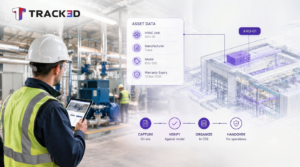
Reality Intelligence sits on top of Reality Capture and turns the captured record into measured progress. Track3D’s platform works in three steps:
- Field teams capture the site with 360-degree cameras, drones, laser scanners, or LiDAR-enabled phones. Insta360 cameras are one example. Their existing workflow does not change.
- AI object recognition and classification identifies installed elements such as framing, drywall, and MEP rough-in. It measures them against the plan. Each result keeps its location and time stamp, so any number traces back to a specific floor and date. Teams can start without a coordinated BIM model.
- The platform reports percent complete by trade, quantities in place, and variance from schedule. Visual data returns in as little as 30 minutes. Progress data returns in as little as 6 hours.
Hensel Phelps used this approach on its SFO aviation project. Field engineers kept the same 360-degree capture routine, so the change happened after capture. Rework costs dropped 20% from baseline. On-time schedule completion improved 12%. Progress quantification for pay application support took 30 to 45 minutes. A typical manual review takes 3 to 4 hours. The team identified issues within 1 to 2 days of a trend emerging. The earlier routine found them 2 to 3 weeks after problems began.
A company announcement also reports $342,000 in labor savings and 2,964 hours saved on manual progress tracking for the same project. Results vary from project to project. These figures come from Track3D case data on that single deployment.
What Do Schedule Alerts Deliver?
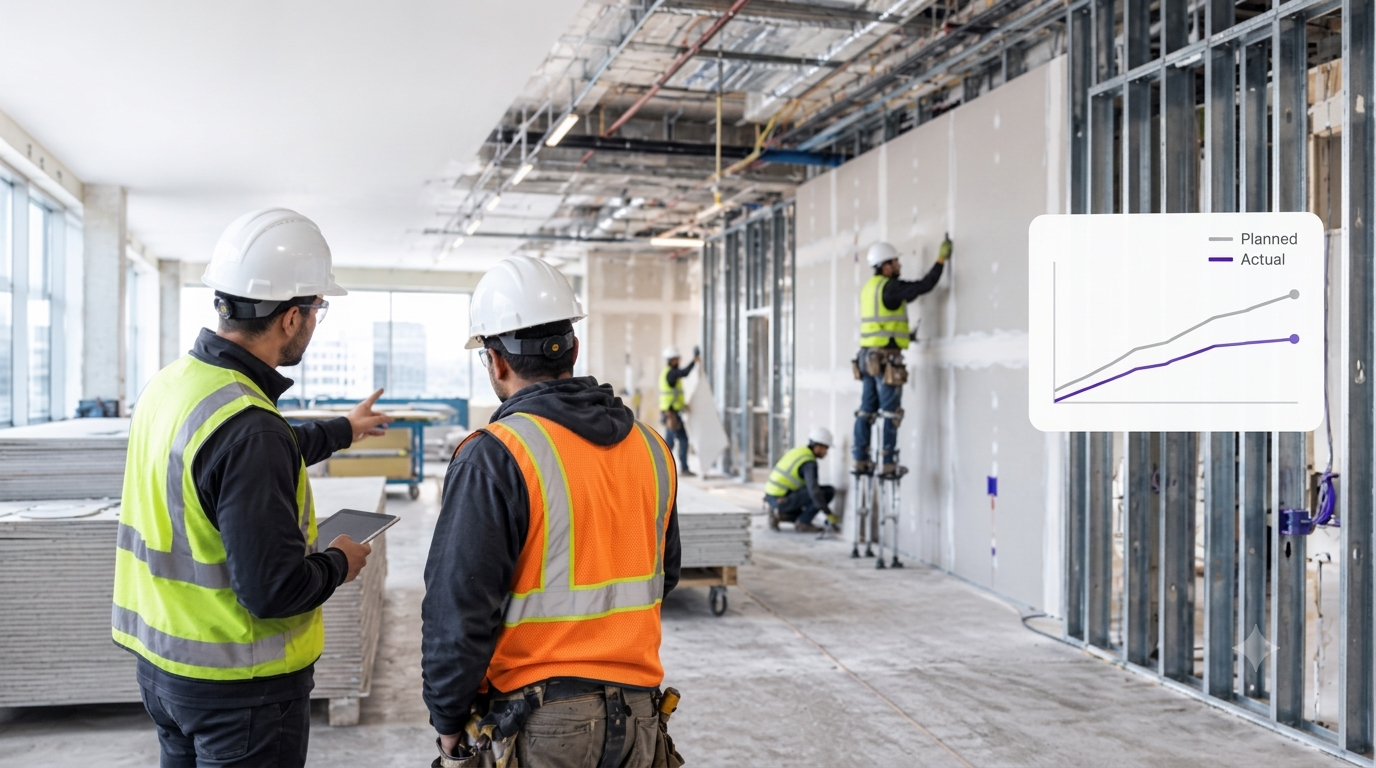
Schedule alerts turn measured progress into early warning. The platform compares installed work with the planned schedule. When a trade falls behind, the record flags it. The team sees the gap while time remains to act.
Imagine a drywall crew hanging board at 30% below the planned rate for two weeks. A weekly report may call that normal variation. A measured trend compares the installation rate with the rate the schedule assumed. It flags the gap within days. The PM can add a crew or resequence the work. The super adjusts the three-week lookahead. The trades that follow keep their start dates.
The business value appears in four places. Rework falls because problems surface before the next trade builds over them. Recovery plans start earlier, so delays stay small. Teams avoid some of the extended general conditions and overtime that late recoveries require. Owners hear about risk from the project team first.
Quantified slippage also gives the PM evidence for a difficult conversation with a trade partner.
See AI Progress Tracking on Your Own Site
The fastest way to judge any of this is to see it on your own captures. Book an AI construction monitoring software demo with Track3D to watch a real floor become measured progress.
Frequently Asked Questions
What is AI construction progress tracking?
It uses AI, mainly computer vision, to measure installed work from site capture. The system compares that work with the plan and reports percent complete, quantities in place, and schedule variance.
How does it differ from software that needs manual updates?
Manual software depends on someone entering a percentage. AI tracking derives that percentage from measurements taken at the site.
Do field teams need new hardware?
Not necessarily. A hardware-agnostic platform accepts 360-degree cameras, drones, laser scanners, and LiDAR phones. Teams keep the capture method they already use.
Does it require a BIM model?
It depends on the platform. Some need a fully coordinated model before they can compare anything. Others measure installed work directly from capture and drawings, so teams can start earlier.
How quickly do teams see results?
Ask each vendor for the time from capture to report. Request one figure for visual data and another for progress data. The longer of the two sets how current your decisions can be.