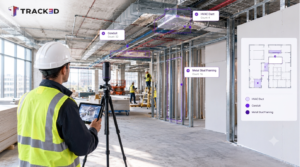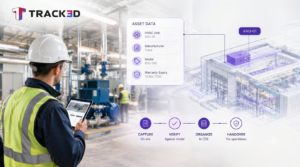
Visual Construction monitoring refers to the collection of data related to project progress, site conditions, and activity through the use of innovative technologies, including drones, 360 cameras, video cameras, and other tools for reality capture. In view of the changing character of construction sites, where materials keep being installed at the site and new working conditions occur, communication and project visibility tend to be poor when reports or occasional inspections are used.
In addition to continuous collection of visual data related to the construction site, visual monitoring makes it possible to have a searchable record that may be accessed remotely by all stakeholders involved. The main benefits include improved progress tracking, site monitoring, collaboration, quality assurance, and decision-making.
Key Takeaways
- Visual monitoring gives real-time visibility into construction progress without needing constant site visits.
- Teams can verify completed work, detect delays early, and reduce costly rework.
- Visual documentation creates an unbiased project record that helps with reporting, communication, and dispute resolution.
- Stakeholders such as owners, contractors, and project managers can monitor sites remotely using photos, videos, and digital models.
In this guide, you’ll learn what visual construction monitoring technologies are and how they help track work on construction sites. We’ll explain how tools like cameras, drones, and 360° scans capture site conditions and create a clear visual record of progress. You’ll also see how these technologies help teams monitor work remotely, catch issues early, and reduce delays, rework, and disputes during a project.
What is Visual Construction Monitoring
Visual construction monitoring refers to the continuous process of taking photos and recording visual information about the construction site through the use of various visual techniques, including the use of drones, 360-degree cameras, laser scanning, crane cameras, and thermal cameras. The objective of the above process is to provide an authentic visual representation of what is happening during the construction process on the site.
Instead of relying on written documentation, physical inspection of sites, or verbal updates from contractors, visual construction monitoring enables project managers to have firsthand access to visuals of what is happening on site.
Common tools are:
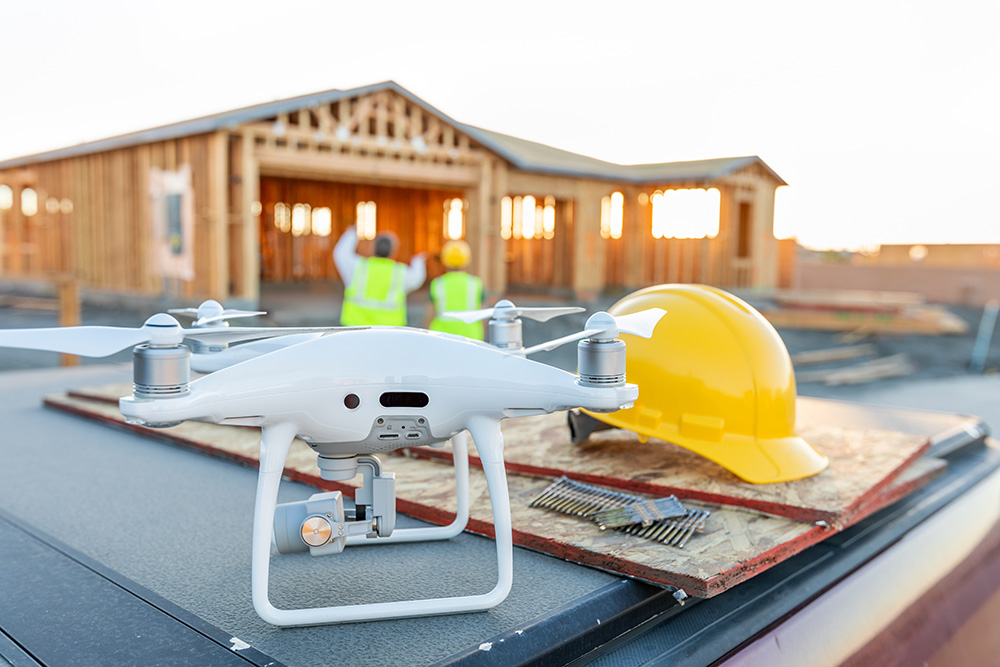
Drones
Drones are an excellent tool. Why? They give the crew a view of the site from angles that are otherwise impossible. They can be used right away and the existing working crew is not disturbed at all.
Areas where drones are of help:
→ Monitoring the development of huge sites or sites that are far apart
→ Providing clear visuals of roofs, facades, towers or places which are unsafe
→ Producing accurate maps of the site through aerial photographs
360-degree Cameras
360-degree cameras capture entire rooms, corridors, and interior areas in a single go. And it lets people “tour” the site afterwards on their computers.
Reasons why teams depend on 360° takes:
→ Team members get to see the project remotely
→ Fast and uniform documentation of daily or weekly progress made
→ Outstanding closeout package supported by a complete visual history
→ Disputes are less frequent as everyone knows when the installation was done
→ A good closeout package supported by the complete visual history
Laser Scanners/ LiDAR
Laser scanners are the tools to use whenever precision is needed. Wondering how they work? It emits extremely short light pulses and records the time taken for each pulse to return. Then move on to produce a very precise 3D representation of the location.
The major contributions of laser scanning are as follows:
→ Finding out clashes of MEP, structural, and architectural systems
→ Continuing to monitor deviations at an early stage rather than during handover
→ Rework caused by guesswork or visual assumptions is eliminated.
Crane Cameras
These are cameras mounted on cranes that go along with the operator. It gives an unfiltered natural view from the top of the site. They are operating all the time, with no one having to bother who schedules or operates them.
In busy jobs with continuous movement, this constant overhead view turns out to be priceless.
Crane Cameras as support for project team:
→ Visually logging daily material movements and site activities, by the way of automation
→ Getting instant access to the areas where work is going on and is crowded
→ Identifying clearly the safety issues around the way of the crane
These tools are not as complicated as they sound. For example, a drone flight takes less than fifteen minutes and can map the entire site.
Thermal imaging
Thermal Imaging cameras are quite effective. They detect heat differences and identify problems that are hard to find with the human eye.
The main uses of thermal imaging during construction :
→ Determining air leakage problems
→ Detecting leaks of water inside the walls or roofs
→ Localizing hot spots in electric circuitry which are caused by overloaded wires
Key Benefits of Visual Construction Monitoring Tech
Comprehensive Visibility Across the Jobsite
Visual technologies enable project managers and other team members to keep track of all the events on the construction site. This is important because with traditional monitoring methods, the project manager would get only piecemeal information, while now he or she will have complete visibility on exactly how each piece of work was done.
Improved Communication
The construction process is associated with constant interaction between all parties involved. The use of visual monitoring technologies simplifies communications since everyone will see the same visuals. Pictures, videos, drone photography, and 3D modeling can greatly increase transparency and prevent any possible misunderstanding caused by written or verbal instructions.
Unbiased Documentation for Owners and Inspectors
Visual monitoring provides an objective record of the project timeline, which can be checked at any point in the process. The owner gains more visibility of the progress on the site without having to come there often, and inspection can be carried out quickly by the inspector.
Reduced Rework and Fewer Disputes
Many conflicts during construction are based on conflicting opinions regarding which tasks were completed, their timely execution, and compliance with project requirements in general. Visual documentation of site activity provides a solid base for solving disputes quickly.
Faster Decision-Making
Stakeholders and managers can inspect the current state of the site online and approve required changes quickly. This way, the decision-making process becomes much faster, and there is no need to wait for additional paperwork from the site.
Improved Safety Monitoring
There are numerous options for monitoring the safety of site operations using different technologies. For example, drones, camera systems for cranes, and remote walkthroughs of the site can help identify potential safety concerns without having personnel involved.
Challenges These Tools Solve
Everybody working on a jobsite is well aware of this feeling…
When information gets lost and you’re wondering what to do next.
For instance, the drywall crew wanted to close the wall. But the mechanical team said they had already finished the installation. The inspector, however, claims he never saw it. The owner demands confirmation. The wall is to be closed today, but it is still not clear to anyone if it is safe to go ahead.
Previously, this scenario would have meant-
– reopening the wall,
– calling the inspector again
This means other trades getting delayed, and all the costs of extra labor being incurred.
However, if the team had a 360-degree walkthrough from that previous week, things would be different. How? They could simply check the scan and see whether everything was finished.
These moments are very common. And they continuously exert pressure on project schedules and budgets. On the other hand, visual monitoring does not eliminate every single problem. But it will avoid a good number of the mysteries that lead to project slowdowns.
How to Integrate Visual Monitoring Without Disruption
The transition to visual monitoring can indeed be an overwhelming change. Though it is possible not to feel so. How? Normally, the teams go for a small start which is very much in line with the idea of a weekly 360-degree walkthrough. This can be incorporated into the daily routine of a site walk, yet the outcome is much more beneficial.
The project team is not left with random photos anymore. They have a full visual record available for them to reference any time. Sometimes this very simple step serves as the turning point.
For instance, a superintendent shows the video during the morning meeting to verify what was done the day before. A project engineer would rather do that in an update meeting than running around looking for pictures.
Trade partners can even watch it beforehand so that they know exactly what is going on when they get there.
A drone might be operated for the view from outside of the building. A laser scan might be used for precise measurement during the installation of critical areas.
All of this does not interrupt the workflow. Why so? These devices do not require the team to change their way of working.
That is how the process of adoption really works. It is not via extensive rollouts. But rather by means of small routines that each day gradually make the work a little easier.
Reasons Why the Construction Teams Prefer Visual Monitoring
Construction teams are sometimes forced to use new technologies. That too without their daily challenges being considered.
What makes visual monitoring different? It comes with the solution to a problem that nearly everyone experiences: uncertainty.
A superintendent will not need to spend his morning moving from floor to floor confirming status. A project engineer could provide an owner with progress information confidently. A subcontractor could plead for his work. Because there is photo evidence that shows exactly what he did and when.
It reduces tension and eliminates conflict. And fosters trust between people and the information that they are receiving. The most significant thing is that it lets the whole project narrative remain intact.
Final Thoughts
Construction monitoring has transformed. It’s no more a mere documentation process with notes, spreadsheets and snapshots. Rather, it’s now a full-scale visual monitoring of the site.
And because of this, the entire process of decision-making has become easier. How?
- The teams are able to see the actual progress instead of making assumptions.
- They will be able to share information better.
- This helps in avoiding misunderstandings that will cost them money.
- The outcome is timely, according to the project schedule.
This is why visual monitoring is an indispensable tool in the construction industry, where time and clarity are the most important factors.