One of the most common issues that construction teams face is disputes of “he said, she said.” Teams often don’t have a comprehensive account of everything that happened, and even if they do, it’s often incomplete or based on memory recollections. But for a field as dynamic as construction, you need information that’s comprehensive, contextual, and, most importantly, instant. Real-time construction data does just that. It helps in creating a complete digital archive, provides extra context, and assists teams in making better decisions.
In this guide, we look at what real-time construction data entails, how it affects daily work, and the tool and tech that supplements it. Do you think it will be helpful for your team? Continue reading to find out!
Key Takeaways
- Real-time construction data gives teams instant visibility into site conditions, progress, safety, and coordination issues.
- Real-time data reduces delays, rework, and disputes by shortening the time gap between issue detection and response.
- The biggest sources of real-time data are IoT sensors, mobile reporting apps, 360° site capture, BIM integrations, and Reality Intelligence platforms.
- Different project phases generate different types of real-time data.
- Timestamped visual records and structured data create stronger, legally defensible evidence during claims and disputes.
What Is Real-Time Construction Data?
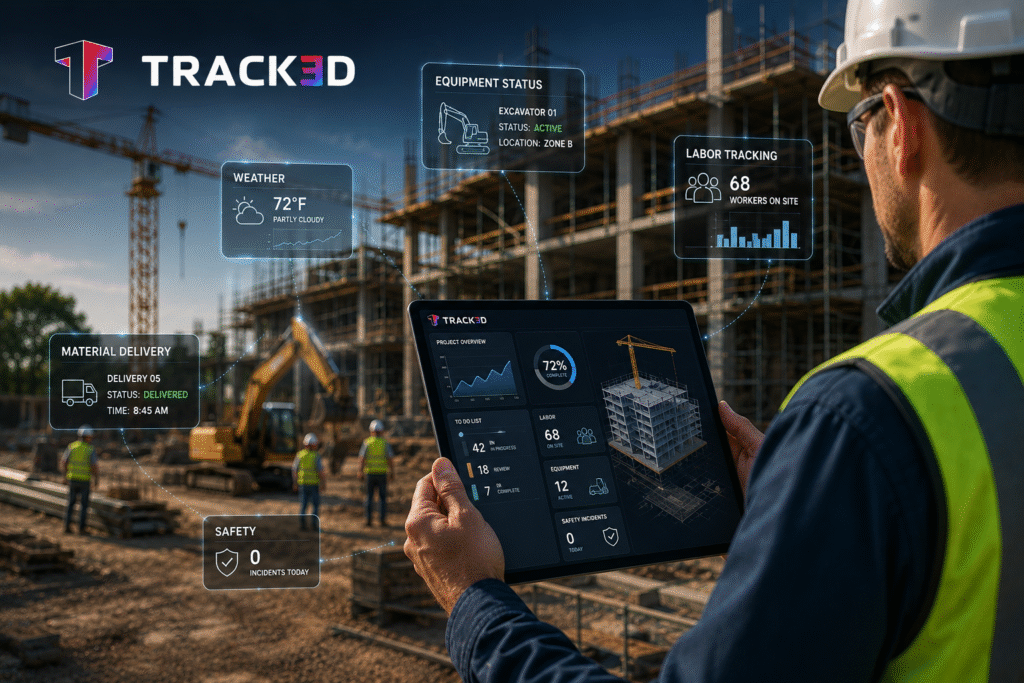
Real-time construction data includes all important information regarding the jobsite that reaches the stakeholders as soon as possible. It provides teams with complete visibility and transparency on the field. Moreover, real-time construction data also enables better decision-making.
The value of real-time reporting depends on reliable inputs. Accurate site data also improves project-control metrics by grounding progress and cost decisions in verified field conditions.
The five sources of real-time site dataare IoT sensors and wearables; mobile field reporting apps; 360° site walkthroughs and reality capture; BIM and program integration; and Reality Intelligence platforms. We discuss these sources and how they supplement real-time construction data as powerful tools in one of the later sections.
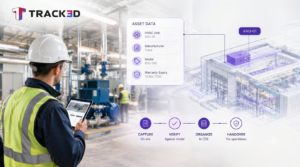
Real-Time Construction Data: By Phase
In this section, we look at how real-time construction data differs by phase. This is important because the type of data generated affects how each stage is managed and monitored. If you neglect its value in separate phases, you’ll miss most of its benefits.
| Phase | Key Data |
| Preconstruction: The data generated here creates the reference point against which all future progress is measured. | Existing condition surveys, baseline site photographs, and program baselines. |
| Active Construction: The highest-frequency phase. | A consistent construction daily report converts these field observations into a same-day record that the wider project team can review and act on. |
| Commissioning | Data shifts toward defect identification, system testing, verification, and construction punch list status. |
| Handover | The final condition documentation and as-built verification. |
A complete real-time visual record accumulated across the project creates a more valuable handover package than one assembled at the last minute.
Why Does Real-Time Construction Matter?
According to the McKinsey Global Institute, large construction projects typically run 20% over schedule and up to 80% over budget, which is largely due to incomplete or delayed information. Real-time construction data has the potential to close this gap. By employing it in your everyday workflow, you’ll gain the following advantages:
- Real-time construction data compresses the gap between event and response, thereby preventing small issues from turning into expensive problems.
- It creates a comprehensive, legally defensible project record that holds up under claim and dispute protection.
- This data also enables complete, distributed oversight without requiring physical site visits.
- Lastly, it surfaces patterns across projects that improve cost estimation and risk management in future projects.
When verified progress is connected to construction scheduling and planning, teams can compare what was planned with what is actually happening and respond to variance sooner.
To take it a step further, here are a few practical applications of real-time construction data:
- Real-time data compresses the gap between event and response. How? Consider a coordination conflict that is discovered on the same day it occurs. Now it’s quickly solvable and a simple conversation. If it’s discovered after the ceiling is closed, it becomes a claims item.
- Autodesk and FMI research show that 48% of construction rework is caused by poor data and miscommunication. Structured real-time data helps teams make better decisions and reduces this percentage significantly.
- As the construction industry moves towards digitization, owners are expecting live progress visibility as a prequalification condition. Real-time data gives them complete visibility and absolute transparency at every stage of the project.
- Timestamped records hold significant credibility in disputes. Every data point captured in real-time becomes a potential piece of defensible evidence.
Common Mistakes While Using Real-Time Data in Construction
To ensure that you utilize real-time construction data to its fullest, here are some mistakes that you should avoid:
| Mistake | Description | Fix |
| Capturing data nobody acts on. | If the tools are capturing a lot of data that nobody is using, it’s an expensive failure to deal with. | Standardize and define what data each data stream is meant to capture and work on before deploying the tech. |
| Neglecting visual site data. | The visual intelligence layer is as important as “paperwork” documentation. Unfortunately, most teams and strategies ignore it completely. | Include 360-degree structured reality capture and visual intelligence from the beginning of the project. |
| No integration between data sources. | If captures of different stages are stored in different locations, they need to be connected to create a complete picture. | Understand map integration requirements and ensure that you have them before tool selection. |
| Retrospective reporting disguised as real-time. | If reports are still being filled into the system at the end of the week, they hold little to no credibility as a comprehensive real-time record. | Implement mobile-first reporting at the end of each shift, and ensure that everyone inputs their updates routinely. |
| No field champion. | Tech rollouts without a site supervisor face significant challenges and produce low-quality data. | Appoint a field champion before going live. |
Tools and Technology for Real-Time Construction Data
Some of the best tools and technology that will help you build a system of real-time construction data are listed here:
- IoT sensors, wearables, and connected equipment: Sensors capture equipment status, fuel consumption, idle time, and location in real time. Wearables capture worker safety data, including proximity alerts, environmental conditions, and incident detection.
- Mobile field reporting platforms: These are apps that guide site supervisors through structured daily reports that are timestamped at submission, weather-logged automatically, and synced to a central project record. Common examples include Raken, Fieldwire, and Procore Field Reports.
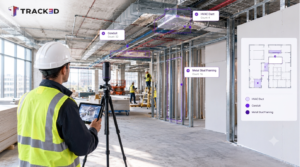
- 360° site capture and visual intelligence: A 360-degree walkthrough produces a navigable record of site conditions on a specific date. Reality Intelligence converts visual site records into searchable project information, helping teams surface progress gaps and deviations instead of relying on manual review alone.
- BIM and program integration: Through program integration, you can close the loop between what is planned and what is actually happening on the jobsite.
When Is Real-Time Data Infrastructure Not a Good Investment?
Although real-time construction data has loads of benefits, it also comes with a few minor tradeoffs. For instance:
- Remote sites and high-rise cores that have poor signal create sync challenges. These defeat the main purpose of real-time data integration.
- All crew members must follow the same naming conventions. Communication gaps in these systems create more management problems.
- Change and new processes almost always face some resistance. This might also be the case while integrating new tools for real-time data integration.
- Collecting real-time data and creating dashboards that nobody uses won’t show the efficiency gains as effectively. Data needs to be structured and integrated such that it saves resources and helps decision-making.
Because of these tradeoffs, there are certain situations in which investing in real-time data construction might not be a smart decision. For starters, projects with a very small duration don’t necessarily need a full IoT and visual capture infrastructure. Standard daily logs are more than enough. Similarly, if teams don’t have the data governance capacity, that is, non-standardized naming conventions and unclear data ownership, these tools will only open a new can of worms. And lastly, when projects are low-risk and based on informal relationships, a formal setup of real-time data infrastructure may not be appropriate.
Conclusion
The implementation of real-time construction data into everyday workflow is the ultimate game-changer. Teams can make quicker decisions, experience 100% transparency, and access all information remotely with complete visibility. It eliminates the small window between an event happening and the details coming up and stops it from becoming a big problem.
For most mid-to-large construction projects, the investment of these tools is justified and mandatory as we move towards more digitization in the field of construction. Real-time data is only the first step towards it.
Track3D helps construction teams build the visual layer of their real-time data stack by turning 360° site walkthroughs into structured, searchable project intelligence through Reality Intelligence. Want to see how it works? Book a demo today!
FAQs
1. What is real-time construction data?
Real-time construction data includes live site information that is captured, processed, and made available as events occur. It covers labor, materials, equipment, safety, progress, and visual site conditions, enabling project teams to make decisions based on current site realities rather than delayed reports.
2. How is real-time construction data different from traditional site reporting?
Traditional reporting is periodic and retrospective, often relying on information compiled after events have occurred. Real-time construction data is captured at the moment activities happen, timestamped, and immediately accessible to stakeholders. This creates a more accurate and defensible project record than reports based on memory or delayed documentation.
3. What technologies capture real-time construction data on site?
Common technologies used to capture real-time construction data include IoT sensors, mobile field reporting applications, 360° site capture platforms, BIM integration tools, and Reality Intelligence systems. These technologies help collect, organize, and analyze site information as work progresses.
4. What is visual real-time construction data?
Visual real-time construction data refers to the live capture of site conditions through timestamped, location-pinned 360° imagery. When combined with Reality Intelligence platforms, this visual information can identify progress gaps, detect deviations, and automatically generate structured records, providing a comprehensive and defensible view of site conditions.
5. How does real-time construction data reduce disputes?
Real-time construction data creates a clear, verifiable record of site conditions and project activities. For example, a timestamped 360° walkthrough linked to a floor plan provides stronger evidence than handwritten notes or isolated photos without context. This detailed documentation helps establish facts, reduce ambiguity, and support claims resolution when disputes arise.