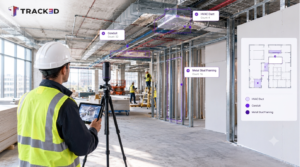

One of the most important tasks of managing a jobsite is maintaining a record of everyday chores. As a superintendent or project manager, keeping track of daily activities can be challenging, especially in a bustling workplace like a construction site. In such fixes, the best solution is a construction daily log. What may seem like tedious paperwork could potentially be the perfect tool for record-keeping.
Key Takeaways
- The daily report serves as the primary record of all the actions performed on the construction site.
- Reporting will help avoid misunderstandings and problems.
- All reports should contain weather, manpower, materials, machinery, safety, and progress reports.
- Immediate reporting with pictures ensures accuracy in recording.
- Electronic files ensure increased accessibility and searchability.
- Effective logs contribute to better forecasting and decision-making.
What Is a Construction Daily Log and Why It Matters
A construction daily log typically covers the finer details and everyday nitty-gritties of the construction site. As the chief manager, you’ll cover the who, what, when, and where of site activity. This may include weather, labor, materials, equipment usage, and any accidents.
A construction daily log might not seem absolutely necessary at first; however, this log will ultimately become your source of truth. These records are what will serve as receipts when you need to know what happened on the site last week, or whether everything is going according to plan. Moreover, in situations of conflicts, a construction daily log is your saviour.
Key Components of an Effective Daily Log
A self-sufficient construction daily log contains:
- Weather conditions
- Completed work and the respective stakeholder
- Worker headcount
- Labor hours
- Materials delivered or installed
- Equipment usage
- Site visitors
- Any inspections
- Safety observations
- Untoward incidents/accidents
- Photos or annotated visuals for more context
What Are You Missing in Your Daily Log?
If you’re missing any one of the details from the above list, your construction daily log will seem incomplete when you (or someone else) is going through it or trying to refer to the notes. It’s important to have all the information in one place.
Another common error is missing context. For instance, you might write “Drywall work ongoing” as an entry, but in the long run, you’ll realise that it doesn’t give any input on the progress or location of the work. Instead, try writing something like “Drywall hung on 2nd floor west wing, 80% work complete, minor damage noted in room 201.” This type of specification will not only help you but also assist your team in keeping track of what’s going on.
Common Challenges in Logging
Regardless of whether you’re working a desk job or a hands-on, onsite job, maintaining tedious paperwork can become a headache. On top of that, construction teams are always busy with plenty of work at hand. In such circumstances, filling and maintaining a construction daily log can pose challenges like:
- Incomplete or inconsistent entries
- Handwriting issues or lost paper logs
- Forgetting key events or misreporting timelines
How to combat these? Read on!
Best Practices for Field-Proof Daily Log
Industry research has proven that lousy documentation can actually lead to long-term hurdles in construction projects, like payment delays and resolution failures. This implies that an incomplete log might save a few minutes today, but it could potentially harm your project long term. Thus, it’s important to ensure consistency and clarity, if not absolute perfection. Here’s what you can do:
- Create and use a checklist to remind yourself of everything that needs to be covered.
- Make entries in real time, not just at the end of the day.
- Include annotated photos for more context. You can also geotag pictures.
- Don’t fluff your notes, but also don’t miss out important context.
- Standardize formatting across teams or trades.
The Shift Toward Digital: From Static PDFs to Living Jobsite Records
Along with paper logs and PDFs, today, there are other tools that can expedite the process of creating construction daily logs. To make your note-keeping more efficient and accurate, you can explore digital daily logs.
For instance, you can use mobile apps and site capture tools to document your entries with speed and accuracy. It gets as simple as snapping a photo, tagging it to a plan, recording labor by voice, and pushing ahead. These digital logs allow you to search, filter, and share your notes in a far more efficient way than you could ever achieve with paper logs.
How Can You Use Modern Logs To Support Your Work?
Once you start maintaining daily logs, you’ll realise certain patterns over time. Repeated delays in specific areas of work, trends of equipment downtime, or general productivity gaps among crew members will pop out right away when you spend time analyzing these logs. Thus, you can use these digital logs as sources of predictive insights. Long-term, you can use them for smarter resource planning, accurate forecasting, and better issue resolution.
How to Create and Maintain Daily Construction Logs
Keeping logs during construction work doesn’t have to be a challenge when you take the time to develop good habits.
1. Choose the Right Log Format
Always start with a template that will make your work easy. It must include information about the weather conditions, crew size, amount of work done, materials used, equipment, and safety.
2. Update in Real-Time
Avoid updating your log at the end of the day when possible. Update in real-time to avoid missing any important detail or getting an incorrect timeline.
3. Provide Descriptive Entries
Don’t make vague entries. Describe what happened and include location, progress level, and problems experienced during the day.
4. Use Visual Documentation
Take photos where necessary because visual documentation makes your logs more credible and gives you extra evidence.
5. List Workforce and Equipment
Record how many workers were on-site during construction and record equipment usage as well.
6. Highlight Delaying Factors
Include details of weather-related delays, safety challenges, or shortages of materials, among other important things.
7. Check Entries Before the End of the Day
Spend some time reviewing your entries to confirm that they are complete and correct.
8. File Your Log Records in an Efficient Way
This means that your log entries must be filed efficiently, whether in a digital or paper format.
Using these steps, you will transform your construction log record from a mere task to a project management tool.
Conclusion
With growing digitalization, more construction teams across the globe are adopting different types of record-keeping. Construction daily logs are a definite way of ensuring that you have solid data and numbers of your team and their work. Using digital logs and tools can create a pathway for you to make your process more streamlined and efficient. It’s not just documentation anymore; it’s a powerful tool that could help you emerge as a competent superintendent or project manager who understands the team’s everyday work and what the project needs.
See the advantage of comprehensive and unified site documentation with Track3D