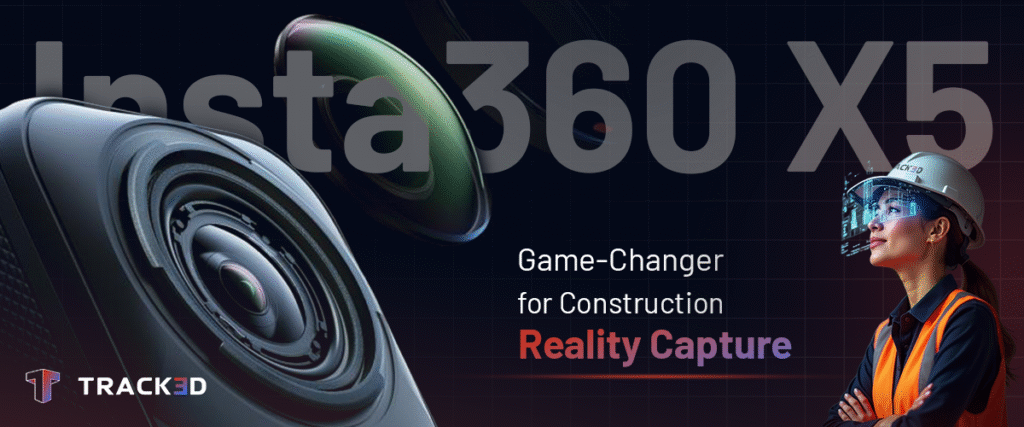
The buzz is real—the Insta360 X5 has officially launched, and it’s set to redefine how construction professionals capture and track progress. This isn’t just a camera, it’s a significant leap forward in field documentation and site intelligence.
With upgrades like dual 1/1.28” sensors, 8K video, jitter blur reduction, and a rugged, field-ready design, the X5 brings unmatched clarity, flexibility, and endurance to jobsite reality capture.
For a comprehensive guide on leveraging 360 capture technology in your documentation workflows, explore best practices and use cases.
Key Insta360 X5 Features for Construction Reality Capture
- Superior Image Quality & Low-Light Performance
The X5 boasts dual 1/1.28″ sensors, a significant upgrade from its predecessor, capturing 8K video at 30fps. The larger sensor size enhances light intake, resulting in clearer images with improved dynamic range, even in challenging lighting conditions.The PureVideo mode utilizes AI-driven noise reduction and dynamic range optimization to deliver vivid footage in low-light environments, ensuring no detail is missed during early morning or evening site inspections. - Enhanced Stability with Jitter Blur Reduction
Construction sites are dynamic, with constant movement and varying lighting conditions. The X5’s Jitter Blur Reduction feature addresses motion blur and stabilization issues in low-light settings, ensuring smooth and clear footage during walkthroughs and inspections. - Rugged Design with Replaceable Lenses
Understanding the demands of construction environments, the X5 is built with durability in mind. Its replaceable lens design allows for quick swaps in case of damage, minimizing downtime and maintenance costs. The camera’s robust build ensures it can withstand the rigors of daily site activities. - Extended Battery Life for Comprehensive Coverage
With a battery life of up to 185 minutes, the X5 enables extended recording sessions, capturing comprehensive site progress without frequent interruptions for charging.
How the Insta360 X5 Helps Construction Teams Capture Better Site Data
Integrating the Insta360 X5 into construction workflows offers:
- Accurate Progress Documentation: High-resolution footage ensures every detail is captured, facilitating precise progress tracking and reporting.
- Reduced Errors: Enhanced image clarity and stability minimize the chances of misinterpretation or oversight in documentation.
- Improved Communication: Clear visuals aid in better communication among stakeholders, streamlining decision-making processes.
- Cost and Time Efficiency: Durable design and extended battery life reduce equipment downtime and the need for repeated site visits.
Embrace the future of construction reality capture with the Insta360 X5. Its advanced features are designed to meet the unique challenges of construction environments, ensuring accurate, efficient, and reliable site documentation.
Better image quality from the X5 directly enables superior visual documentation, reducing interpretation errors and improving stakeholder communication.
Key Takeaways
- Construction site management is the day to day coordination of people, work, materials, and information on a project to make sure everything gets delivered safely, on time, and on budget.
- This process actually starts when we are planning and getting ready for the project long before anyone begins working on the site.
- Every kind of construction site is different whether it is for homes, offices, factories or hospitals, each one has its set of challenges and level of coordination required.
- A managed site needs a clear team structure, with the General Contractor, superintendent Project Manager, safety officer and trade leads all working together.
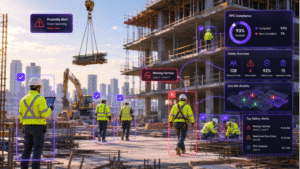
- The most common challenges are poor communication, labor shortages, scattered safety reporting, and no real time visibility into what is actually happening on site.
- When we do construction site management correctly it helps reduce delays, cuts down on wasted time, improves the quality of the work, makes the site safer and makes sure everyone is on the page.
What is Construction Site Management?
Construction site management is the day to day coordination of people, work, materials, and information on a construction project to make sure everything gets delivered safely, on time, and on budget. It covers everything from planning the work sequence and coordinating trades, to daily field oversight, progress tracking, quality control, and site safety.
And one more thing to know, Construction site management does not start when the first worker shows up on site. It actually begins during planning and pre-construction, when the sequences, schedules, and site logistics are all being set up, long before any physical work starts on the ground.
Why Does Construction Site Management Matter?
When we do construction site management right the whole project runs smoothly. Here is what good construction site management does for the project.
- It reduces project delays by scheduling trades in the order and ensuring clear handoffs.
- It cuts time and improves labor productivity by syncing labor schedules with material deliveries.
- It strengthens safety, on site by establishing zone boundaries, consistent safety routines and regular check-ins.
- It reduces rework. Improves quality by building quality checks into the workflow at right stages.
- It keeps everyone on the page by creating shared communication and common progress records.
- It gives your team visibility to make faster decisions by tracking progress based on real site data.
To maximize the value of your X5 footage on large-scale projects, follow established reality capture best practices for data organization and integration.
Types of Construction Site and Their Key Players
Types of Construction Sites
- Residential sites: These are single family homes, town homes and apartment buildings. The crew is smaller. Works fast. The foundation goes in first then framing, then MEP and finishes all need to happen in the order without stepping on each other.
- Commercial sites: These are for office buildings, shopping centers and mixed use towers. You have subcontractors, more complex MEP systems and sometimes you are building in a space where other parts of the building are already open. Coordination here is very important.
- Industrial and data center sites: These are for warehouses, manufacturing plants and data centers. The work is very technical. The equipment is heavy. One wrong move or a late delivery can delay an entire section of the build.
- Public works: These are for roads, bridges, rail lines and utilities. Most of this work happens outdoors in all kinds of weather. Safety and planning are crucial here.
- Healthcare and mission critical facilities: These are for hospitals, labs and cleanrooms. These sites are running while you are building. That means you have to work without disrupting patients or operations.
- Renovation and retrofit sites: These are for existing buildings being upgraded or expanded. The tricky part is you never fully know what is inside the walls until you open them up. Work happens in phases to keep the building functional.
Every type of site has the core goal, deliver the project safely on time and on budget. The problems and risks change significantly from one type to the next.
Key Roles in Construction Site Management
Behind every well managed site is a team of people with clear responsibilities. Here is who does what.
- General Contractor and Project Manager. The GC and PM are in charge. They manage the schedule, budget and coordination. They are also the point of contact for the owner and stakeholders.
- Superintendent. The superintendent is the leader on site. They handle the day to day operations, oversee sequencing and manage material flow.
- Subcontractors and trade leads. These are the crews handling concrete, structural steel, MEP and finishes. They manage their labor and materials but need to stay aligned with the overall site schedule.
- Safety officer. The safety officer enforces safety standards and conducts site inspections.
- Engineers and QA/QC leads. They make sure the work meets design, code, and performance requirements. They review submittals, conduct inspections.
- Estimators and planners. They build the schedule and cost plan before work starts. During construction they help manage changes and update budget and timeline assumptions.
- Owner’s project team. The owner or client rep sets priorities. Approves changes. Good site management keeps them updated on progress and issues.
Common Construction Site Management Challenges
Even experienced teams face challenges on every project. Here is what actually gets in the way.
- Communication breaks down between teams. The field crew, General Contractors, subcontractors, and office are all working from different information and that is where rework and delays start.
- Labor shortages put pressure on everyone. Smaller crews, less experienced workers, and tight schedules make it harder to keep quality and safety on site.
- Safety reporting is scattered. When safety records sit in paper checklists or separate tools, it is hard to spot real risks before something actually happens.
- Keeping the schedule on track is a daily battle. Weather, late material deliveries, and labor gaps push work off the planned path faster than most teams can react.
- Budget overruns sneak up on you. Rework and change orders tracked manually in spreadsheets mean by the time someone spots the problem it is already too late
- Materials and crews are not always aligned. The crew is on site but the materials are not, or the other way around. That idle time adds up fast.
- No clear picture of real time progress. Weekly walkthroughs and manual updates mean the superintendent and Project Manager (PM) often work with information that’s already days old.
- Old tools and old habits slow everything down. Paper logs and legacy software make it harder to manage projects consistently and spot issues early.
Track3D’s VisualTrack platform automatically organizes, archives, and retrieves your 360° footage by location and phase, turning raw captures into actionable site intelligence.
Explore how our existing solutions already streamline reality capture using ProgressTrack.
FAQs
1. What is the difference between construction site management and project management?
Project management covers the full project lifecycle from planning to handover. Site management focuses on the day to day coordination of trades, materials, safety, and progress on the ground.
2. What are the key responsibilities of a construction site manager?
A construction site manager oversees activities on site. Their tasks include coordinating workers, checking safety following schedules and ensuring quality checkers are done on time.
3. How does poor site management lead to delays and cost overruns?
When site management is not done well, small problems can become issues. These issues include missed deadlines and workers not being used properly. This can lead to wasted work and budgets getting out of control.
4. What role does technology play in modern construction site management?
Technology helps construction site managers and project managers see what’s happening on site in time. This allows them to catch problems like delays and safety risks early.
5. How can owners and GCs improve construction site management?
They can standardize communication, align material deliveries, and enforce safety protocols. Use consistent progress tracking tools across every project and team.