For a very long time, project managers have walked miles of rebar, scaffolding and dust on the site to keep track of everything. But now, where projects have spread out over many sites timelines are getting shorter; just walking around sites isn’t enough.
That’s where remote construction monitoring comes in handy. It helps teams see all the work without actually being on site. This does not mean getting rid of the experts that are there on-site, but giving them more tools, data, automation and linked technology to work with.
This blog will explain exactly how you can check the progress, safety and quality of the work and the problems that need to be solved as well.
What is Remote Construction Monitoring
Remote construction monitoring makes use of tools like IoT sensors, 360-degree cameras, drones, and analytics by AI to keep an eye on the project and to control the activity remotely.
It integrates field data into cloud-based platforms, enabling teams to view progress, safety conditions, equipment usage, and site status.
Common Components
- IoT Sensors: Collects data like temperature, vibration, and humidity.
- Drones and Cameras: Give live feeds and photo documentation.
- GPS and Tracking Systems: Monitors heavy equipment and asset movement.
- AI and Analytics Dashboards: Turns raw data into progress reports and safety alerts.
In short, this is how construction teams keep an eye on the site now, even when it’s far away.
Why Remote Construction Monitoring is Rising Now
This doesn’t happen overnight. Every construction worker knows that it is driven by the reality of the industry that every construction professional recognizes:
- Labor shortages: There aren’t enough workers and site managers can’t be everywhere at once.
- Tight project schedules: Delays soon eat into profits.
- Safety demands: Risk visibility prevents costly incidents.
- Data-driven reporting: Clients expect transparency and proof of progress.
- Tech maturity: It’s easier to embrace when IoT, cloud and 5G connectivity are cheap.
These things together have made remote monitoring less of a luxury and more of a must have for businesses.
Key Trends Defining Remote Contruction Monitoring
The construction site of the near future looks smarter, safer, and more connected than ever. Here are the trends shaping that transformation:
1. Reality Capture and 3D Documentation
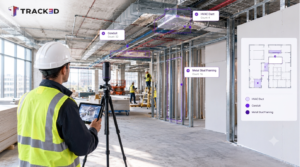
Capturing is an essential process in monitoring buildings and construction from a distance. Technologies like LiDAR scanning, photogrammetry, and 360-degree help construction teams create realistic and exact replicas of the construction site. These tools help simplify the process of monitoring and the comparison of “as-built” with the “planned-built” without the need to be present at the site 24/7. With the capturing sessions conducted regularly, they generate a solid visual representation, which holds the stakeholder accountable.
2. AI-Powered Progress Tracker
AI is changing how teams now look at the data from the job site. AI now finds the problem, checks if the tasks are done, and also warns of delays before they get worse by looking at the photos, reports, and sensory data. These insights help project managers keep the schedule to the point and cut down on expensive rework. Use AI and scheduling data together to see tasks that are out of order and keep delays from getting worse.
3. IoT and Edge Computing
IoT sensors are now an important part of remote monitoring; they keep track of how equipment is being used, environmental data and the activity of the workers. Edge computing only sends important information to the cloud; this is quick and reliable, especially in areas where the connection is weak. This helps teams that are far away to work better and respond faster.
4. Digital Twin Integration
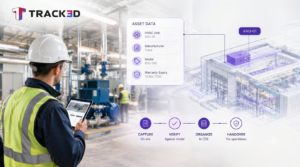
Connecting field data to digital twin models allows teams to see what is happening in 3D and in real time. These models combine IoT feeds, drone imagery and BIM data to tell updates, run simulations for different situations and plan maintenance ahead of time. This results in better decision-making and firm control over quality and performance across the project lifecycle.
5. Predictive Analytics and Smart Alerts
Remote monitoring is not only about observation but also helps with prediction and prevention. Using machine learning models, predictive analytics predict risks, from safety hazards to schedule disruptions, and also sends alerts. This allows early adjustments, reduces downtime, and keeps projects on track.
Challenges Associated with Remote Construction Monitoring
Despite all its benefits, remote monitoring implementation can often be met with some challenges.
Technical Challenges
Connectivity Limitations
Not all construction sites have access to reliable high-speed internet. Poor network performance is likely to cause disruptions in video streaming, communication, and even affect the stability of the entire process.
Data Overload
The use of an excessive number of devices may lead to excessive amounts of information that are too complex for analysis without special tools.
Operational Challenges
Workforce Training Gaps
On-site personnel and supervisors might lack adequate training required to utilize sophisticated monitoring equipment.
Resistance to Change
The construction process is well-established with many processes and practices entrenched in practice. There might be resistance to new processes introduced by remote technology adoption.
Compliance and Regulatory Issues
Data Privacy Regulations
Recording of data through remote technology might lead to data protection issues in some regions with stringent data and labor laws.
Safety Compliance Requirements
The construction sector is one where safety standards have to be followed and compliance has to be proved so that there is no non-compliance issue when inspections are conducted.
Industry-Specific Use Cases of Remote Construction Monitoring
Remote monitoring technologies are currently gaining traction across different industries with distinct demands.
Infrastructure Construction
In the case of large-scale infrastructure construction such as highways, bridges, railways, or airports, remote monitoring is used to cover vast geographical territories. It is useful in monitoring progress and ensuring the safety of structures, as well as improving coordination among various contractors.
Commercial Construction
In commercial construction like offices, hotels, and retail establishments, it is necessary that there be proper scheduling among different subcontractors. With remote monitoring technology, teams can get an increased view of how the project is progressing and communicate important milestones, in addition to making sure that the client is aware via visual reports.
Industrial Construction
Construction of facilities like factories, oil and gas processing plants, refineries, and power plants must be done while observing the highest degree of safety. Remote monitoring helps the team monitor hazardous areas and also track machine usage.
Data Center Construction
This industry requires extremely precise scheduling and coordination of different operations. With the help of remote monitoring solutions, teams can track progress in MEP installation, temperature control, deliveries, and commissioning procedures.
The Future of Remote Contruction Monitoring
Remote monitoring will move beyond observation into predictive control.
Here’s what’s coming next:
- Autonomous drones patrolling sites and uploading real-time visuals.
- AI-driven forecasting that identifies issues before they occur.
- Wearable technology integrating worker safety data with project analytics.
- Sustainability tracking, monitoring emissions, materials usage, and energy consumption.
The future job site will have a lot of data, be open and be proactive. Decisions will be made based on facts, not gut feelings.
Conclusion: Build Smarter, Safer, More Connected Sites
Teams can now manage their projects differently thanks to remote construction monitoring. It’s not enough to just watch your project remotely; you need to make faster, smarter decisions based on the things you see from the site.
The companies leading this shift are the ones treating data as a core asset, not an afterthought. They’re building workflows that merge physical progress with digital visibility.
If you’re thinking about how to start or grow remote monitoring in your projects, look at modern tools made for today’s connected workplace.
Explore how AI-powered progress tracking tools like Track3D can help you gain complete visibility of your project’s progress.