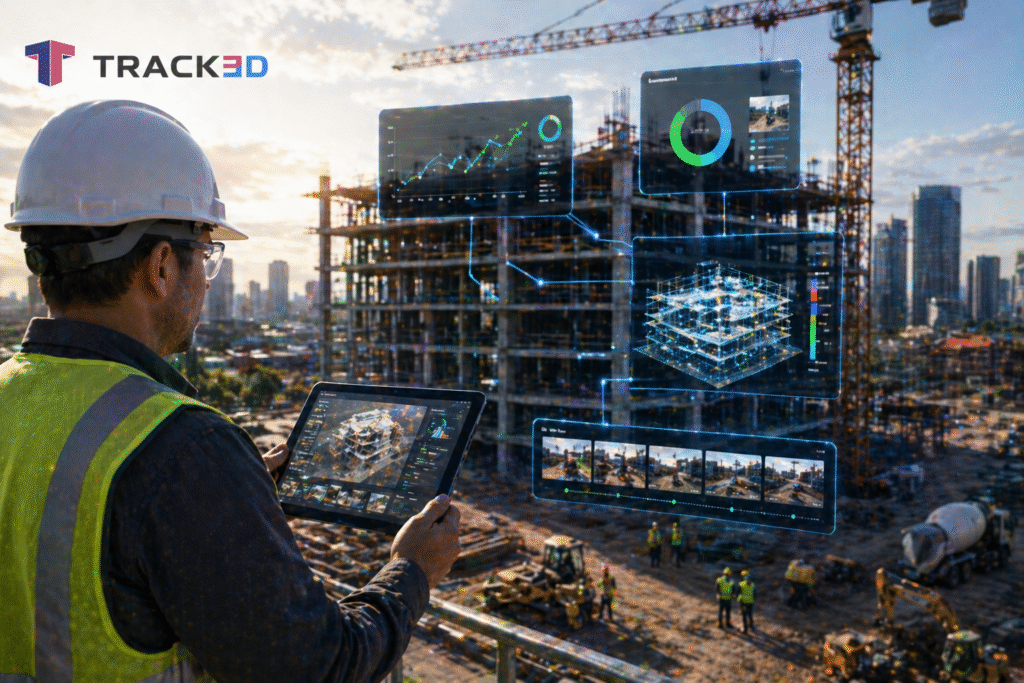
Construction cybersecurity gets to the heart of keeping the digital side of your project safe from cyber threats. And the truth is, if your team is using any combination of BIM, Procore, cloud drives, drones, GPS trackers, or even making use of WhatsApp groups for sending site updates, then you’re probably already playing a game of catch-up with cybersecurity threats(even if you’re not fully aware of it).
The fact is, this isn’t just some “IT problem”. A cyberattack can freeze drawings, block a team from accessing RFIs, delay approvals, or even hijack a big payment. Your bottom line is at stake here. Construction cybersecurity isn’t some remote, theoretical game anymore. It’s about protecting real work at real sites. In this blog, let’s break it down!
Key Takeaways
- Ransomware attacks target the construction industry more than any other sector around the globe.
- BIM files, bid data, payment workflows, and subcontractor access are high-value targets.
- IoT devices like cameras, drones, sensors, and wearables expand jobsite attack surface fast.
- Most construction companies still operate at basic cybersecurity maturity levels.
- The best protection comes from a mix of tools, training, and clear jobsite processes.
What is Construction Cybersecurity
Construction cybersecurity comprises all security measures that a business may take towards safeguarding its digital infrastructure. This ranges from cloud servers to communal file storage systems, laptops, smart phones, Wi-Fi hotspots at construction sites, interconnected equipment, and all the valuable information within.
This is more than just protecting computers at construction firms. Construction cybersecurity also includes things like:
- BIM models and drawings
- Payment and invoice systems
- Subcontractor access to platforms
- Bid documents and estimating files
- Building control systems during commissioning
If your company creates it, stores it, or shares it, attackers can target it. And construction is a tempting target because projects involve lots of vendors, lots of money, and lots of communication happening fast.
Why Cybersecurity Matters in Construction Projects
Construction is a high-value industry with constant money moving between owners, contractors, subs, and suppliers. That makes it attractive to attackers. Also, job sites are vulnerable by nature. You have temporary networks, rotating subcontractors, shared devices, and dozens of external vendors accessing project files. That is a perfect setup for cyber criminals.
NCC Group’s global threat research has ranked construction among the top sectors hit by ransomware. The reason is simple: attackers know contractors cannot afford downtime.
When a cyberattack hits, the damage is not just “digital.” It becomes real-world chaos: drawings and submittals get locked, payment workflows get disrupted, procurement schedules get delayed, owners lose trust, legal liability increases and even a 24-hour outage can throw a tight schedule off track.
7 Common Cybersecurity Risks in Construction
1. Ransomware (The Most Disruptive Threat)
A ransomware attack is an actual case of cyber blackmail. An attacker encrypts your computer files and requests you to pay up if you want them back. Imagine the situation when a construction company loses all its drawings and RFIs in this manner.
The most damaging effect here will be downtime. When the project team lacks access to up-to-date drawings, coordination messages, etc., they simply stop working on projects until everything gets restored.
2. Phishing & Emails Attacks
Phishing remains the most common way of gaining access to construction businesses’ systems. A phishing email may disguise itself as a message from the architect or your own project manager. It takes just one click for hackers to gain access to confidential data. What makes phishing emails so effective is that they can look like harmless messages such as “drawing update attached” or “invoice overdue.”
3. Business Email Compromise (BEC)
BEC is one of the costliest risks in construction because it targets money flow. A typical scenario is simple: an attacker monitors a subcontractor’s email account, waits until a payment is due, then sends a message asking the GC to update bank details. If the accounts team pays without verification, the money is gone. The FBI’s IC3 has repeatedly listed BEC as one of the highest-loss cybercrimes.
4. Supply Chain and Subcontractor Weakness
Construction is a shared environment. You might be working with 30, 50, or even 100 subcontractors involved in a project. And, surely, not all of them have strong security practices. Hackers often target smaller subcontractors because they have weaker systems. Once they steal their credentials, they use that access to enter shared project platforms and move toward larger targets. This is why cybersecurity is not just about your company. It is about your whole project ecosystem.
5. BIM, Drawings, and Project Data Theft
The BIM model is much more than a 3D sketch. There is a lot of data in terms of engineering and commercial information that it holds. If attackers steal it, the consequences go beyond one project. Competitors can use bid information to undercut future tenders. For government projects, stolen design data can become a major compliance issue.
6. IoT Devices and Smart Jobsite Risks
There are numerous connected devices in today’s construction site settings such as GPS tracking devices, drones, cameras, and even wearables. While they simplify processes on-site, they also multiply the attack vectors that hackers could take advantage of. Many Internet-of-Things (IoT) devices come with preset passwords. Some run on unsecured jobsite Wi-Fi. If one device is compromised, it can become a doorway into larger project systems.
7. OT and Smart Building System Attacks
Operational technology includes elevators, access control, fire systems, HVAC, and building management systems. These systems are increasingly connected during commissioning and handover. The risk here is different because OT attacks can cause physical disruption. Attacks of such a nature may involve locking doors, shutting off building services or disabling alarm systems. For these reasons, OT security is increasingly becoming a consideration during project closeout.
How to Mitigate Cybersecurity Risks on Construction Projects
Now that we know the dangers, let’s look at the actions needed for their mitigation. Good news is that most cyberattacks on construction companies happen due to easy-to-exploit flaws rather than advanced hacking skills. Therefore, any company will be able to minimize risks quickly after addressing only a few control measures.
The most effective mitigation steps include:
| Mitigation Step | What It Prevents | Why It Works |
| Multi-factor authentication (MFA) | Account takeovers | Password theft alone won’t be enough |
| Role-based access control | Oversharing of sensitive data | Limits damage if an account is hacked |
| Payment verification rule | BEC fraud | Stops fake bank-change emails |
| Cyber awareness training | Phishing and malware | Helps staff spot scams early |
| Network segmentation | IoT device exploitation | Keeps devices separate from core systems |
| Tested backups | Ransomware downtime | Allows recovery without paying ransom |
| Offboarding procedures | Credential misuse | Removes old users before they become a risk |
What matters most? If your firm does nothing else, enforce MFA, secure payments, and test backups. Those three actions alone stop many of the most expensive incidents. Also, mitigation only works if it becomes routine. Cybersecurity cannot be a one-time setup. It needs consistent habits across the project team.
Tools and Technologies
Cybersecurity does not require “fancy” systems to start. Many tools are already available through common platforms. The key is using them correctly.
| Tools | What It Does | Why It’s Useful in Construction |
| MFA | Adds a second login layer | Blocks stolen password access |
| Email filtering | Detects phishing and spoofed domains | Reduces fake invoice attacks |
| Endpoint protection & Response (EDR) | Detects malware on laptops/tablets | Prevents spread across devices |
| SIEM monitoring | Flags suspicious activity | Helps detect breaches early |
| Access management | Controls who sees what | Limits subcontractor exposure |
| Secure cloud storage | Protects shared documents | Reduces data leakage risk |
| Cyber insurance | Covers response costs | Helps reduce financial shock |
| Encrypted backups | Allows fast recovery | Protects against ransomware |
Common Mistakes Construction Firms Make
Most cyber failures happen because of simple operational habits, not complex technical issues.
One common mistake is treating cybersecurity as something the IT team handles “in the background.” In reality, cybersecurity is a project risk just like safety, quality, or schedule.
Another major issue is failing to remove access after a subcontractor leaves. Old accounts often remain active for months, which is basically an open door.
Password sharing is also extremely common on sites. It may feel convenient, but it destroys accountability. If something goes wrong, nobody knows who accessed what. Finally, many firms assume their backups are fine until they actually need them. A backup that has never been tested is not a real backup.
How Does Your Firm Measure Up? A Simple Maturity Check
Not every firm needs enterprise-level security overnight. But every firm should know where they stand.
| Level | What It Looks Like | Risk Level |
| Level 1: Reactive | Antivirus only, no MFA, no training | Very High |
| Level 2: Aware | MFA on some systems, basic backups | High |
| Level 3: Managed | Role-based access, training, policies | Medium |
| Level 4: Proactive | Monitoring, testing, incident planning | Low |
Most construction firms still sit at Level 1 or 2. That means the risks are not theoretical. They are real and active.
Construction Cybersecurity Checklist
| Area | What to Confirm | Why It Matters |
| Project onboarding | Every subcontractor is added through a formal onboarding process (not random invites) | Stops unknown users from slipping into your systems |
| Access permissions | Each subcontractor only has access to their package (not full project folders) | Limits damage if one account is compromised |
| Drawing control | There is one approved source of truth for drawings | Prevents wrong versions and reduces file leakage risk |
| RFI and submittal security | RFIs, submittals, and approvals are kept inside the project platform, not scattered in inboxes. | Email chains are easier to hijack or spoof |
| Payment verification process | Bank detail changes require a second verification step (phone confirmation or signed form) | This is the easiest way to stop BEC fraud |
| Device rules on site | Site tablets/laptops are assigned to named users, not shared devices | Shared devices create zero accountability |
| Wi-Fi and jobsite networks | Temporary site Wi-Fi has a password policy and is separated from sensitive systems | Jobsite Wi-Fi is often the weakest entry point |
| Offboarding controls | Access is removed immediately when a subcontractor finishes scope or leaves site | Old accounts are one of the biggest long-term risks |
| Weekly security check-in | Once a week, someone checks user access logs and unusual activity alerts | Small checks prevent big surprises |
| Handover stage lock-down | BMS / OT access is limited to approved commissioning personnel only | Handover is when building systems are most exposed |
Protect Your Projects Before the Cyberattack
Cybersecurity in construction is not an option anymore. It is now a core risk management process, like safety planning and contract management. But those who treat it as such are already winning, because not only do they stay safe from cyberattacks. They are trusted by the owner even more. Cybersecurity is already required for large-scale projects in infrastructure and government sectors.
At Track3D, we enable you to keep track of site progress while minimizing any extra data exposure through well-structured access management processes. This means every stakeholder will only access the information they need. Want to learn more about Track3D? Schedule a demo today→
FAQs
What is construction cybersecurity and why does it matter?
Ans: Construction cybersecurity refers to securing digital systems, project information, and interconnected devices utilized during a project. It is important since a breach could lead to delays, fraud, theft of bids, and legal issues.
What is the most common cybersecurity risk in construction?
Ans: Phishing and business email compromise are common threats in construction cybersecurity. Ransomware causes the most disruption since it can immediately lock out project access.
How does ransomware affect construction projects?
Ans: It prevents access to critical data such as drawings, schedules, and RFI log files which makes it difficult to operate on jobsites. Labor will stand idle as a result, and there might be liquidated damages due to missing milestones.
Do small construction firms need to worry about cybersecurity?
Ans: Yes. Smaller companies often experience more vulnerabilities in terms of protection and thus get affected. Subcontractors provide easy access points for hacking large contractors’ systems.
What regulations apply to cybersecurity in the construction industry?
Ans: The CMMC standard regulates cybersecurity controls in construction firms involved in US Department of Defense contracts. All states have data breach notification requirements. In addition, property owners now.