If you have ever been told your bid didn’t make the shortlist because of “safety scoring,” there’s a good chance your EMR was the reason. Even when your price is strong and your team is experienced, owners and general contractors often treat EMR like a filter. If your score is too high, you may not even get a chance to compete.
EMR stands for “Experience Modification Rate,” which is considered one of the most crucial figures related to the issue of workplace safety. Indeed, EMR is tied to premium rates associated with workers’ compensation insurance. At the same time, the EMR figure plays an integral role in your eligibility to bid for specific projects.
OSHA reports that construction accounts for around 21% of all worker fatalities in the U.S., which shows why safety performance is taken seriously in this industry. EMR is basically the insurance world’s way of pricing that risk.
Key Takeaways
- An EMR of 1.0 is considered the industry average.
- Below 1.0 is better and can reduce insurance premiums.
- Above 1.0 usually means higher premiums and lower bid eligibility.
- EMR is a lagging indicator, based on past claims.
- Strong safety documentation, faster reporting, and active claim handling help improve EMR.
What’s Considered a Good EMR Rating for Construction?
EMR is a score that compares your company’s workers’ compensation claims history to what is expected for a contractor of your size and trade type. In most U.S. states, the score is calculated through the NCCI (National Council on Compensation Insurance) or a state rating bureau.
The easiest way to think about EMR is like a safety credit score. If your company has fewer claims than average, your score goes down. If your company has more claims than expected, your score goes up. And just like credit scores, this number can follow you for years, even if you’ve improved your practices today.
Here’s the basic scale:
| Below 1.0 | fewer claims than average |
| 1.0 | industry baseline |
| Above 1.0 | higher risk than average |
So if you have an EMR of 0.75, your premium may be roughly 25% lower than the baseline. If you have an EMR of 1.25, your premium may be about 25% higher.
How Can Construction Companies Improve Their EMR?
EMR matters because it affects more than insurance paperwork. It can influence your ability to win work, grow your company, and even secure bonding.
Pre-qualification and bid eligibility
Many owners and large GCs set EMR thresholds before bids are even reviewed. A cutoff of 1.0 is common, but some owners require 0.85 or lower, especially for industrial and government projects. That means if your EMR is high, you may lose the opportunity before your proposal is even opened.
Insurance premium impact
Workers’ compensation premiums are multiplied by your EMR. This is where the number hits hardest because it directly changes your yearly overhead. For example, if your base workers’ comp premium is $200,000:
EMR 1.3 makes it $260,000
EMR 0.8 makes it $160,000
That’s a huge difference, especially for firms operating on tight margins.
Subcontractor screening
General contractors also look at subcontractor EMR. A subcontractor with a high EMR can create safety and schedule risk, and nobody wants to inherit that liability. That’s why EMR is often part of subcontractor pre-qualification packages.
Reputation and bonding
Bonding companies and underwriters pay attention to EMR because it signals stability. A rising EMR can limit your ability to take on bigger projects.
How EMR Is Calculated (Without the Confusing Math)
EMR is based on a rolling three-year window of workers’ comp claims. Usually, the most recent year is not included in the calculation. That means EMR is always looking backward, not at what you’re doing right now.
The calculation uses a few key pieces:
1. Actual losses
This includes claims that were paid, plus claims that are still open with reserves.
And this part surprises many contractors: reserves count even if the claim ends up smaller later.
2. Expected losses
This is what the rating bureau expects a company of your size and trade type to have in claims.
3. Claim weighting (small claims matter a lot)
The formula weighs smaller claims heavily because repeated minor injuries often point to weak safety culture. So a contractor with constant small strains, slips, and minor cuts can get punished more than someone with one big incident.
The simplified idea is:
EMR = Actual losses ÷ Expected losses
But the weighting rules are why the score can feel confusing.
How EMR Impacts Your Business Operations
EMR doesn’t change overnight. It follows a slow cycle that most contractors only learn after they’ve been hit by it. First, an incident happens on site. A report is filed and the workers’ comp process starts. The insurer assigns a reserve, which may be higher than the final settlement, but it still enters the EMR system.
Then, at the end of the policy year, claims data is submitted to the rating bureau. A new EMR is calculated and issued, usually 60–90 days before renewal. That EMR becomes part of your next insurance premium. It also becomes the number clients see when you submit bids.
And once that incident enters the EMR cycle, it stays there for about three years. That’s why one bad year can take a long time to recover from, even if you clean up your safety program quickly.
Tools and Technologies That Help Reduce EMR
Lowering EMR comes down to reducing incidents and handling claims properly. Technology helps because it makes safety reporting faster and more consistent.
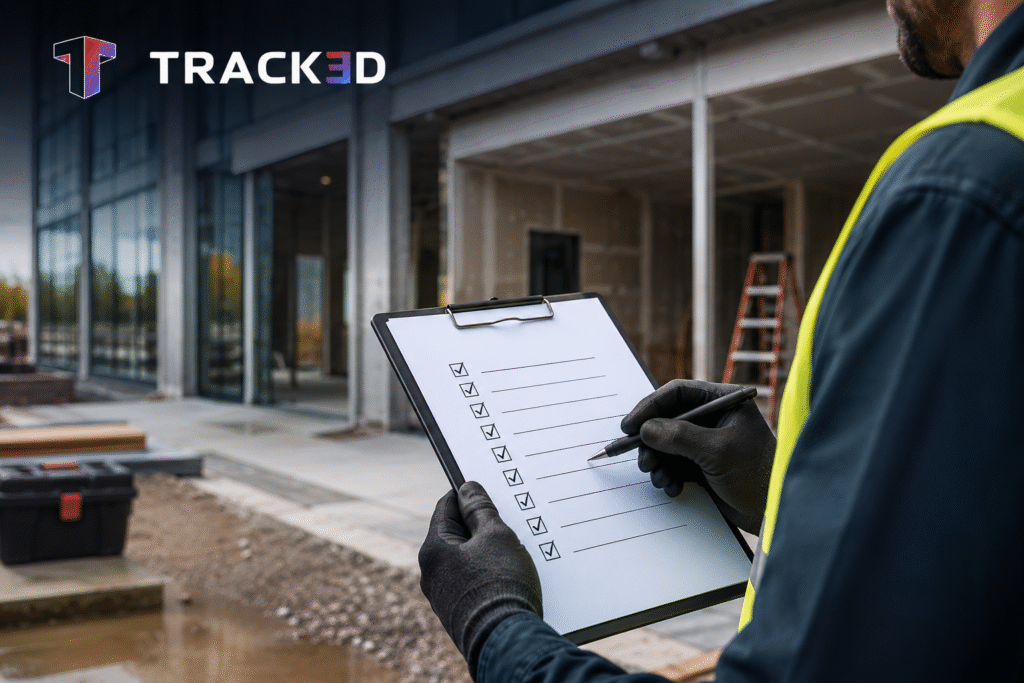
Regular construction site inspection reduces the small, repeat incidents that quietly push EMR up.
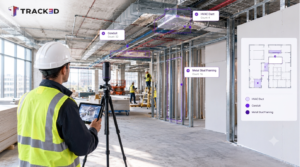
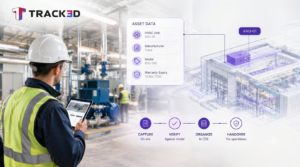
Track3D’s VisualTrack keeps a timestamped visual record of jobsite conditions to support safety claims.
Technology is reshaping this space — see the role of AI in construction safety.
Here’s a quick view of the most useful tool types:
| Tool Type | What It Helps With | Why It Matters |
| Digital safety platforms | Inspections, toolbox talks, corrective actions | Creates a clean record that proves safety steps were done |
| Mobile reporting apps | Faster incident reporting | Quick reporting often lowers claim severity and confusion |
| Reality capture tools | Visual proof of site conditions | Helps identify hazards early and supports claim disputes |
| Claim tracking software | Managing open claims and reserves | Prevents claims from sitting open and inflating EMR |
| Training tracking systems | Certification and safety training history | Reduces repeat injuries from poor awareness |
| Subcontractor prequal systems | EMR and compliance screening | Helps prevent risky subs from increasing project exposure |
Why Small Injuries Can Quietly Destroy Your EMR
Most contractors think EMR gets wrecked by big incidents. But in reality, it is usually the constant smaller stuff that does the damage. Back strains. Twisted ankles. Minor falls. Hand injuries. Small lost-time cases.
Owners often ask for inspection logs — a QA/QC audit checklist for construction keeps them audit-ready.
A construction documentation checklist helps ensure inspections and sign-offs are never missing when a claim is disputed.
The EMR formula weighs frequent minor claims heavily because they suggest a pattern, not bad luck. So if you want to protect your EMR, the best strategy is not just “avoid catastrophic events.” It is reducing the everyday incidents that keep repeating across crews.
That usually comes down to:
- better housekeeping
- better ladder use
- better PPE habits
- better supervision during high-risk tasks
- faster correction of unsafe site conditions
Pros and Cons of EMR as a Safety Metric
EMR is widely used, but it is not perfect. Here’s a fair look at what it does well and where it falls short.
| What EMR Does Well | Where EMR Falls Short |
| → Gives a consistent benchmark owners understand → Impacts insurance costs directly, so safety becomes a business issue → Easy for GCs to compare subcontractors → Encourages companies to reduce claims → Helps identify contractors with repeated incident patterns | → It reflects the past, not your current improvements → Smaller contractors can be hit hard by one claim → Doesn’t track near misses or unsafe conditions → Can create pressure to under-report minor injuries → Doesn’t measure real safety culture on site |
That’s why smart owners use EMR, but also ask for training logs, inspection records, and current safety plans.
Common EMR Mistakes Construction Firms Make
A lot of companies don’t have a high EMR because they “don’t care about safety.” They have a high EMR because of poor habits that build up over time.
One big mistake is treating EMR like an insurance issue that gets reviewed once a year. EMR is really an operations issue. It comes from how the jobsite is run daily. Another common problem is ignoring open claims. Reserves can sit high for months, even if the injury is minor. Contractors who never challenge reserves or follow up often pay the price later. Some firms also fail to track subcontractor risk. On certain projects, subcontractor incidents can still create exposure for the GC, especially if safety control is weak.
Weak documentation is another major issue. If you cannot prove inspections were done, hazards were fixed, or training was delivered, you lose leverage when a claim is disputed. And finally, many companies don’t have a return-to-work plan. Lost-time cases hurt EMR far more than modified-duty cases.
When EMR May Not Be the Most Relevant Metric
EMR has limitations, especially for new or highly specialized contractors. If a company has limited history, EMR may not reflect true performance. Also, one isolated major incident can temporarily inflate EMR without representing a broken safety culture.
Because of this, owners and GCs should ideally evaluate EMR alongside current safety programs, inspection history, and leading indicators.
EMR Improvement Takes 3 Years (So Start Now)
This is the part many contractors don’t like hearing, but it’s true: EMR is slow. Because it’s based on a rolling three-year window, even a perfect year won’t instantly fix your EMR. Improvement requires consistent results over multiple years.
That means your best move is to treat EMR like a long-term performance metric, not something you panic about once a year at renewal time. The contractors who keep EMR low are usually the ones who track safety trends monthly, correct hazards quickly, and manage claims actively before reserves grow.
Build the Safety Record That Protects Your Bid Pipeline
In construction, EMR is more than paperwork. It affects what you pay, what you win, and what doors stay open. A strong EMR comes from boring consistency: fewer incidents, better reporting, better documentation, and smarter claim management.
Track3D supports safety and project teams by creating a visual record of jobsite conditions through 360° capture and Reality Intelligence. That makes it easier to spot hazard patterns early and document conditions clearly when claims are questioned.
Want to see how Track3D supports better safety visibility? Explore Now →
FAQs
1. What is EMR in construction?
EMR is a score that compares your workers’ compensation claims history to similar contractors. A lower EMR means fewer claims and usually lower insurance premiums.
2. What is a good EMR in construction?
Most owners prefer 1.0 or below. Many large projects require 0.85 or lower. Contractors under 0.75 are generally seen as strong performers.
3. How is EMR calculated in construction?
It is calculated using three years of claims data, comparing actual losses to expected losses for contractors of similar type and size.
4. How does EMR affect construction bids?
Many owners set EMR thresholds as pre-qualification criteria. If your EMR is above the limit, you may be disqualified even before pricing is reviewed.
5. How can a construction company improve its EMR?
Improving EMR requires reducing incidents, documenting safety consistently, managing open claims and reserves, and using return-to-work programs to reduce lost-time claim costs.