
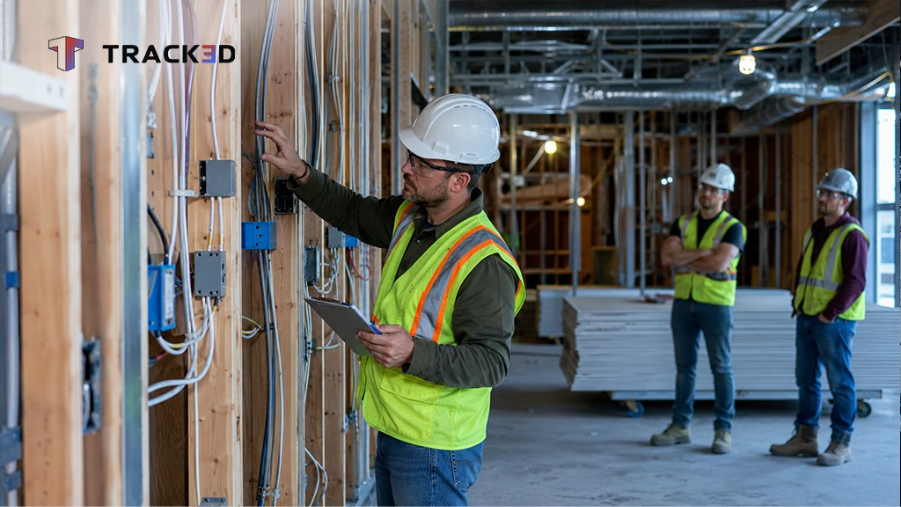
An inspector arrives for a scheduled electrical rough-in inspection. Nobody has actually run the wiring behind one wall yet. The general contractor called for the inspection based on the schedule, not a confirmed check of the work. The inspection fails, and drywall waits another week.
NIST studied poor data handoff and coordination across the U.S. capital facilities industry. The gaps it found carry a steep price. As per NIST’s study, the industry loses $15.8 billion a year to them. Owners and operators absorb $10.6 billion of that figure alone. A failed rough-in inspection is one small, visible symptom of that larger problem.
Key Takeaways
Electrical rough-in is a gating activity. Drywall and every trade behind it waits until the inspection passes.
Most failed rough-in inspections come down to one cause. A general contractor called for the inspection before anyone confirmed the work was ready.
Poor trade coordination and unclear subcontractor handoffs create most of the conflicts an inspector ends up catching.
Most rough-in delays trace back to the same root cause, a gap between what the schedule assumes and what a subcontractor actually finished in the field.
Good electrical rough-in progress monitoring tracks status zone by zone, not project-wide, and pairs a physical walk with a dated record.
What Is an Electrical Rough-In?
The rough-in phase is when an electrician runs wiring, sets electrical boxes, and roughs in panels after framing but before drywall goes up. An inspector checks wire gauge, box placement, and panel clearances against National Electrical Code requirements before any wall closes over the electrical installation.
Wiring that runs through wall studs also needs a protective plate wherever it sits close to the stud’s face, since a code requirement exists specifically to stop a drywall screw from piercing the wire later. Rough-in is a gating activity, so drywall crews cannot proceed until the electrical work passes inspections.
Why Electrical Rough-In Inspections Fail
The single most common cause of a failed rough-in inspection is calling for it before the work is actually ready. A general contractor sees the schedule say rough-in is complete and books the inspection. Nobody walked the zone first to confirm it.
Poor trade coordination and unclear subcontractor handoffs compound the problem. Mechanical ductwork, plumbing lines, and electrical conduit often compete for the same wall and ceiling space, and one trade’s definition of “done” rarely matches the next trade’s definition of ready.
Rushing electrical work also carries real safety consequences. As per ESFI’s workplace injury and fatality data, construction recorded more electrical fatalities than any other industry between 2011 and 2024. Getting rough-in right the first time is a safety issue, not just a scheduling one.
The Verification Gap Behind Most Rough-In Delays
Most rough-in delays trace back to the same root cause. A gap opens between what the schedule assumes and what a subcontractor actually finished, and nobody confirms it in the field before calling the inspector.
That gap widens on any project running multiple zones at once. A superintendent walking the site once or twice a day catches some of it. A two-week gap between formal checks still leaves room for a zone to look ready on paper and not be ready in reality.
What Good Electrical Rough-In Progress Monitoring Looks Like

Good monitoring starts with zone-level status, not project-level status. A single “rough-in 80% complete” figure hides exactly which zones are done. That’s the information a project manager actually needs before scheduling an inspection.
A construction daily log that captures what an electrician completed in each zone gives a superintendent something concrete to check against. Reviewing construction project coordination before rough-in starts also catches conduit conflicts while they’re still cheap to fix.
The strongest version pairs a verified physical walk with a dated record instead of relying on either one alone. A weekly check catches far less than an ongoing, day-by-day view of each zone, since conditions on an active floor change constantly.
A Real Example: Closing the Gap on a Live Project
At Hensel 7Phelps, tighter progress verification reduced the time required to confirm what a crew had actually built, from 20 hours a week to about one. That shift alone saved the team $342,000 in labor costs. As Superintendent Garin Anderson put it, “We’re not chasing trades anymore, we’re making decisions.”
Closing the Verification Gap
Every failed rough-in inspection comes down to the same gap between what a schedule assumes and what a crew actually built. Track3D’s Reality Intelligence Platform closes that gap, tracking zone-level site conditions nonstop and giving a project manager verified status before a crew moves or an inspector gets the call. See how Track3D verifies zone status on your next project.
Frequently Asked Questions
Q1. What happens if an electrical rough-in inspection fails?
The electrician corrects the flagged issue, and the general contractor schedules a re-inspection with the local authority having jurisdiction. That re-inspection can add days or weeks to the schedule, which is why confirming readiness before the first call matters so much.
Q2. How long does an electrical rough-in inspection take?
A typical rough-in inspection takes 15 to 45 minutes for a single zone. The larger cost is rarely the inspection itself. The real cost is the schedule gap created when a failed inspection forces a wait for a second visit.
Q3. What’s the difference between rough-in and final electrical inspection?
A rough-in inspection checks wiring and boxes before any wall closes over them. A final electrical inspection happens after fixtures and covers are installed, confirming the completed system works and meets code.