Multifamily construction progress tracking gets complicated fast once a project has more than a handful of units. A single-family home has one kitchen, one roof, one set of MEP runs to track. A multifamily construction project might have 200 nearly identical units moving through the same trades at once. Mix up which unit is done, and you risk the schedule and the budget.
Key Takeaways
- Multifamily construction progress tracking depends on tracking unit by unit, not the building as a whole.
- Line of balance scheduling handles repetitive unit construction tracking directly.
- Trade stacking is one of the most common causes of multifamily construction delays.
- Percent complete by unit only matters when it matches what’s actually installed.
- Modern tracking methods can confirm progress across large unit counts without walking every unit.
Quick Definitions
- Multifamily construction: Housing with multiple separate units in one structure or development.
- Line of balance: A scheduling method that plots repetitive trade work across units and time.
- Trade stacking: Multiple trades working the same unit at once, usually from schedule compression.
- Percent complete: The share of a unit’s scope finished relative to its total scope.
- Repetitive unit: A unit built from the same floor plan as others, tracked the same way.
What Is Multifamily Construction?
Multifamily construction is the building of housing with multiple separate units in one structure or development, such as apartments, condos, and townhome communities. What is multifamily construction, in practical terms? One feature defines it: the same unit type gets built dozens or hundreds of times across a single project.
Multifamily construction companies range from national developers to regional general contractors delivering one mid-rise building. Unit 214 and unit 215 look identical on paper, but they’re rarely at the same stage of completion on site.
Why Progress Tracking Gets Harder With Repetitive Units
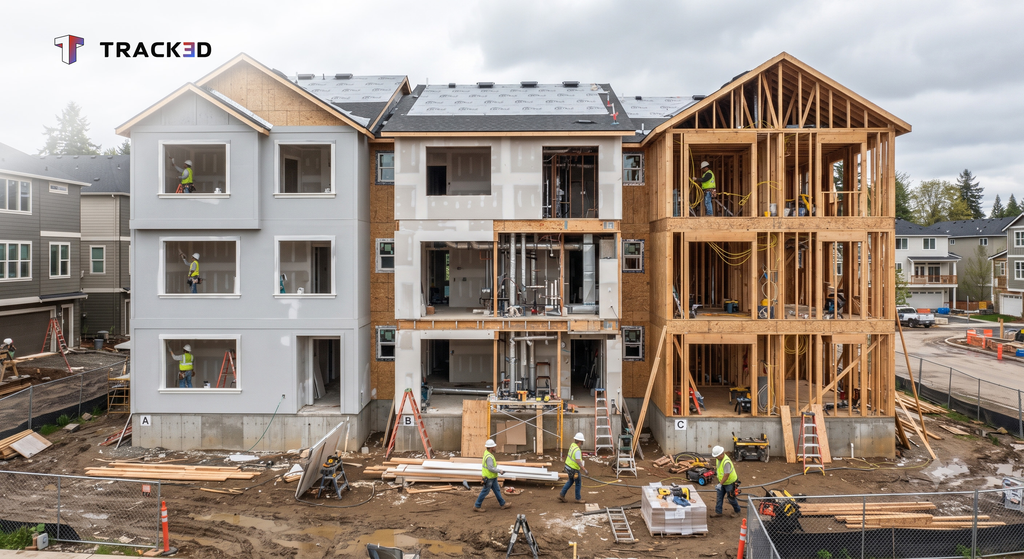
A single custom home has one version of every system to track. A 200-unit project has 200 versions of the same systems, each on its own timeline. Framing might finish in building A while building C is still waiting on rough electrical.
That variation adds up fast. Multiplied across dozens of units, multifamily construction progress tracking gets harder, not easier, despite the repetition. Our Construction Progress Tracking Software: Complete Guide covers the broader tools teams use for this.
How to Track Construction Progress by Unit
- Teams learning how to track construction progress by unit build their process around three habits:
- Track status at the unit level, then roll it up to the building.
- Use the same trade milestones for every unit, so percent complete means the same thing everywhere.
Update unit status on a fixed cadence, not just when someone notices a problem.
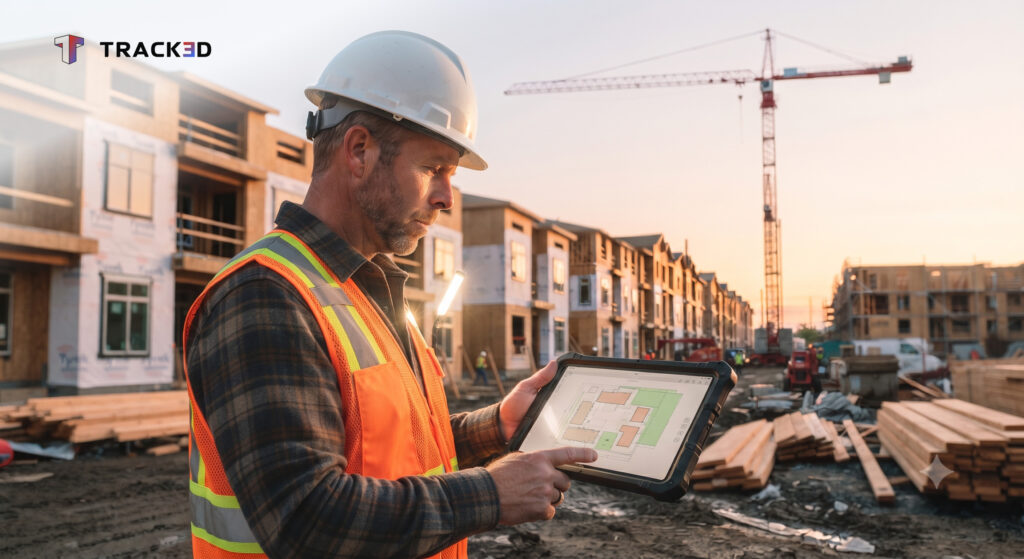
How to monitor construction progress across multiple units comes down to that principle at scale: a dashboard where every unit shows its trade and percent complete, side by side. Percent complete by unit construction only holds up when it reflects verified work, not a memory of the last walk.
What Is Line of Balance in Construction?
What is line of balance in construction? It’s a scheduling method built for repetitive work like this. A Gantt chart uses a separate bar per task. Line of balance plots each trade’s progress across every unit over time as one line instead.
Line of balance scheduling makes it easy to spot a trade falling behind before it bottlenecks every unit behind it. If the drywall line starts to lag the framing line, that gap shows up on the chart well before it shows up as a missed handover date.
What Is Trade Stacking, and How Do You Avoid It?
What is trade stacking? It’s when multiple trades end up working the same unit at once, usually because the schedule got compressed upstream. On a repetitive-unit project, one late unit pushes its trades into the next unit’s timeline, and the stacking spreads from there.
How to avoid trade stacking comes down to catching the slip early:
- Track each trade’s pace by unit, not just by building, so a slowdown shows up before it compounds.
- Keep a buffer between trades instead of scheduling them back to back on every unit.
- Flag any unit that falls two or more units behind its neighbors before the next trade starts.
Common Multifamily Construction Delays
Multifamily construction delays tend to come from a short list of repeat offenders:
- Permitting and inspection delays, since one inspection often clears several units at once.
- Rework from a mistake repeated across several units before anyone catches it.
- Trade stacking that starts in one unit and spreads to the units scheduled after it.
- Mid-project design changes that require redoing work already finished elsewhere.
Tracking Repetitive Units in Practice
Repetitive unit construction tracking works best when every unit is checked against the same trade milestones. Take three units on one floor, all started the same day: unit 101 has finished framing, rough MEP, and drywall, and is now in paint; unit 102 has finished framing and rough MEP, with drywall in progress; unit 103 has finished framing, but rough MEP is still in progress.
The pattern is easy to spot: unit 103 is falling behind on rough MEP, despite starting on the same day. That’s the kind of gap line of balance scheduling catches before it becomes a bigger delay.
Common Mistakes in Multifamily Progress Tracking
- Reporting percent complete for a whole building instead of unit by unit, hiding which units are behind.
- Relying on a single site walk to represent units seen days apart.
- Letting one delayed unit’s trades stack into the next unit’s schedule unflagged.
How Teams Track Progress Across Large Unit Counts
Most of the methods above still rely on someone physically checking every unit. That works, but it’s slow, and a 150-unit project can fall days behind on reporting even when the work itself is on schedule.
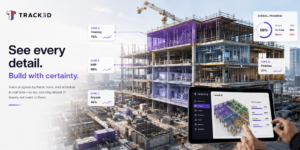
Reality Intelligence platforms like Track3D close that gap by comparing captured site data against the unit-by-unit schedule. Track3D’s ProgressTrack quantifies work installed across every unit from each capture, so percent complete reflects what was actually built, not a memory of the last walk.
Want a Clearer View of Progress Across Every Unit?
Tracking two hundred versions of the same unit is a different problem than tracking one. Talk to us to learn how Track3D can help you see where every unit stands, without walking each one yourself.
Frequently Asked Questions
What is multifamily construction?
Housing with multiple separate units in one structure or development, such as apartments, condos, and townhomes.
What is line of balance in construction?
A scheduling method that plots each trade’s progress across every unit over time, making it easier to spot a trade falling behind.
What is trade stacking?
When multiple trades end up working the same unit at once, usually because a schedule delay pushed their work into overlapping timeframes.
How do you track construction progress by unit?
Track status at the unit level using the same trade milestones, then roll those numbers up to the building level.
What causes multifamily construction delays?
Permitting and inspection delays, rework, trade stacking, and design changes made after construction has already started on some units.