For many years, construction teams have relied on traditional means of project monitoring and progress tracking. Unfortunately, although comfortable, these techniques are now only increasing issues with delays, rework, lack of communication and late updates. However, as advanced construction technologies rise, construction monitoring is becoming more automated, proactive and connected.
In this guide, we explore the most upcoming 4 technological shifts that are expected to revolutionize the way the construction industry works. Continue reading to find out!
What Drives The Evolution of Construction Monitoring?
Before we directly jump into tech shifts, let’s first look at what elements drive the evolution of construction monitoring. Here are a few key pointers:
- Ever-growing complexity of construction projects.
- Tighter timelines with lesser breathing room.
- Increasing need to improve safety and reduce on-site risks.
- Increasing demand for accurate, real-time data about the construction project.
- The need to keep the project under budget.
- Rising demand to lessen rework.
- A calculative shift towards proactive, data-driven decision-making.
- Further advancements in AI, automation, and reality capture technologies.
- The need for better collaboration between on-site teams and remote stakeholders.
#1 Reality Intelligence
Firstly, let’s understand the shortcomings of traditional systems of progress management. As discussed above, regardless of how much effort teams put in, inaccurate and incomplete information is unavoidable as there’s always room for human error, natural discrepancies and misunderstandings. These often lead to costly rework and undue delays.
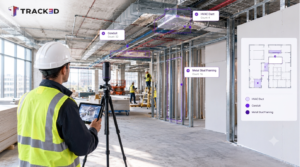
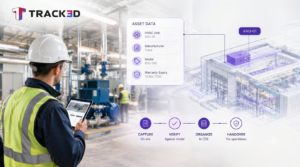
This is exactly the problem area that Reality Intelligence resolves. At its core, it functions on advanced AI and ML algorithms. It can combine various types of reality capture technologies into a single, unified platform. For instance, the following data streams are all integrated together by Reality Intelligence.
- LiDAR scanners for precise 3D models
- 360-degree cameras for recording site progress
- drones for aerial views
- mobile devices for quick on-site images
The core idea is to have an entirely new approach to construction progress monitoring that’s driven by accurate and actionable insights. And this approach ensures that teams have access to the most updated information. Relying on a single source of data will often leave the construction team feeling inadequate.
Platforms like Track3D are actively leading the way in the shift from traditional ways of tracking progress to new technology. These platforms have made it easier than ever to take a full approach to monitoring construction. Construction teams can now quickly and almost in real time compare as-built conditions to design models, keep track of progress with precise accuracy, and take standard actions to avoid costly rework.
In fact, a lot of teams have already started adopting this tech and the impact is evident in several real-world applications. For instance, users of Track3D have reported benefits like:
- 12% increase in schedule adherence
- 15% increase in productivity and
- 20% reduction in rework expenses
These metrics show how Reality Intelligence makes sure that every phase is successful, from pre-planning to final project handover. It isn’t just about monitoring progress; it’s about transforming how projects are delivered smarter with fewer setbacks along the way.
#2 Agentic AI
Let’s begin by getting an idea of what Agentic AI is. Agentic AI refers to the autonomous agents that plan, reason, and execute multi-step tasks. They proactively monitor projects, interface with systems, and adapt to dynamic site changes in real time. This technology has incredible potential to evaluate massive amounts of data, make decisions, and execute tasks autonomously. Also, it can actively address potential safety hazards and delays before they become problems.
Next, we explore a few examples of how Agentic AI can help with safety management on job sites:
- It can detect schedule bottlenecks caused by weather-related delays or material shortages. To counter that, it automatically adjusts timetables or reallocates resources to ensure efficiency.
- Through constant monitoring of the construction site conditions, it may spot concerns like hazardous equipment use or environmental risks and quickly take corrective action.
- Agentic AI’s proactive strategy prevents accidents and guarantees adherence to safety requirements.
Agentic AI is not about merely collecting data, but also acting upon it. Because of this transformative approach, Agentic AI is emerging as a crucial part of how modern construction projects are monitored and managed. Gradually, as teams adopt this tech more actively, they can experience a smarter, safer, and more efficient system of construction monitoring. At the end of the day, you can get a system that thinks ahead, solves issues on its own and provides instant actionable insights.
#3 Robodogs
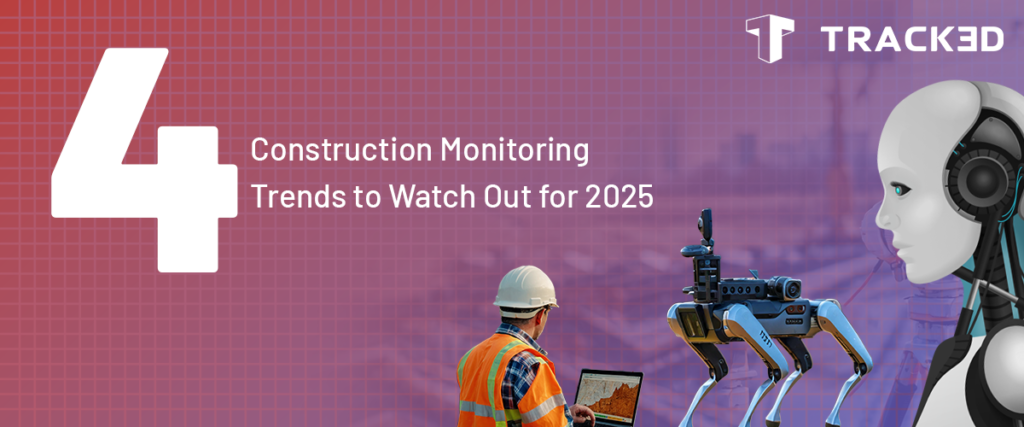
This is the latest, most impressive new technology in the field of construction that is changing how things work on the jobsite. As the name suggests, robodogs are agile four-legged dog that are equipped with cameras, sensors, and LiDAR systems that enable them to navigate complex environments while capturing precise, real-time data at the same time.
Robodogs can handle routine and repetitive tasks without breaking a sweat. Human inspectors struggle to access dangerous or difficult-to-reach regions, but not robodogs! They can easily access and navigate uneven terrain, stairs, and enclosed spaces. This gives them the biggest advantage of all – the safety risk for operational hazard is completely mitigated, while simultaneously producing high-quality data for analysis. Also, as robodogs continue to become a preferred tool on construction sites, they’re becoming more affordable and accessible. This scalability, paired with their cost-effectiveness, makes them an efficient addition in construction projects.
A prime example of the direct application of robodogs is when Track3D, in collaboration with Ryan Companies, utilized them to capture site data. Here’s how it went:
- Robodogs were deployed to scan the site.
- They captured 360-degree images, generated 3D point clouds, and collected accurate progress data.
- Because of this, the team was able to smoothly feed the data into Track3D’s platform.
- Precise data could be analyzed and visualized to deliver actionable insights.
This example tells us how with technological developments and increased accessibility, robodogs are on the verge of being a larger player in project monitoring and progress tracking on construction sites.
#4 Augmented Reality & Virtual Reality
Augmented reality and virtual reality are two pieces of tech that complement each other to create a tool that plays a critical role in construction projects. Let’s understand both of these, one by one.
Augmented Reality (AR) overlays 3D models and schematics onto a jobsite in order to connect the digital and physical worlds. This enables teams to directly compare as-built conditions to design plans on the site, thus identifying discrepancies early and ensuring the project is moving as expected. The core idea of AR is to mitigate errors and provide clarity to on-site operations.
Virtual Reality (VR) further enhances AR by providing a fully immersive digital environment that enables all stakeholders to virtually visit the jobsite and monitor progress. This is particularly useful for remote collaboration between crew members, architects, and clients who wish to keep tabs on different stages of the construction project. This also allows teams to provide instant feedback and make decisions in real-time. Additionally, VR environments also include advanced simulations that enable teams to test different scenarios, like scheduling changes, logistics challenges, and weather impacts before they occur, thus resulting in a more resilient project plan.
With AR, superintendents and field engineers can conduct detailed site inspections using wearable devices or tablets, while VR allows project teams to present accurate progress updates to stakeholders, which increases transparency and trust. Together, AR and VR offer innovative ways to enhance communication and coordination between the team members.
Why Should You Integrate New Tech?
We have already discussed the latest evolving tech and its core functioning. However, what are the advantages for the same? Consider these key benefits for your construction team:
- You can prevent issues before they occur with proactive, AI-driven insights.
- The safety around the construction site is automatically increased by identifying and mitigating risks in real-time.
- Teams are enabled to make faster and smarter decisions with accurate, up-to-date data.
- The efficiency of the team increases as repetitive tasks and workflows get automated.
- Collaboration between the on-ground team and remote stakeholders also gets better with more transparency and trust, because of centralized and shared project data.
- Project managers, superintendents and finance officials can reduce costs by minimizing rework and avoiding delays.
- The accessible and flexible tools allow teams to integrate them in various projects without any hiccups.
- Since project monitoring and validation is continuous, teams can expect high-quality work.
- The use of resources automatically becomes more optimized.
- Construction crews can stay competitive and relevant within the industry with future-ready, tech-enabled operations.
Final Thoughts
As we move into 2026 and beyond, construction monitoring is clearly undergoing a technological shift at a fundamental level. Reality Intelligence, Agentic AI, Robodogs, Augmented Reality, and Virtual Reality are some of the latest bits of tech focused on improving existing processes and redefining how projects are planned, executed and delivered. The work that once took lots of manual effort and enabled only reactive decision-making, is today becoming automated, predictive and highly precise.
But understand that these tools are only as good as their integration into the workflows. It must be seamless and smooth so teams can experience accessible tech that doesn’t disrupt their day-to-day. Once they have embraced these new adaptations, construction professionals are better equipped to manage and execute faster, safer, and more efficient construction projects.
Ready to embrace smarter monitoring solutions? See how Track3D is transforming construction projects with innovations like Reality Intelligence and robodogs. Book a Demo with us today