Austin Kappes has been immersed in construction for as long as he can remember. Growing up in Northern Kentucky just outside Cincinnati, Ohio, in a family with deep roots in the industry, Austin was naturally drawn to the field. From a young age, he was exposed to the day-to-day work of job sites, sparking a curiosity that would later shape his career. After studying Architecture at the University of Kentucky, Austin took his first steps into professional construction as an intern at AECOM Hunt, and he hasn’t looked back since.
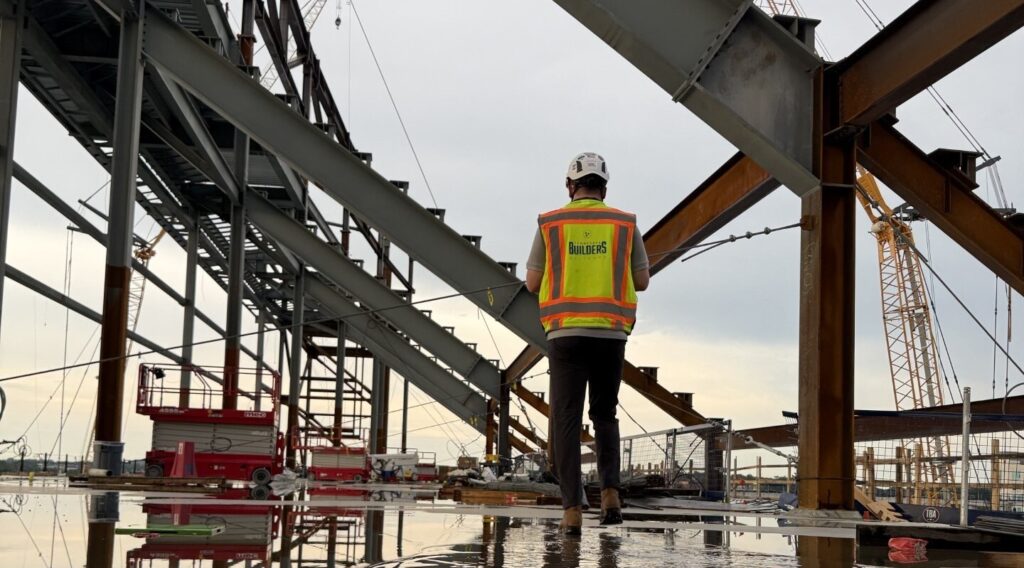
Today, Austin serves as a BIM Project Manager at AECOM Hunt in Nashville, Tennessee, where he is currently supporting one of the most high-profile projects in the region: the Tennessee Titans Stadium

A Career Built from the Ground Up
Long before he stepped into the world of BIM and digital coordination, Austin spent years working directly on job sites as an electrical technician. During that time, he worked on installing various electrical components across projects.
Those years in the field gave him something many technology specialists lack: a first hand understanding of how construction actually unfolds on site.
That experience continues to shape the way he approaches BIM today.
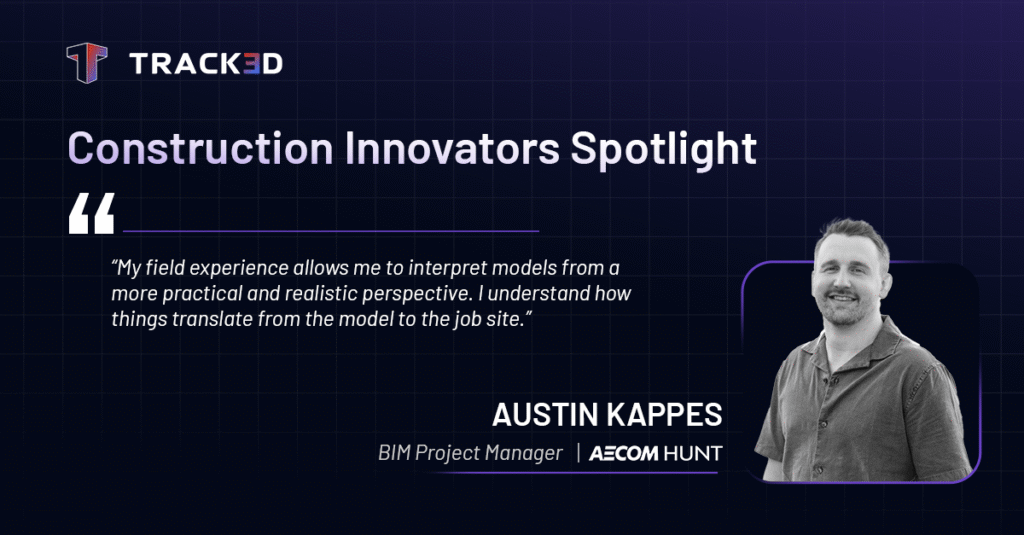
“My experience working in the field allows me to interpret models from a more practical and realistic perspective,” Austin explains. “It helps enhance coordination and decision-making because I understand how things translate from the model to the job site.”
Austin’s journey with AECOM Hunt began during college when he joined the company as an intern. That early exposure to large-scale construction projects and advanced modelling workflows laid the foundation for his growth.
Over the years, his role has evolved from supporting modelling efforts on individual projects to contributing across multiple projects in the central region, helping teams coordinate efficiently and make informed decisions throughout the construction process.
Delivering One of Nashville’s Biggest Projects
Among the projects Austin has worked on, the Tennessee Titans Stadium stands out as the most intricate. With an accelerated construction schedule and coordination required across multiple teams and disciplines, the project demands quick decision-making and constant awareness of how different scopes of work intersect.
“The Titans Stadium has been the most complex project I’ve worked on. The pace requires constant adaptation. You have to make real-time decisions that best serve the project’s needs.” Austin says.
The nature of the project also shapes what a typical day looks like for Austin. Rather than following a fixed routine, his work revolves around staying connected to multiple teams and ensuring each discipline has the information it needs to move forward. From coordinating with design teams to supporting field operations and reviewing project progress, his role adapts to what the project requires at any given moment.
To keep everything on track, Austin leverages a suite of digital tools that bring project data to life and help teams collaborate seamlessly.
His workflow includes platforms such as Revizto, Procore, Track3D, the DJI Dock 3 platform, and Autodesk tools, all of which play a role in helping teams visualize, coordinate, and track project progress.
Building Smarter with Technology
Austin sees construction technology evolving rapidly, especially with the rise of AI-driven tools.
“Much like others in the industry, I expect AI to continue shaping the future of construction. AI-driven tools are accelerating workflows and improving both the quality and speed of deliverables.” he says.
When it comes to construction monitoring, Austin emphasizes the importance of having the right data to understand progress and make informed decisions. “You can never have too much data. Metrics provide clear insight, and the numbers speak for themselves.” He explains.
Leveraging Track3D for Jobsite Progress
Austin first encountered Track3D through another project within AECOM Hunt that had already begun using the platform.
As the team integrated it into their workflow, it quickly became a valuable tool for tracking project performance.
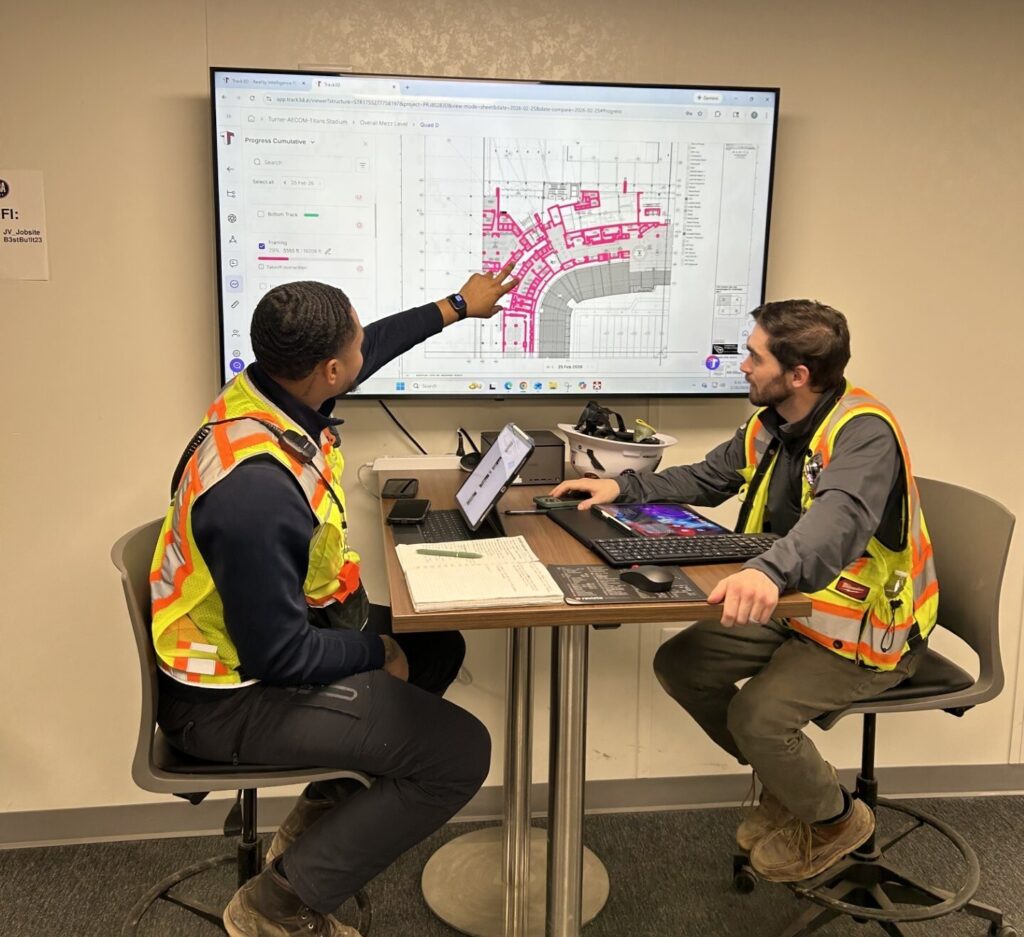
“Track3D has given us new visibility into KPI tracking that we didn’t previously have. It’s improved our ability to measure progress with greater accuracy.” Austin mentions.
One capability that has had a particularly strong impact is the use of drone imagery to track exterior progress and calculate average daily production. By combining aerial capture with data analysis, the team can better understand how work is progressing across the site.
For projects as large and fast-moving as the Titans Stadium, that level of insight made a meaningful difference in decision-making.
Looking Ahead
As for the year ahead, Austin is particularly excited about the lift of the cable-net roof system on the Titans Stadium, a major milestone that demonstrates the scale and of the project.
He also takes a moment to acknowledge collaborators who make these achievements possible: “I’d like to give a shoutout to Michael Marchesano of Turner Construction, our JV partner on the Titans project. Working with him has been a valuable experience. He consistently challenges me to explore new ways to use our models and encourages innovative thinking to advance the project with today’s technology.”
Austin’s story reflects the evolving nature of construction, where hands-on expertise, technical skills, and innovative thinking come together to make complex projects possible. From his early days on job sites to leading one of Nashville’s most high-profile stadium projects, Austin demonstrates how adaptability and a passion for technology can create real impact in the built world.
The people behind the projects are the ones driving real change in the industry. Want to share your story or highlight someone else doing amazing work?
We’re all ears! Tell us here.