Owners carry more financial and schedule risk on a construction project than almost anyone else at the table. The capital, the delivery timeline, the long-term value of the asset, all of it sits with the owner long after the project itself wraps up.
And yet owners are usually the furthest removed from what’s actually happening on site day to day. They see progress through scheduled updates rather than the work itself, simply because that’s how information has always moved on a construction project.
That’s not a reflection of how any particular team operates. It’s more a byproduct of how construction has always been structured: the people closest to the daily work generate the data, and the people funding the project get a summary of it on a schedule someone else sets.
Why the gap exists
Owners typically work off reporting cycles the project sets, usually weekly or monthly. A handful of structural realities built this pattern over time, and they show up regardless of how well a project is being run.
Reporting, by nature, is compiled after the fact. A progress update summarizes work that’s already happened rather than describing it as it happens, so by the time it lands on an owner’s desk, it may already reflect conditions from a week or two earlier.
Site visits come with a real cost in time and travel, and that cost scales with how many projects someone is overseeing. A single visit means coordinating schedules and stepping away from other responsibilities, whether that’s the owner, an executive, or a rep. That’s manageable for one project. It gets a lot heavier for an owner or developer managing ten or twenty active projects across different markets, and even then, each visit only captures a single moment rather than everything that happened between visits.
Verifying that a pay application or schedule update actually reflects site conditions has traditionally come down to two options: take the report at face value, or send someone out to check it in person. The second option adds real cost and staff time, so most owners can only justify it selectively, usually for the highest-dollar items on a project, while everything else gets accepted largely on trust.
Most construction technology has always been built to serve the field first, and that’s exactly where it should start. Scheduling tools, punch lists, RFI trackers, these are designed for the people executing the work day to day, because that’s where the work actually happens. What’s been missing is a layer that takes all that granular field data and turns it into something an owner can act on, without needing to log into five different systems or wait for someone else to translate it.
And portfolios have grown faster than oversight models have kept up with. As owners and developers take on more projects across more markets, a small internal team plus periodic reports has more ground to cover than it used to. More projects doesn’t automatically mean more visibility into each one.
Add it all up, and the pattern is consistent across the industry: owners tend to learn about site conditions later, and with less detail, than the people doing the work. That’s less a story about any one party and more about how information flow got built around construction execution rather than around who’s actually carrying the financial risk.
What’s changing
Two things have shifted over the last few years in a way that’s starting to close this gap rather than just narrow it.
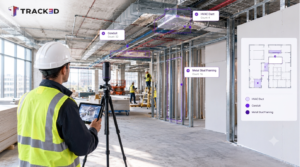
Reality capture has gotten a lot more accessible. 360-degree cameras, drones, and laser scanners can now document a jobsite almost daily, at a cost that would have been out of reach ten years ago. That means there’s finally a continuous, independent record of site conditions that can exist alongside the reports a project already produces.
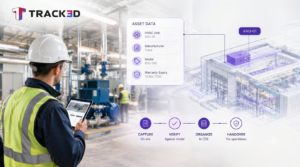
And AI can now turn that raw capture into an actual intelligence layer rather than just a picture. A photo or a scan on its own doesn’t tell an owner much. What’s new is the ability to process that capture into data that’s objective and comparable, things like percent complete by scope, deviations from plan, or work-in-place checked against the schedule. That’s what turns reality capture from something you archive into something you can actually act on.
Put together, owners now have a third option beyond just accepting a report as-is or paying for extra verification: a continuously updated, independent record of the site sitting right alongside whatever’s already being reported.
This space has picked up a name, Reality Intelligence, the practice of turning continuous site capture into structured, objective progress insights. Track3D works in this category, and the same pattern holds across it more broadly. What matters here isn’t any one platform. It’s that owners finally have a real complement to the reporting they’ve always depended on.
It’s not just a data gap, it’s a decision-making gap
Better data by itself doesn’t close the gap. Most owners aren’t going to sit down and cross-reference site capture against a schedule themselves, and that’s not really their job anyway. Owner’s reps, construction executives, and asset managers exist specifically to turn project information into decisions on the owner’s behalf.
So the more interesting shift isn’t just better site data on its own. It’s what happens once the people already representing owners get that data as part of how they already work.
That’s already playing out in the market. Track3D and Zero RFI recently announced a partnership pairing Zero RFI’s owner representation model with Track3D’s Reality Intelligence platform, giving the people who advise owners on capital programs a continuous, objective view of site progress to work from. Read the announcement. It’s a good example of where this category seems to be heading: owner’s reps backed by better information, doing the same job they were already hired for.
Why it Matters
The real significance here is what the technology does and how owners and project teams work together.
When an owner, or whoever’s representing them, has access to objective progress insights, conversations tend to move from reconstructing what happened to deciding what happens next. Pay applications, schedule conversations, risk calls, they all move faster when everyone’s starting from the same current picture of the site.
This shows up most concretely at financing and closeout. Construction loans typically require draw inspections or third-party verification before funds release, and an independent, continuously updated jobsite conditions gives owners a stronger basis to move through that process without delay. It also changes the position owners are in if a dispute ever comes up over what percentage of a scope was actually complete on a given date, since there’s now Reality Intelligence data that doesn’t depend on either side’s memory or paperwork.
That shared starting point isn’t just good for owners either. Project teams spend less time compiling and explaining updates, and owners spend less time waiting on them. It’s a small shift in how information moves, but it changes the tenor of almost every conversation that follows.
The same Reality Intelligence that helps day to day also pays off at the end of a project. A continuous, structured jobsite record makes handover to operations and facilities teams noticeably cleaner, since there’s already a documented account of what was built and when, rather than a scramble to reconstruct it from scattered files after the fact.
Closing the owner progress tracking gap doesn’t mean adding more oversight or more friction to how projects get built. It means giving the people carrying the most long-term risk on a project, and the people representing them, a clearer, more current view of the same reality everyone’s already working toward.
The bigger shift here is about the confidence owners can have in the decisions they’re already making, on payment, on schedule, on risk, without waiting on someone else to interpret the site for them first.
Get in touch with our team to have an objective view of your project’s status.