Introduction
Delays in construction rarely arrive without warning, because a project usually shows small signs weeks before the project completion date officially slips. The difficulty is that those signs look minor when examined individually.
Float shrinks a little, a planning meeting runs long, and one trade partner requests additional time. Each item appears manageable, so team members keep moving, and the project eventually ends up behind schedule.
This guide covers 9 early warning signs that a construction project is falling behind, explains how to track each one, describes what to do when you recognize it, and shows where Track3D fits. It serves project teams across the construction industry, from site leads and project managers to project executives.
Key Takeaways
- Delays in construction begin as small, measurable signs long before the finish date moves.
- Shrinking float, a growing schedule variance, and a slipping lookahead schedule are three of the clearest indicators.
- Compare reported progress with installed work every week, because the two frequently disagree.
- Act early, since recovery options shrink with every additional week of schedule slippage.
- Keep dated records from the start so the supporting facts are available if a delay claim follows.
Why Delays in Construction Start Small
Construction project delays seldom originate from one dramatic event, and they usually build from many small misses in the construction project schedule.
A late delivery pushes one crew, that crew pushes the next one, and soon the whole sequence sits later than originally planned.
A single construction delay can look harmless, since a day lost on a task with float may cost nothing, while a day lost on a critical task moves the finish date. That difference explains why float matters so much.
A complex project involves more trades, more handoffs, and more opportunities for delay events to begin, and each delay event becomes easier to manage when the team catches it early.
Common causes of construction delays include late materials, weather, crew shortages, design changes, and slow approvals. The causes of delay in construction projects often overlap, so one problem frequently hides another.
Construction schedule delays also fall into several categories, and teams usually group the types of construction delays as excusable, compensable, or non-excusable. Compensable delays are the ones where the contract may give the contractor additional time and money. The construction contract usually establishes which type applies, and that type determines who carries the cost.
A project delay often stretches the project duration and brings a schedule overrun and construction cost overruns along with it, because crews stay longer, general conditions run longer, and the next trade waits. Early warning signs give you time to act before that happens, and construction delay management starts with noticing.
9 Early Warning Signs a Project Is Behind Schedule
Each sign below is easy to miss alone, yet together they show whether a project behind schedule is about to get worse.
1. Float Is Shrinking
Float in construction is the amount of time an activity can slip without moving the finish date, while the critical path is the chain of activities that carries no float. Teams build that chain with the critical path method (CPM).
Review float every week in your construction scheduling tool, because good planning and schedule habits start with that check. Float that drops on several paths at once is an early warning sign, and a near-critical path can turn critical overnight.
When the critical path moves to a different chain, the project has changed shape and the plan needs a thorough review.
2. Schedule Variance Keeps Growing
Schedule variance compares planned progress with actual progress, measured against the planned schedule, and a negative number means the project is behind plan. Watch the trend rather than a single number.
The schedule performance index (SPI) expresses the same gap as a ratio by dividing the value of work completed by the value of work planned. An SPI below 1.0 means the project is behind, and an SPI that falls week after week points to growing schedule slippage and a potential delay you can still manage.
3. The Lookahead Schedule Keeps Slipping
A three week look ahead lists the work crews plan to complete over the following three weeks, so check how much of it crews actually finish and ask team members which tasks they expect to slip.
If the same tasks roll from one lookahead schedule to the next, something is blocking them, whether missing materials, an unanswered question, or a crew stuck elsewhere. Rolled tasks show that the construction schedule no longer matches conditions in the field.
4. Crew Production Falls Below Plan
Construction productivity appears in quantities installed per day or per week, so compare each crew’s actual production rate with the rate assumed in the plan.
A crew that runs below plan for two weeks rarely recovers on its own, and poor resource allocation, such as too few workers on one area, often explains the gap.
Labor shortage in construction makes the problem worse. A trade partner short on workers may still report that work is on track, but measured production shows what is really happening.
5. Material Delays Pile Up
Material delays in construction affect the schedule quickly, because a late package or a long equipment lead time can stall several trades at once.
Look for outstanding purchase orders without a confirmed delivery date and for submittals that return with comments, and compare each lead time with the date the work needs to start.
6. Weather Eats the Calendar
Weather delays in construction are easy to explain and easy to brush off. A few lost days feel insignificant, but several weeks of them can erase float on exterior work.
Count lost days against the days your schedule allows, and if the gap grows, plan recovery work before the weather window closes.
7. Requests for Information and Change Orders Pile Up
A request for information (RFI) indicates that the field found a gap in the design, so a rising count of open RFIs shows work waiting on answers. Check how long each one remains open.
Change orders in construction have a similar effect, since each one adds scope and some reset the sequence. Numerous open change orders, or slow approvals, push crews to work around items instead of completing them.
8. Rework Keeps Coming Back
Rework in construction costs time twice, because the crew builds the work, then builds it again, while the next trade waits.
Rising rework often follows rushed installation, ambiguous drawings, or problems discovered late. Log each item with its area and trade, since a pattern in one zone or one trade is an early warning sign.
9. Reports and the Site Disagree
Progress reports and site conditions should match, and when they do not, trust the site. Self-reported progress often runs ahead of what is installed, so a general contractor should check each trade partner’s report against the field.
Walking every area takes considerable time, so many teams rely on captured walks and measured progress. This is where construction progress tracking and construction progress monitoring help most, because they replace an impression with a number.
Early Warning Signs at a Glance
Use this table as a quick weekly check.
| Sign | What it looks like | First check |
|---|---|---|
| Shrinking float | Float drops on several paths | Review the critical path every week |
| Growing schedule variance | The gap widens week after week | Compare planned and actual progress |
| Slipping lookahead | The same tasks roll forward | Find what blocks each task |
| Low production | Crews install less than planned | Compare rates with the plan |
| Material delays | Open orders with no delivery date | Check lead times against start dates |
| Weather losses | Lost days exceed the allowance | Count lost days against the schedule |
| RFIs and change orders | Open items grow older | Track the age of each open item |
| Rework | Repeated fixes in one area | Log rework by zone and trade |
| Reports and site disagree | Reported progress beats installed work | Verify with a capture |
How to Track Early Warning Signs Every Week
Spotting these signs takes a consistent routine, and a straightforward weekly rhythm works for most teams.
- Update the schedule. Record actual progress against the construction schedule rather than dates alone, and make schedule updates part of every weekly meeting.
- Review float and variance. Check which paths lost float and where schedule variance grew.
- Walk the lookahead. Confirm that each task has materials, drawings, labor, and access.
- Check production. Compare installed quantities with the planned rate for each crew.
- Log blockers. Record open RFIs, change orders, and late deliveries with dates.
- Share one record. Give project managers, site leads, and trade partners the same information.
Construction project monitoring works best when the data comes from the field instead of from memory, and captured site walks provide a dated record that shows what changed since last week.
Weekly tracking is also basic construction risk management, because it turns minor risks into visible issues before they grow. Log identified risks with an owner and a date.
What to Do When You See the Signs
Act early, because recovery options shrink every week, and schedule recovery works best in a clear order.
- Find the cause. Determine whether materials, labor, design, or weather sits behind the sign.
- Protect the critical path. Move crews and resources to activities with no float first, since those activities control the finish date.
- Resequence work. Open additional work fronts so crews do not wait.
- Add resources with care. Additional crews can crowd a space and reduce productivity.
- Test the fix. Check the forecast finish date before you commit to a recovery plan.
- Document everything. Keep dated records of delays, notices, and decisions.
Good records also support construction delay claims later, and a delay claim without dated records is hard to defend. A formal construction delay analysis relies on dated facts about what happened and when, so teams that keep those facts from the start can answer questions with evidence.
Where Track3D Fits
Track3D enables teams to identify these signs through measured progress rather than guesses, so they can make informed decisions. It covers progress tracking and schedule recovery on projects set up for progress tracking.
- Teams capture the site on 360 video walks, and Track3D measures installed work from those captures.
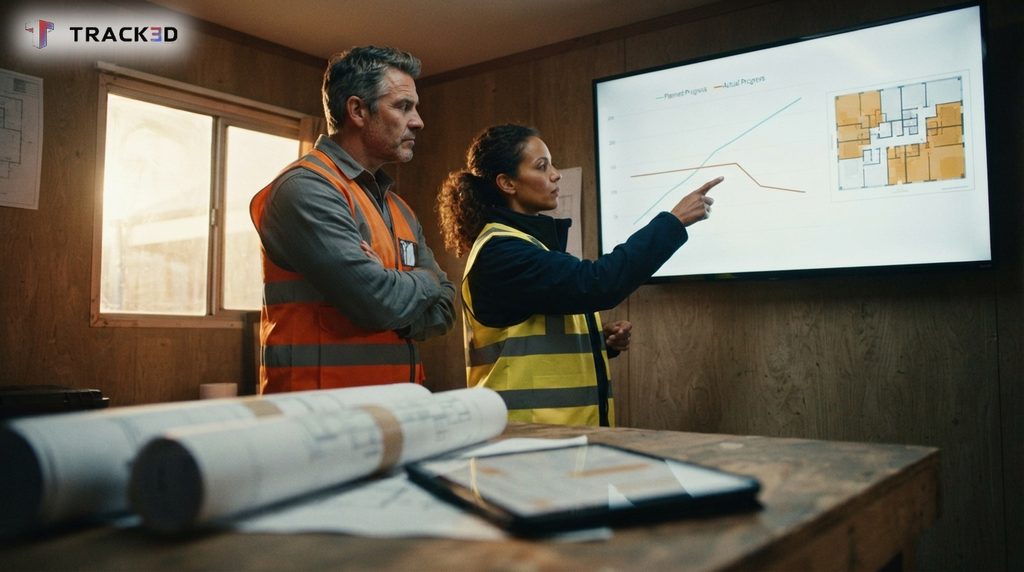
- Planned, average, recent, and required pace lines sit side by side, with a forecast finish date at the current pace.
- Schedule alerts flag work that is behind schedule, ahead of schedule, or at risk of delay.
- Trend alerts and heatmaps show areas that slowed down or stalled.
- Teams can test a proposed fix against measured rates before they commit to it.
These views need a schedule and a quantity setup in the project.
Know Your Pace Before the Schedule Slips
Pick the one sign your team misses most often and measure it this week. See how Track3D helps with schedule recovery.
Frequently Asked Questions
What causes delays in construction projects?
Late materials, weather, labor shortages, design changes, slow approvals, and rework are the most common causes, and several often overlap on the same project.
How do you know if a construction project is behind schedule?
Compare actual progress with the planned schedule. Four signs point to a project that is behind, namely shrinking float, a negative schedule variance, a schedule performance index below 1.0, and look-aheads that keep slipping.
What is schedule variance in construction?
Schedule variance is the gap between planned progress and actual progress at a point in time, and a negative value means the project is behind plan.
How do you recover a delayed construction project?
Find the cause, protect the critical path, resequence work, and add resources where space allows, then test each fix against measured production before you commit.
Who is responsible for delays in construction?
The answer depends on the cause and the contract. Teams usually group delays as excusable, compensable, or non-excusable, and the contract sets who carries the cost, so keep dated records and ask legal counsel about claims.