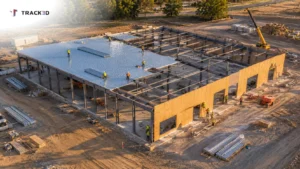

Drone insurance pays for injury or property damage that a drone causes to other people. Optional hull coverage also pays for physical damage to the aircraft itself. On a jobsite, the liability side carries the most risk, because a drone flies over workers, vehicles and cranes.
General liability policies can exclude aircraft. At least one court has also treated a drone as an aircraft under that exclusion. Confirm your coverage with a broker before the first flight. This guide offers risk guidance for contractors, not legal or insurance advice.
As per the FAA’s UAS Compendium to its 2026 to 2046 Aerospace Forecast, the commercial drone registry reached 424,516 active aircraft by the end of 2025. The FAA had also issued more than 493,000 remote pilot certifications by December 2025. Those numbers make drone coverage a practical question for most contractors.
What Drone Insurance Covers
A drone policy combines separate coverage types, and a contractor can buy some without the others. As per the National Association of Insurance Commissioners, drone use calls for several types of coverage. The list includes liability, property, personal injury, invasion of privacy and cyber risk. For construction work, four of these matter most.
Liability Coverage
Drone liability insurance pays when the drone injures a person or damages property that belongs to someone else. On a jobsite, that could mean a laborer on the slab, a car in the parking lot or a neighboring roof.
Liability coverage is also the insurance coverage that owner contracts set dollar limits for. Treat it as the core of any drone program.
Hull Coverage
Hull coverage protects the aircraft. As per Pilot Institute, hull insurance covers the cost of the drone itself if an accident damages it.
A contractor with one entry-level drone might decide to carry that risk directly. A contractor running multiple drones should compare the premium against the replacement cost of the full fleet.
Payload and Equipment Coverage
Payload coverage pays to repair or replace the equipment a drone carries, such as cameras and sensors. A camera rig used for aerial mapping or aerial photography can carry significant value.
Ask whether the hull limit already includes the payload. If it does not, the payload may need its own line on the policy.
Privacy Coverage
The NAIC lists invasion of privacy among the coverage types that drone use calls for. A site drone can pass over backyards, office windows and public sidewalks during a routine flight.
Ask the broker whether the policy responds to a privacy claim and on what terms. Insurance companies word these coverages differently, so read the policy definitions closely.
Who Needs It on a Construction Project
Any party that flies a drone on the project carries the risk of that flight. On most jobs, that means one of three groups. The contract should state who carries drone coverage insurance in each case.
Your Own Pilots
When your own staff fly for site photos or inspections, the exposure belongs to your company. The first question is whether your existing policies respond to drone operations at all.
General liability forms can carry an aircraft exclusion. As per Insurance Journal, ISO created optional drone exclusions and limited coverage endorsements for its commercial general liability program.
In one California federal case, a court reviewed a drone accident under a general liability policy. The court held that the accident fell within the aircraft exclusion, so the insurer had no duty to defend.
Personal policies leave a similar gap. As per Kiplinger, a homeowners policy may cover hobby drone use. That same policy may not cover commercial use by a business. An employee who brings a personal drone to work can create exactly this exposure.
A Drone Service You Hire
Some contractors hire a drone service for aerial photos, surveys or drone monitoring instead of building an in-house program. The service should carry its own liability protection.
The contract should require that coverage in writing. It should also list the limits and documents described in the sections below.
A Trade Partner Who Flies on Your Site
Some trade partners fly their own drones to document their scope of work. Treat a trade partner the same way as a hired drone service.
Require the same coverage and documents from the trade partner. Hold every trade partner flight to the same site rules as your own.
Owner and Contract Requirements
Owners and public agencies can set drone insurance terms directly in the contract. As per the City of Chula Vista’s insurance requirements for the use of UAS, operators need aviation liability coverage. That coverage must apply on an occurrence basis.
Chula Vista sets those limits at no less than $1,000,000 per occurrence and $2,000,000 in the aggregate. That document gives contractors a useful public benchmark for owner expectations.
States can add their own rules. As per the Minnesota Department of Transportation, commercial operators should obtain insurance on the drone. They should also file a certificate of insurance with the state Office of Aeronautics.
Federal rules take a different approach. As per Pilot Institute, no federal rule requires drone insurance, although some states require it for commercial operators. Review the prime contract, the owner’s requirements and the state rules before deciding on coverage.
What Limits and Terms to Ask For
The right terms depend on the contract, the site and the risk the owner wants to transfer. Use the four points below as a checklist for conversations with your broker and with every operator.
Liability Limits
Start with the coverage limits in the contract and treat them as the minimum. Published owner requirements provide a helpful reference point when a contract is silent.
Chula Vista requires at least $1,000,000 per occurrence and $2,000,000 in the aggregate for aviation liability. When the coverage comes through a general liability endorsement, the minimum rises to $2,000,000 per occurrence.
The same document allows an umbrella or excess policy to help meet those limits. Insurer websites advertise a wide range of starting limits, so treat those figures as sales material rather than a standard.
Insurance costs follow the limits and coverage types you select. Request quotes after the contract limits are final.
Additional Insured Status
As per IRMI, an additional insured is a person or organization that a policy does not automatically include as an insured. The named insured adds that party at its own request.
Owners and general contractors can require this status on a drone operator’s liability policy. Write the requirement into the contract, then confirm it on the documents the operator provides.
Certificate of Insurance and Endorsements
Request the certificate of insurance together with the endorsements behind it. Chula Vista, for example, requires operators to provide original certificates and policy endorsements, or copies of the applicable policy language.
The same document requires an insurer with an A.M. Best rating of at least A:VII. That rating requirement is worth matching in your own contracts.
Territory and Site Restrictions
A policy can limit where and how the drone operates. Ask the broker about geographic limits, airspace exclusions and conditions on flights near people and structures.
Then compare those terms against the actual site conditions. Check nearby roads, occupied buildings and the crane swing radius before approving any flight plan.
What a Hired Drone Pilot Should Show You
Collect the paperwork before the first flight rather than on the morning of the flight. Most of the items below come from federal rules for commercial drone operations. The rest reflect standard site practice.
Remote Pilot Certification
As per the FAA’s Part 107 overview, the person operating the controls needs a remote pilot certificate with a small UAS rating. The alternative is direct supervision by someone who holds that certificate.
Federal rules also require the remote pilot to present the certificate for inspection when the FAA requests it. Ask for a copy and confirm that the name matches the pilot who arrives on site.
Drone Registration and Remote ID
As per the FAA’s registration guidance, every drone needs registration. The only exception covers hobby drones that weigh 0.55 pounds or less. The same page states that registered business drones must also comply with Remote ID.
Request the registration for every unmanned aircraft that will operate on the project. Keep a copy with the project file.
Insurance Certificate
Collect the certificate of insurance and endorsements with the limits and additional insured status your contract requires. Compare the policy dates against the flight schedule.
A policy that expires partway through the job leaves every remaining flight uninsured. Calendar the renewal date and request the updated certificate in advance.
Flight Plan and Site Rules
Agree in writing on flight areas, flight times and the pilot’s position on site. The agreement should also state how the crew receives notice and who has authority to stop a flight.
Part 107 sets the baseline for these rules. Flights must occur in daylight, or in twilight with anti-collision lighting, and the drone must stay within the pilot’s sight.
Flights in controlled airspace also need approval from air traffic control. Build your site rules on top of these requirements and align them with the project’s drone best practices.
A Record of Flights
Ask the pilot for a log of each flight on the project, including the date, time, location and pilot name. Under Part 107, the remote pilot must give the FAA any records that FAA rules require, on request.
A shared project log gives your team its own copy of that record. It also gives the project manager a quick reference when questions arise later.
Records That Help If There Is a Claim
After an incident, the same questions arise every time. The team needs to know who was flying, where the drone was and what the site looked like.
Complete records answer those questions with documented facts. Without them, the answers depend on memory and competing accounts.
Accident Reports
As per 14 CFR 107.9, the remote pilot in command must report certain accidents to the FAA within 10 calendar days. The rule covers serious injury to any person and any loss of consciousness.
The rule also covers damage to property other than the drone. It does not apply when the repair cost or the property’s fair market value is $500 or less.
Confirm that every pilot on the project understands this requirement. Set a rule that your team hears about any incident on the same day.
Flight Logs
Store the pilot’s flight logs with the project records. Each entry should show the pilot, the aircraft, the date and time, the location and the site conditions.
Dated Captures
Photos and drone images tied to a date and a location show the site before and after an incident. A consistent site photo documentation routine creates that record before anyone needs it.
Site Conditions and Notes
Record the weather, wind, active work areas, crane activity and any temporary changes to access or traffic. These details give context to every other record in the file.
Also record the pre-flight briefing, near misses, neighbor complaints and instructions given to the pilot. A note tied to a specific location on the site is easier to find and harder to dispute.
Where Track3D Fits

Track3D does not provide or arrange insurance. It processes flat drone images in about 24 hours and organizes every capture by location and date on the floor plans.
Teams pin notes, voice notes and tags to the exact location and export note reports as CSV or PDF. That dated record sits alongside the flight logs, certificates and reports described above.
Frequently Asked Questions
Do I need insurance to fly a drone for business?
As per Pilot Institute, no federal rule requires drone insurance. Some states do, and Minnesota directs commercial operators to obtain insurance and file a certificate of insurance with the state.
Owners and general contractors also write insurance requirements into contracts. Review both the contract and the state rules before treating coverage as optional.
How much does commercial drone insurance cost?
Insurance costs vary by insurer, by the limits and coverage types selected and by how the drone operates. Ask a broker to quote against the limits your contracts require rather than relying on advertised starting prices.
Does general liability insurance cover drones?
A general liability policy may not cover drones. Standard general liability forms can carry an aircraft exclusion. ISO also offers drone-specific exclusions and limited coverage endorsements.
In one California federal case, the court applied the aircraft exclusion to a drone accident. Ask your broker to confirm in writing whether your policy covers drone operations.
What does hull coverage cover?
Hull coverage pays to repair or replace the drone itself after physical damage. Cameras, sensors and other equipment may fall under separate payload coverage, so check what the policy includes.
Should a trade partner that flies a drone on my site carry its own coverage?
Yes. Require the trade partner to carry its own drone liability insurance at the limits in your contract.
The trade partner should also name you as an additional insured where the contract calls for it. Collect a certificate of insurance with endorsements before the first flight.