
Construction retainage is the part of each payment that the payer holds back until the work meets the contract terms. The owner holds it from the general contractor. The general contractor holds a matching share from each trade partner.
Owners use it to protect the project when work is left unfinished or defects show up late. Retainage is common across the construction industry, and rates and rules vary by state and by contract. This guide explains retainage in construction, when it comes back, and which records support release. It is general information and not legal advice.
Key Takeaways
- Contracts often set the rate between five and ten percent, and the rate can change by state and by contract.
- Retainage release usually follows substantial completion, final completion, or a staged reduction.
- Open punch list items, missing closeout documents, and unclear records hold up release most often.
- A dated record of work completed by location gives the payer less to question.
How Does Retainage Work in Construction?
Retainage works when the payer holds a set percent of each progress payment until the work meets the contract’s release conditions. Many contracts set the percent between five and ten percent. Most billings include retainage as a separate line, and construction companies of every size see this pattern.
What Does Retainage Mean in Construction?
The retainage meaning and the retainage definition are simple. The work is done and billed, but part of the money waits. The meaning of retainage is the same on every job. To define retainage in one line, it is earned money that the payer keeps for now.
People ask what is retainage, what is a retainage, and what is construction retainage. They also ask what is retention money, what is a retention payment, and what is retention in construction. All of these mean the same thing.
You may also see retention fee, retainage fee, or construction retention. Retainage vs retention is a naming difference, so read the contract’s own words.
What is retainage in a construction contract? It is the clause that sets the percent, the release trigger, and the process. Look for the words retainage required, since that clause decides how construction retainage works on your job. Retainage construction clauses also act as financial incentives that keep a trade partner on the job through the last ten percent.
Who Holds Retainage, the Owner or the General Contractor?
Both hold it, at different levels. The owner holds retainage from the general contractor, and the general contractor holds it from each trade partner. Confirm whether the owner or general contractor holds the money at each level.
Accounting teams track both sides. The trade partner books retainage receivable, and the same balance sits in accounts receivable retainage. The payer books retention payable. The owner and contractors should match these numbers to the pay application.
How Is Retainage Calculated?
To calculate retainage, multiply the billed amount by the retainage percent. Here is a simple example. A trade partner bills $100,000 for the month, and the contract holds ten percent. The payer releases $90,000 and holds $10,000. That $10,000 is the retainage payment that waits for release.
The retained amounts grow with each payment, so good retainage tracking happens by line. Each line on a schedule of values carries its own billed amount, so each of those line items carries its own held amount. A large balance can cause cash flow issues for a trade partner that needs timely payments.
How to Bill Retainage on AIA Form G702 and G703
People ask how to bill for retainage on AIA form G703. They also ask how do I bill for retainage on AIA form G702. AIA retainage shows up as its own line on the pay application.
The G702 summary page shows total retainage. The G703 detail sheet can carry it line by line when the rate varies, so the AIA G703 retainage column is where line-level numbers live. To bill retainage on the AIA form, apply the contract percent to work completed and stored material. The AIA G702 and G703 forms follow this pattern.
The progress payment in construction cycle shows how each billing moves toward approval. Retainage is the part that waits.
When Is Retainage Released?
Retainage is usually released at substantial completion, at final completion, or in stages, depending on the contract. The contract sets the conditions, and state rules may add to them.
When Is Retainage Paid in Construction?
- At substantial completion, the owner can use the building. Some contracts release part of the retainage here and hold the rest for punch work.
- At final completion, the team has finished all work and closeout documents. This is the most common release point for the balance, and it often arrives with final payment.
- In staged releases, the contract steps retainage down as the work advances. Some contracts tie each step to project milestones.
A contractor must complete the project to the contract terms before the last release. The trade partner or general contractor usually sends a written request, called a retainage release letter or a retainage release form. If you wonder how to release retainage in Procore, follow its release steps and attach the same package.
How Long Can Retainage Be Held?
It depends on the contract and on state rules. Some states set time limits, and some do not.
Can Retainage Be Reduced Before the End of the Project?
Sometimes. Some contracts lower the rate after a set point, such as when the work is half complete. If the contract is silent, ask early.
Some contracts also let a trade partner post a retainage bond, sometimes called a retention bond, in place of held cash. The contract and the state decide if that is allowed, and the bond has a cost.
What Holds Up Retainage Release?
Most delays trace back to open items and unclear records. The money is ready on paper, but something is missing.
- Open punch items: A short list can hold the whole amount. The construction punch lists that teams keep in the field decide how fast the punch list items clear.
- Missing closeout documents: Manuals, warranties, as-builts, and test records often arrive late. The construction project closeout documents list is long, and one missing item can stall the request.
- Unresolved issues: An open dispute or an unsigned inspection gives the payer a reason to keep holding.
- Warranty paperwork: Many contracts require signed warranties before final release.
- Lien waiver gaps: A construction lien waiver that does not match the payment received can pause release.
- No clear record of what was finished and when: When nobody can show the date a room was complete, the talk turns into memory against memory.
What Documentation Supports Retainage Release?
A complete, dated package gives the payer less to question. Documentation does not decide release. The contract and the parties do.
Copy this checklist as a starting point.
- A closed punch list with a date and a photo for each item.
- A dated record of work completed by location, such as floor, zone, or room.
- The closeout set, including manuals, warranties, as-built drawings, and test records.
- Inspection reports and sign-offs.
- Lien waivers that match each payment received.
- The final pay application showing the retainage line.
- A written retainage release request that lists every attached document.
Collect closeout items as the work moves. Tie each completed scope to a schedule of values line, so the billed amount and the record match. The same dated record backs up the billed percent on the pay app construction side.
Teams that want to shorten the pay app cycle with reliable progress visibility can read how that works in this pay app cycle use case.
How Do State Retainage Rules Differ?
States set their own retainage rules, so there is no single answer. Some states limit the rate on public work. Some set release timing or interest.
Some treat private work differently. Construction retainage laws by state differ, and retainage laws by state change over time. Start with the primary sources.
To check your own state, search its official statute website for the word retainage and compare the rule to your contract. This article is general information and not legal advice. Confirm every rate, cap, and date with the current statute and with legal counsel.
How Track3D Helps the Record
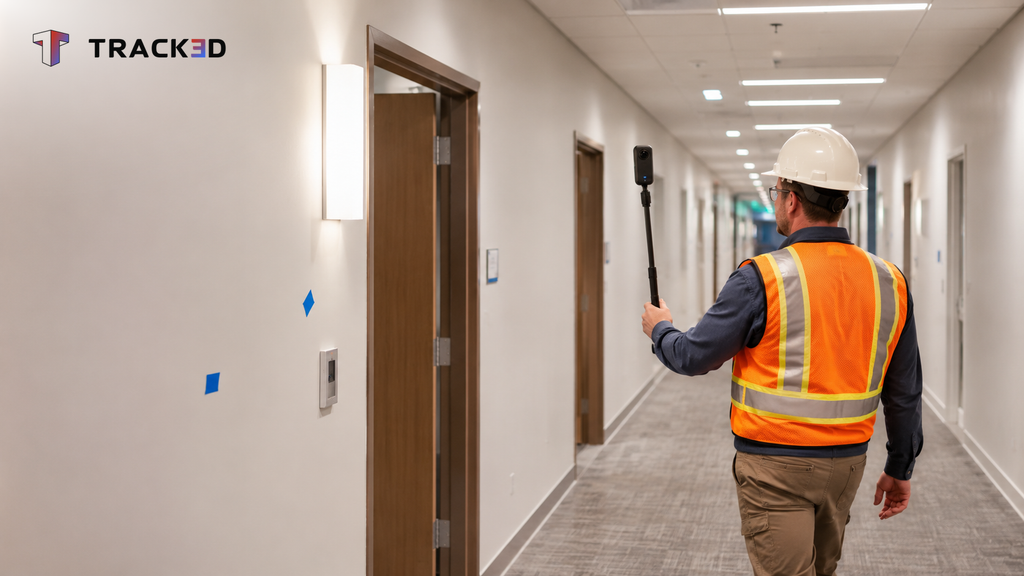
Track3D, a Reality Intelligence platform, builds a dated record of completed work from 360 video walks in the Track3D mobile app. Track3D recommends walks of about 30 minutes, with processing in about 24 hours. It organizes captures by location and date on the project floor plans, with notes, voice notes, and tags pinned to the exact spot.
A Note List and note reports in CSV and PDF cover the whole project. Integrations with Procore, Autodesk ACC, and Fieldwire link notes to inspections, issues, and RFIs. After closeout, the Offline Deliverable packages captures and floor plans into a downloadable HTML file. On progress tracking projects, a progress report PDF follows every capture, and the pay application verification page explains that use.
The record shows what was captured and when. Pay and release decisions stay with the parties and the contract. Progress is only as good as the project data setup, and work covered before a walk cannot be seen.
See How Track3D Builds a Dated Record of Completed Work
Construction retainage waits on proof that the work is done. See how Track3D builds a dated record of completed work and how it fits into your closeout process.
Frequently Asked Questions
What is retainage in construction?
Retainage in construction is a portion of each payment, often five to ten percent, that the payer holds back until the work or the project meets the contract conditions.
How much is retainage on a construction project?
Contracts often set retainage between five and ten percent. State law may limit the rate on certain projects, so check the contract and your state’s rules.
When is retainage released?
Retainage is usually released at substantial completion, at final completion, or in stages the contract sets, after the payer reviews a written release request.
Can retainage be reduced before the end of the project?
Sometimes. Some contracts lower the rate after a set point, release retainage when the owner accepts a trade partner’s scope, or allow a retainage bond in place of held cash.
Who holds retainage, the owner or the general contractor?
The owner holds retainage from the general contractor, and the general contractor holds a matching share from each trade partner under the trade contract.