Progress tracking in data center construction management is the practice of measuring installed work by phase, trade, and zone, then comparing it to the schedule so teams can protect energization and commissioning dates.
Key Takeaways
- Track different metrics at each phase. Foundations, MEP rough-in, equipment setting, and commissioning each need their own measures.
- Measure quantities, not impressions. “847 of 1,000 LF of cable tray installed” is more useful than “about 85% done.”
- Increase capture frequency as the project moves into MEP. Weekly works early. Two to three captures a week works better during peak MEP.
- Track long-lead equipment from delivery to installation to testing.
- Tie every metric to the schedule. A quantity only matters when you can compare it to the plan.
What Does Progress Tracking Mean in Data Center Construction Management?
Progress tracking answers one question: how much planned work is actually in place today? In data center construction management, that answer has to be specific. It should name the trade, the zone, and the quantity.
A data center is mostly a mechanical and electrical building. Most of the schedule risk sits in MEP and equipment work.
Good tracking has three parts:
- A baseline. Planned quantities from takeoffs, drawings, or the BIM model.
- A field record. Regular captures of what is installed, such as 360° photos or laser scans.
- A comparison. Planned versus actual, by zone and trade, against the schedule.
Tracking a data center build?
See how Track3D measures installed work by hall, trade and zone from a 360° walk.
Why Do Data Center Projects Need a Different Tracking Approach?
Data center schedules are tight, and delays are common. Sightline Climate found that 26% of the 110 data center projects expected to come online in 2025 were delayed (Latitude Media). Power, equipment, and labor shortages drive much of that risk.
Three traits make data centers harder to track than typical commercial work:
- High MEP density. Many trades work in the same white space at once.
- Repeated layouts. Data halls look alike, so manual reports often mix up zones.
- Hard testing gates. Equipment must pass staged commissioning before the facility can carry IT load.
What Should You Measure at Each Stage of the Data Center Construction Process?
The data center construction process moves through five broad phases. Each phase has its own leading indicators.
| Phase | What to Measure | Suggested Capture Frequency |
| Site work and foundations | Earthwork volume, piers and footings poured, slab area placed | Weekly |
| Shell and structure | Steel erected by grid line, roof dry-in by area, wall panels installed | Weekly |
| MEP rough-in | LF of conduit, cable tray, busway, and piping by zone | 2 to 3 times per week |
| Equipment setting | Switchgear, UPS, generators, and cooling units delivered, set, and connected | 2 to 3 times per week |
| Commissioning | Tests passed by level, open issues, systems turned over | Per test milestone |
Frequencies are suggested starting points. Adjust them to your project size and schedule.
Site Work and Foundations
Track earthwork volume, foundations poured, and underground utilities installed. Watch duct banks closely. Late duct banks can push back energization.
Shell and Structure
Track steel erection by grid line and roof dry-in by area. MEP work in the data halls usually waits for a weathertight space.
MEP Rough-In
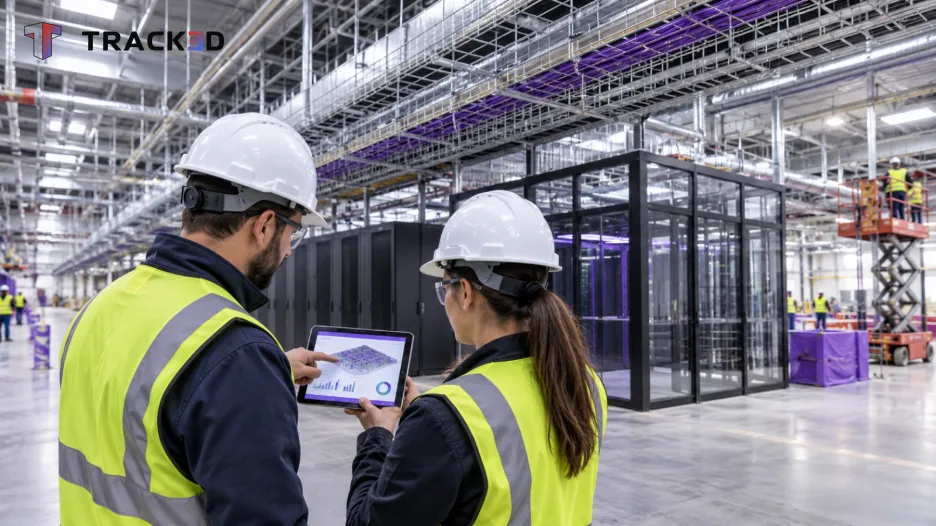
This phase carries the most risk. Measure installed linear feet of conduit, cable tray, busway, and chilled water piping. Break the numbers out by data hall and by trade.
Quantities make the difference here. A report that says “Hall 2 power is 60% done” invites debate. A report that says “1,200 of 2,000 LF of busway installed in Hall 2” does not.
Equipment Setting and Energization
Track every major piece of equipment through four states:
- Delivered to site
- Set in place
- Connected
- Energized
This equipment often has long lead times. Tracking all four states shows exactly where the chain is breaking.
Commissioning
Most data center projects use a five-level commissioning approach. It runs from factory testing (Level 1) to integrated systems testing (Level 5). Track how many tests have passed at each level. Track open issues by system.
A system cannot be tested until it is fully installed. Accurate field data helps the commissioning team plan test windows.
How Often Should You Capture Progress on a Data Center Project?
Match capture frequency to the pace of work. Weekly is often too slow during MEP rough-in. A lot of conduit and tray can go in between two walks.
A practical rhythm looks like this:
- Weekly during site work, foundations, and shell.
- Two to three times per week during MEP rough-in and equipment setting.
- Before and after key milestones, such as energization or a ceiling close-in.
Capture before you cover. Once ceilings, raised floors, or containment go in, the work behind them is hard to verify. A timestamped record protects the team during pay applications and closeout.
How Does Progress Data Protect the Data Center Construction Timeline?
Progress data protects the data center construction timeline by showing problems while there is still time to fix them. A trade that falls behind in week three is easier to recover than one found behind in week eight.
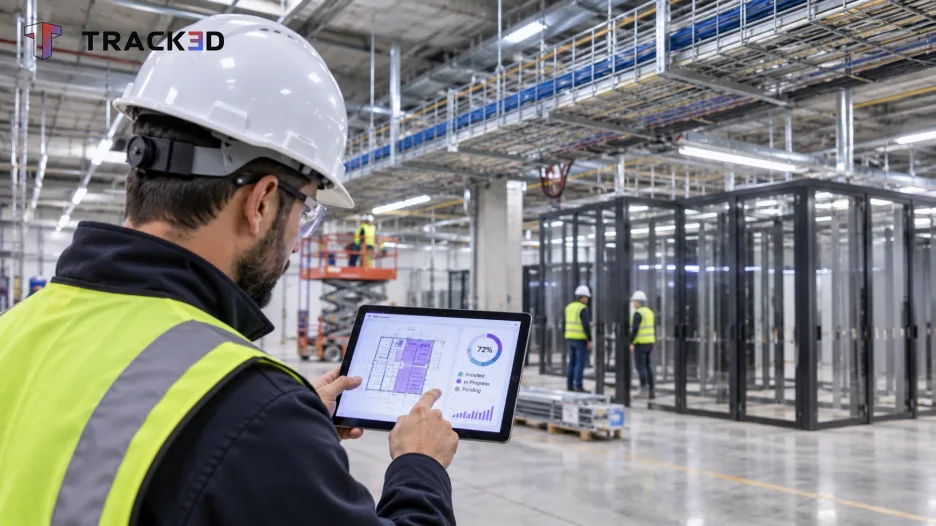
The key is speed. If it takes days to turn site photos into a status report, decisions lag behind the field. Reality Intelligence platforms such as Track3D shorten the time between capturing the site and acting on it. They analyze 360° site captures with AI and measure progress by trade, floor, and zone. Teams see planned versus actual without manual markup.
Results from other complex builds show what this looks like in practice. On a six-story project at San Francisco International Airport, Hensel Phelps used Track3D across 26 sub trades. The team saved 2,964 hours across the project. Garin Anderson, Area Superintendent at Hensel Phelps, put it simply in the Hensel Phelps SFO case study: “We used to spend 20 hours a week just trying to verify progress. With Track3D, it’s down to an hour.”
That project was an airport, but the lesson carries over. Multi-trade work across many zones needs measured progress.
What Are the Most Common Progress Tracking Mistakes on Data Centers?
| Mistake | Fix |
| Percent complete without quantities | Report installed units against planned quantities |
| Building-level reporting only | Break the site into zones, such as data halls and electrical rooms |
| Same capture rhythm all project long | Increase frequency when MEP work peaks |
| Progress data separate from the schedule | Link field progress to scheduled activities |
| Commissioning planned in isolation | Feed installation status into test planning |
Where Does Reality Intelligence Fit in Data Center Construction Management?
Strong data center construction management depends on knowing what is built, where, and how it compares to the plan. Manual site walks struggle to keep up once dozens of trades work across repeated halls.
Reality Intelligence fits into the workflow teams already have. Superintendents keep walking the site with a 360° camera, and the platform does the measuring. It works with 2D drawings or BIM. The result is one shared view of progress for the GC, the owner, and every trade partner.
See Progress Tracking Built for Data Centers
Want to see how measured progress could support your next data center project? Book a demo with Track3D to see Reality Intelligence on a live project.
Frequently Asked Questions
What is data center construction management?
Data center construction management is the planning, coordination, and control of a data center build from site work through commissioning. It places heavy focus on dense MEP and equipment work.
What are the main phases of the data center construction process?
The main phases are site work and foundations, shell and structure, MEP rough-in, equipment setting and energization, and commissioning. Commissioning usually follows five levels, ending with integrated systems testing.
How long is a typical data center construction timeline?
There is no single standard timeline. Duration depends on facility size, design, and power availability. Large hyperscale campuses are often built in phases over several years.
What should you track during data center MEP installation?
Track installed linear feet of conduit, cable tray, busway, and piping by zone. Also track major equipment from delivery through energization.
How often should progress be captured on a data center site?
Weekly works during site work and structure. Two to three captures per week suits MEP rough-in and equipment setting. Always capture each zone before the work is covered.